


I remember walking out thinking, That’s it?
No breakthrough moment. No dramatic clarity. No sudden sense that I had crossed into a new life.
Just me. Same brain. Same doubts. Same quiet fear that maybe I was the problem.
If you’ve been through treatment before and walked away disappointed, skeptical, or emotionally flat, I want to talk to you directly.
Not to convince you. Not to sell you something. Just to say this: the gap between expectation and reality in recovery is real. And it trips a lot of us up.
The Fantasy We Don’t Admit We Had
Most of us walk in with a secret hope.
We imagine that treatment will feel transformational. That there will be a moment when everything clicks. That cravings will shrink, relationships will mend, and we’ll finally feel free.
Even if we don’t say it out loud, we’re hoping for relief. Immediate, noticeable relief.
So when what we get instead is structure, group sessions, uncomfortable honesty, early bedtimes, and a lot of feelings we’ve been avoiding… it can feel underwhelming.
You might have even found yourself Googling options for alcohol addiction treatment again and thinking, I already tried that. It didn’t work.
But what if part of the disappointment wasn’t failure… it was expectation?
Sobriety Doesn’t Erase You
Here’s something that doesn’t get said enough: removing alcohol doesn’t remove your personality.
If you were anxious before, you might feel more anxious at first.
If you were lonely before, the loneliness might get louder.
If you struggled with self-worth, sobriety can actually expose that.
Alcohol often numbs discomfort. When you take it away, you don’t just remove the damage—you remove the anesthesia.
That can feel like things are getting worse.
A lot of people mistake that phase for proof that “treatment didn’t work.” But sometimes what’s happening is the opposite. The alcohol is gone, and now the real work begins.
That’s uncomfortable. It’s not cinematic. It’s slow.
And slow can feel like failure when you were hoping for fast.
Not Every Program Fits Every Person
Another truth? Not all treatment experiences are created equal.
Maybe the level of care wasn’t right for you.
Maybe you needed more structure than you got.
Maybe you needed less intensity and more integration into real life.
Maybe trauma or mental health issues weren’t fully addressed.
There’s a big difference between:
- “Treatment doesn’t work.”
- “That specific approach didn’t work for me.”
Some people need live-in, round-the-clock support to fully disconnect and stabilize. Others do better in structured daytime care that allows them to practice recovery skills in the real world. Some need multi-day weekly treatment to build consistency without burning out.
If you’re near treatment in Fountain Hills, there are different levels of care designed for different stages of readiness and complexity. The fit matters more than most of us realize.
The first pair of shoes you try on isn’t always the one you run in.
Sometimes We Leave Right Before It Clicks
This one stings.
Recovery gets hardest right before it gets honest.
The first few weeks can feel productive. You’re learning new language. You’re hearing stories that sound like yours. You’re motivated.
Then something shifts. The novelty wears off. The real emotional work starts. Old wounds surface. Accountability deepens.
And suddenly, leaving feels easier than staying.
Some people physically discharge early.
Some stay until the end but emotionally check out halfway through.
Some complete the program but stop engaging once they’re home.
If that was you, it doesn’t make you weak.
It makes you human.
Growth often feels like sitting in a room you don’t want to be in, talking about things you don’t want to say, facing parts of yourself you’ve avoided for years.
That’s not dramatic. It’s not inspirational. It’s awkward and raw.
But it’s usually where the shift begins.
“It Didn’t Work” Might Mean “I’m Still in Pain”
Under a lot of skepticism is something softer: hurt.
You tried.
You invested time.
Maybe you spent money.
You hoped.
And when the relief wasn’t immediate—or lasting—it felt like a broken promise.
But recovery isn’t surgery. It’s more like physical therapy.
You don’t leave one session stronger. You build strength through repetition. Through consistency. Through small adjustments over time.
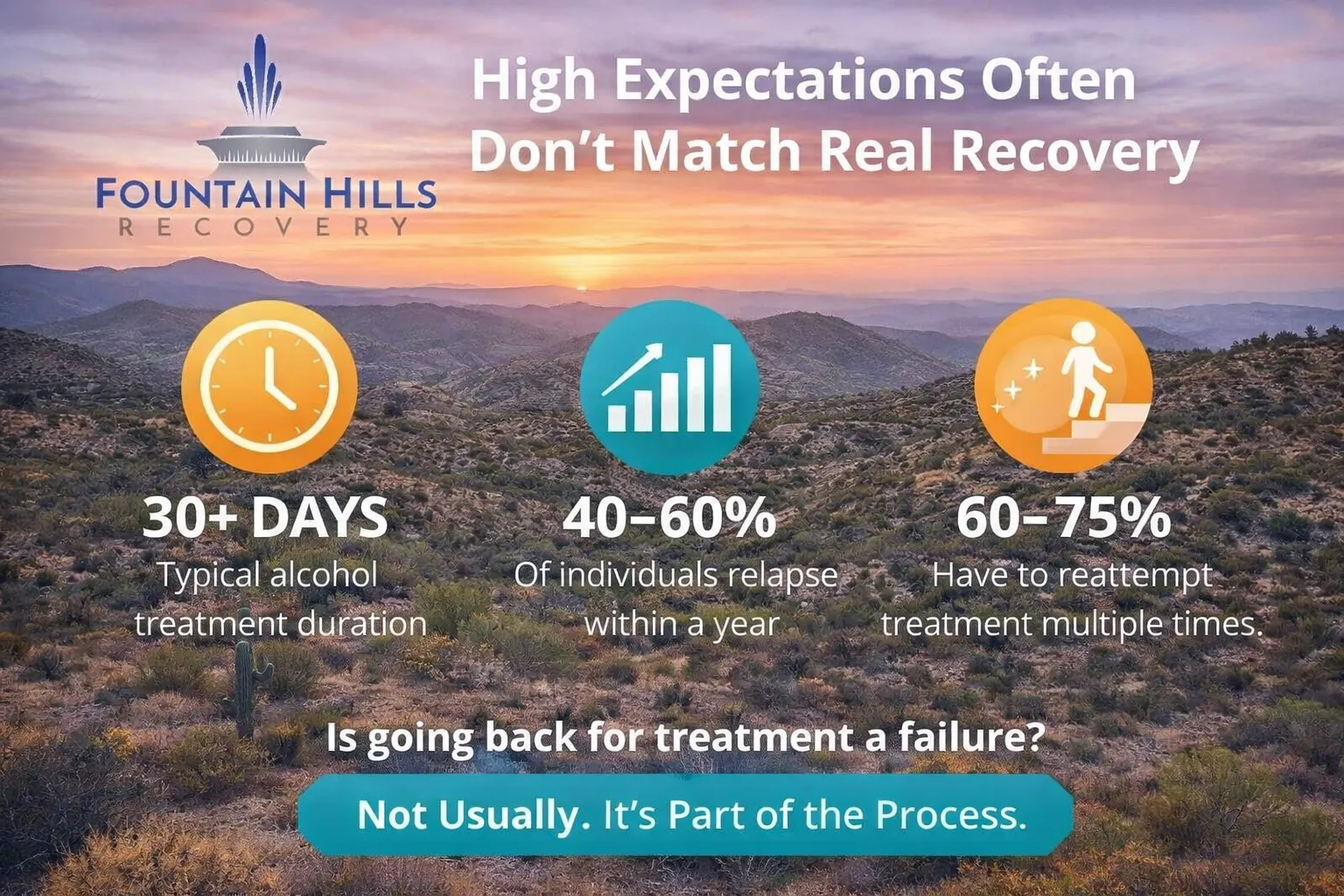
Many people revisit alcohol addiction treatment more than once. Not because they’re incapable. Not because they “failed.” But because healing often happens in layers.
The first attempt might stabilize you.
The second might deepen the work.
The third might finally connect the dots.
It’s not a straight line. It’s more like sanding down rough edges slowly until something smoother emerges.
The Emotional Flatness No One Warns You About
Another common experience? Numbness.
After treatment, some people expect joy. Instead, they feel… flat.
Not drinking.
Not spiraling.
But not exactly thriving either.
That middle ground can be disorienting.
You might think, If I’m not happy, what was the point?
But early sobriety isn’t about happiness. It’s about stabilization. Regulation. Learning to exist without chaos.
Joy often comes later. First comes neutrality.
And neutrality can feel disappointingly ordinary.
High Expectations + Real Life = Collision
Treatment happens in a controlled environment.
Real life doesn’t.
When you leave, the stressors are still there:
- Work pressure
- Relationship tension
- Financial strain
- Family dynamics
If you return to the same environment with only a few new tools, the transition can feel overwhelming.
That doesn’t mean the tools are useless. It may mean they need reinforcement, more time, or a different setting.
Some people benefit from stepping down gradually—moving from immersive care into structured outpatient support instead of jumping straight back into full responsibility.
If you’re exploring options for support in Scottsdale or nearby communities, it can help to think less about “starting over” and more about “building on what I already began.”
You’re not back at zero. Even if it feels like it.
You’re Allowed to Be Skeptical
Here’s the part that matters most: you don’t have to feel inspired to try again.
You don’t have to believe it will work.
You just have to be honest about whether your current situation is working.
Are you less anxious?
More connected?
More at peace?
Or are you just managing?
Skepticism isn’t the enemy of recovery. Sometimes it’s the result of disappointment. And disappointment usually means you cared enough to hope.
You can carry doubt and still take a step forward.
Those two things aren’t mutually exclusive.
FAQs: The Questions People Ask After “It Didn’t Work”
Why didn’t I feel dramatically different after treatment?
Because recovery is rarely dramatic. It’s incremental. Treatment often focuses on stabilization and skill-building, not instant emotional transformation. Big shifts usually happen over time, not in one defining moment.
Is it normal to relapse after completing a program?
Yes. Relapse is common, especially when stressors reappear and support decreases. It doesn’t mean you learned nothing. It often highlights where more support or deeper work is needed.
Does going back to treatment mean I failed?
No. It means you’re reassessing what you need. Many people require more than one round of structured support. Think of it like adjusting a treatment plan, not repeating a grade.
How do I know if it was the wrong program versus me not trying hard enough?
That’s an honest question. Consider:
- Was the level of care appropriate for your severity?
- Were underlying mental health issues addressed?
- Did you feel safe enough to be open?
- Did you leave because it was uncomfortable—or because it truly wasn’t aligned?
A thoughtful reassessment with professionals can help clarify this.
What if I’m tired of trying?
That’s understandable. Trying again can feel exhausting. Instead of thinking about “forever,” focus on the next right step. One conversation. One appointment. One honest look at what’s happening now.
Can treatment feel different the second time?
Yes. Your readiness might be different. Your awareness might be deeper. You might recognize patterns sooner. The same type of support can land differently when you’re in a different place emotionally.
The Gap Is Where Growth Actually Happens
That space between expectation and reality? That uncomfortable middle?
That’s often where the real work begins.
You expected fireworks.
You got foundation.
You expected euphoria.
You got stability.
You expected a new identity.
You got the slow return of your actual self.
It’s not glamorous. But it’s solid.
If you’re considering revisiting alcohol addiction treatment, it doesn’t have to be about hope or hype. It can simply be about honesty.
Are you okay with where things are right now?
If the answer is no, that’s enough.
Call 800-715-2004 or visit our alcohol addiction treatment to learn more about what a different approach could look like this time.