Conditions We Treat

Alcohol Addiction Treatment Near Scottsdale, AZ

Find alcohol addiction treatment at Fountain Hills Recovery. Luxury residential rehab, evidence-based therapies & dual diagnosis care.

Alcohol addiction can affect every part of your life, from your physical health and relationships to your career and sense of purpose. Whether you’re experiencing alcohol dependence for the first time or have struggled with repeated relapses, professional treatment can provide the medical care, structure, and support needed to build lasting recovery.

At Fountain Hills Recovery, we provide personalized alcohol addiction treatment near Scottsdale, Arizona, in a private luxury setting designed to promote healing, comfort, and long-term success. Our experienced clinical team combines evidence-based therapies, holistic wellness approaches, and individualized treatment plans to address both alcohol use disorder and the underlying factors that contribute to addiction. Whether you’re seeking residential treatment, dual diagnosis care, or specialized support as a first responder, executive, or professional athlete, we’re here to help you take the next step toward recovery with confidence.

Personalized Luxury Alcohol Rehab Near Scottsdale, AZ

Choosing where to begin recovery is one of the most important decisions you’ll make. At Fountain Hills Recovery, we’ve created an environment where healing extends beyond clinical care. Our luxury residential treatment program combines evidence-based addiction treatment with a peaceful setting that allows clients to step away from everyday stressors and focus entirely on recovery.

Located near Scottsdale and Phoenix, our private residences offer comfortable accommodations, thoughtfully designed amenities, and serene desert surroundings that support emotional wellness throughout treatment. Many of our homes feature private or semi-private rooms, chef-inspired kitchens, fitness areas, outdoor gathering spaces, and recreational amenities that help clients feel at home while receiving comprehensive care.

More importantly, every client receives an individualized treatment plan developed by an experienced multidisciplinary team. Through a low client-to-staff ratio, personalized therapy schedules, psychiatric support, and ongoing medical oversight, we tailor treatment to each person’s recovery goals, history, and co-occurring mental health needs.

Recovery isn’t just about stopping alcohol use, it’s about rebuilding every aspect of your life with the right support.

Wondering if you drink too much?

Take our free, private alcohol use self-check (AUDIT).

Ready to take control with alcohol rehab?

Call Us to Check Availability

When you first arrive, you’ll be shown to your room in one of our private luxury estates. Our residences offer you a full kitchen for healthy eating and amenities that can include infinity pools, home theaters, a putting green, and much more to help you relax and enjoy yourself when you aren’t receiving treatment.

Once you’re settled in, you’ll meet with your personal Recovery Team to develop a treatment plan that targets your specific addiction triggers and challenges.

When you’re ready to begin treatment, your daily and weekly schedules will include:

  • Access to our highly credentialed staff, including our Medical Doctor, Nurse Practitioner, Behavioral Health therapists, Yoga instructor, Music Therapist, and many more.
  • Individual and group therapy sessions to help you overcome your alcohol addiction and develop healthy coping skills and patterns to prevent and manage triggers and relapse.
  • Additional evidence-based therapies include cognitive behavioral therapy, dialectical behavior therapy, EMDR, and much more.
  • Alternative, holistic therapies like music therapy, yoga, and Neurofeedback support your recovery from alcohol addiction.
  • Medication management, if necessary.

What Is Alcohol Addiction?

Alcohol addiction, clinically known as Alcohol Use Disorder (AUD), is a chronic medical condition characterized by an inability to control or stop drinking despite experiencing negative consequences. While some people may begin drinking socially or occasionally, alcohol addiction develops when repeated alcohol use changes the brain’s reward system, making it increasingly difficult to stop without professional support.

Alcohol addiction exists on a spectrum ranging from mild to severe. As the disorder progresses, many individuals develop a higher tolerance, require larger amounts of alcohol to achieve the same effects, and may experience withdrawal symptoms when they try to cut back or stop drinking. Over time, alcohol misuse can impact nearly every aspect of daily life, including physical health, emotional well-being, relationships, employment, and financial stability.

The good news is that alcohol addiction is highly treatable. With comprehensive care that addresses both the physical dependence on alcohol and the emotional, behavioral, and psychological factors contributing to substance use, lasting recovery is possible. At Fountain Hills Recovery, we develop personalized treatment plans that help each client safely begin recovery while building the skills needed to maintain long-term sobriety.

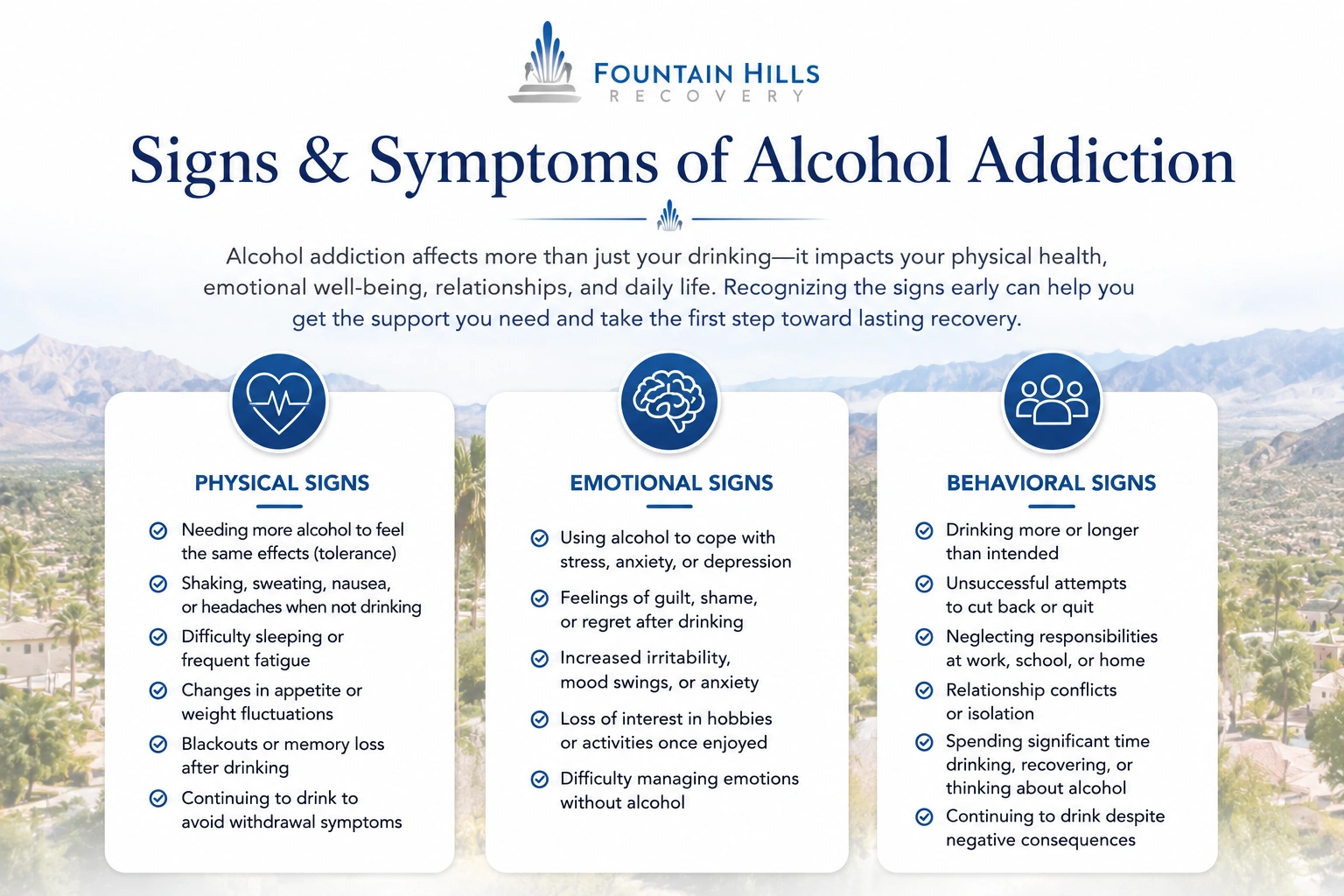
Signs & Symptoms of Alcohol Addiction

Alcohol addiction rarely develops overnight. It often begins with occasional or social drinking before gradually becoming more frequent and difficult to control. As alcohol use increases, it can begin affecting your physical health, emotional well-being, relationships, work performance, and overall quality of life.

Recognizing the warning signs early can make a significant difference in getting the support you need. While every person’s experience is different, alcohol addiction often involves a combination of physical, behavioral, and psychological symptoms.

As the body becomes dependent on alcohol, physical symptoms often become more noticeable. You may experience:

  • Needing to drink more alcohol to achieve the same effects (increased tolerance)
  • Shaking, sweating, nausea, or headaches when alcohol wears off
  • Difficulty sleeping or frequent fatigue
  • Changes in appetite or unexplained weight fluctuations
  • Frequent blackouts or memory loss after drinking
  • Continuing to drink to avoid withdrawal symptoms

These symptoms can indicate physical dependence and should be evaluated by a medical professional before attempting to stop drinking on your own.

Infographic: physical, emotional and behavioral signs and symptoms of alcohol addiction

When Should You Seek Alcohol Addiction Treatment?

Many people wonder whether their drinking has become “serious enough” to require professional treatment. The truth is that you don’t have to wait until alcohol has completely taken over your life before seeking help. Early intervention often leads to better outcomes and can help prevent more serious physical, emotional, and social consequences.

Professional alcohol addiction treatment may be appropriate if you:

  • Find it difficult to stop drinking once you start
  • Need larger amounts of alcohol to feel the same effects
  • Experience withdrawal symptoms when you stop drinking
  • Continue drinking despite problems at work, school, or home
  • Have damaged relationships because of alcohol use
  • Have tried to quit on your own without lasting success
  • Use alcohol to cope with stress, anxiety, depression, or trauma
  • Spend a significant amount of time thinking about, obtaining, or recovering from alcohol

If any of these situations sound familiar, you’re not alone. Alcohol addiction is a medical condition, not a personal failure, and seeking treatment is a proactive step toward improving your health and quality of life.

At Fountain Hills Recovery, every client begins with a comprehensive assessment that allows our clinical team to understand your unique needs and recommend a personalized treatment plan designed to support lasting recovery.

Evidence-Based & Holistic Therapies for Alcohol Addiction

Whether you’re a first responder, high-profile professional, or working mom, alcoholism doesn’t discriminate. It affects you in unique ways. That means a one-size-fits-all approach to alcohol rehab isn’t going to cut it. At Fountain Hills Recovery, our luxury alcohol treatment center in Arizona does things differently.

We emphasize a highly individualized approach to alcohol addiction treatment, tailoring your recovery plan to your specific challenges and needs. When you come to us for alcohol treatment, you’ll be cared for by professionals who have been handpicked for their strength in the addiction recovery field.

Our team members provide a mix of evidence-based treatments and holistic therapies for healing your mind and body from alcoholism, including:

  • Equine Therapy
  • Music Therapy
  • Recreational Therapy
  • Mindfulness-Based Therapies
  • Psychoeducational Group Therapy
  • Trauma Focused CBT
  • Experiential Therapy

Dual Diagnosis Treatment for Alcohol Addiction

Alcohol addiction often occurs alongside mental health conditions such as anxiety, depression, post-traumatic stress disorder (PTSD), bipolar disorder, or unresolved trauma. In many cases, these conditions influence one another, making recovery more difficult when only one issue is treated.

At Fountain Hills Recovery, we provide integrated dual diagnosis treatment that addresses both alcohol addiction and co-occurring mental health disorders at the same time. Through comprehensive assessments, psychiatric support, evidence-based therapies, and individualized treatment planning, our team works to identify the underlying factors contributing to substance use while helping clients develop healthier ways to manage emotional challenges.

Treating both conditions together can improve long-term recovery outcomes, reduce the risk of relapse, and help individuals build a stronger foundation for lasting wellness. Rather than focusing solely on alcohol use, we take a whole-person approach that supports physical, emotional, and psychological healing throughout every stage of treatment.

What Happens After Alcohol Rehab?

Completing residential treatment is an incredible milestone, but recovery is an ongoing journey. Maintaining sobriety often requires continued support, healthy routines, and a plan for navigating life’s challenges after leaving treatment.

Before completing treatment at Fountain Hills Recovery, each client works with their care team to develop a personalized aftercare plan designed to support long-term success. Depending on your needs, your continuing care plan may include outpatient treatment, ongoing individual therapy, recovery support groups, medication management when appropriate, family involvement, and connections to community resources.

Our goal is to help every client leave treatment with the tools, confidence, and support system needed to continue building a healthy, fulfilling life in recovery. By preparing for potential triggers and creating sustainable coping strategies, clients are better equipped to maintain their progress long after formal treatment ends.

Recovery is not measured by perfection, it’s strengthened through consistency, support, and a commitment to continued growth.


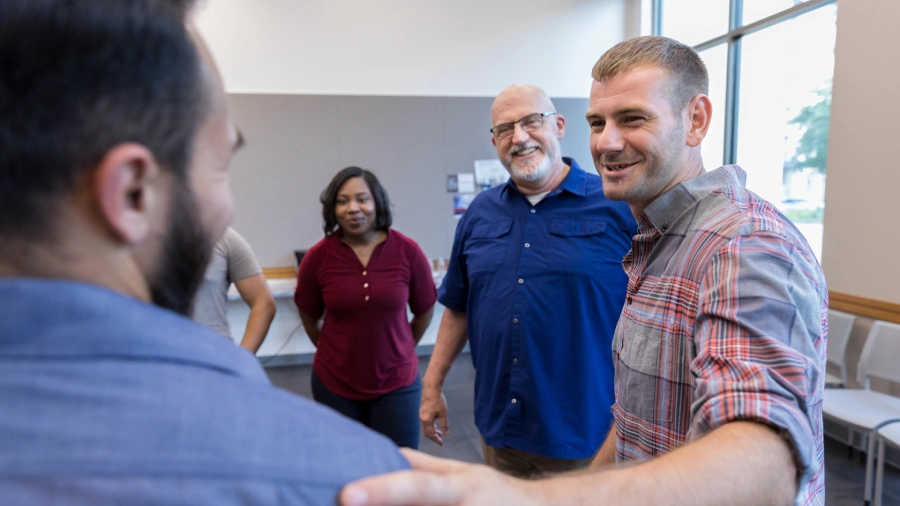
Smiling woman greeting group members in a bright meeting room

Two men embracing during a group therapy session

World-Class Treatment for Alcohol Addiction

  • Compassionate & Professional Care Our integrated treatment team truly sets us apart from many other rehab facilities. Every member of our team is highly trained and credentialed, and they were handpicked for their role based on the high level of experience and empathy they bring. Many of our team members have also personally gone through addiction themselves, providing a unique perspective that helps them connect with every single one of their clients.
  • A Place for Peaceful Healing The best way to successfully recover from addiction is to get alcohol treatment at a facility that gets you away from your triggers and truly helps you disconnect from the world. Our luxury, multi-million-dollar estates and treatment facility are located along the rolling hills of Fountain Hills, Arizona. With stunning panoramic views and luxurious amenities, our residential alcohol treatment centers put your health and recovery above all else.
  • Personalized Treatment A cookie-cutter treatment plan that everyone receives isn’t going to set you up for long-term sobriety and success. That’s why our approach to your alcohol rehab is focused on individualized treatment where our client-to-staff ratio never exceeds 3:1. When you come to our alcohol rehab center in Arizona; we use health and psychological assessment to build a unique treatment plan that targets your personal struggle with alcohol addiction and your recovery needs.
Begin Alcohol Addiction Treatment Near Scottsdale Today

Call Us to Check Availability

Questions and answers

Alcohol Addiction Treatment FAQs

How do I know if my drinking has become a problem?

Common signs include drinking more or longer than you meant to, trying to cut back without success, needing more alcohol to feel the same effects, and continuing to drink despite problems at work or at home. Shaking, sweating or trouble sleeping when alcohol wears off can point to physical dependence. You do not have to wait until alcohol has taken over your life to ask for help.

Is it safe to stop drinking on my own?

If you have been drinking heavily, stopping suddenly can bring on withdrawal symptoms, so it is important to have a medical professional evaluate you before you quit. Our admissions team will talk through your history with you. If you need acute medical detox, we help arrange it with a trusted provider first, and then you return to Fountain Hills Recovery to continue your treatment.

What does a typical day in alcohol rehab look like?

Your days follow a schedule built around your treatment plan. That usually includes individual and group therapy, evidence-based approaches such as CBT, DBT and EMDR, and holistic options like music therapy, yoga and neurofeedback. Medication management is available if you need it. Between sessions, you live in a private residential estate with a full kitchen and comfortable spaces to rest and recharge.

Can you treat my drinking and my anxiety or depression together?

Yes. Alcohol use often goes hand in hand with anxiety, depression, PTSD, bipolar disorder or unresolved trauma, and each can make the other harder to manage. Our dual diagnosis care treats both at the same time, with one clinical team and one treatment plan. Psychiatric support and therapy help you understand why you drink and build healthier ways to cope with emotional challenges.

What makes your alcohol rehab near Scottsdale different?

Fountain Hills Recovery keeps treatment small and personal. Our client-to-staff ratio never exceeds 3:1, and every plan is built from a health and psychological assessment rather than a standard template. Clients live in private estate homes away from daily triggers. Our team was handpicked for experience and empathy, and many members have been through addiction themselves. Call us at (888) 788-7033 to check availability.

Where is your alcohol rehab?

Our residential program is in a private home in north Scottsdale, at 7210 E Dale Lane. See alcohol rehab in Scottsdale for the home, levels of care and directions. Partial hospitalization and intensive outpatient are at our outpatient center in Fountain Hills.

How do I know if I need alcohol addiction treatment?

If alcohol is affecting your health, relationships, work, or daily responsibilities—or you’ve been unable to stop drinking despite trying—it may be time to seek professional treatment. A comprehensive assessment can help determine the most appropriate level of care.

Is alcohol withdrawal dangerous?

It can be. While some people experience mild withdrawal symptoms, others may develop severe complications such as seizures or delirium tremens (DTs). Because alcohol withdrawal can become life-threatening, medical supervision is often recommended.

How long does alcohol addiction treatment last?

Treatment varies based on each person’s needs. Some individuals benefit from residential treatment followed by outpatient care, while others may require longer-term support. Your clinical team will recommend a treatment plan based on your history, symptoms, and recovery goals.

What therapies are used to treat alcohol addiction?

Treatment often includes evidence-based therapies such as Cognitive Behavioral Therapy (CBT), EMDR, Motivational Interviewing, individual counseling, group therapy, family therapy, and holistic wellness services that support long-term recovery.

Can alcohol addiction occur alongside mental health disorders?

Yes. Many individuals living with alcohol addiction also experience anxiety, depression, PTSD, bipolar disorder, or trauma-related conditions. Treating both conditions together through dual diagnosis care often leads to better long-term outcomes.

Does insurance cover alcohol addiction treatment?

Many insurance plans provide coverage for alcohol addiction treatment. Our admissions team can verify your benefits, explain your coverage, and help you understand your treatment options before you begin care.

What happens after residential treatment?

Recovery continues after residential care. Depending on your needs, your aftercare plan may include outpatient treatment, ongoing therapy, relapse prevention planning, support groups, family involvement, and community resources to help maintain long-term sobriety.

Why choose Fountain Hills Recovery?

Fountain Hills Recovery combines evidence-based addiction treatment, experienced clinicians, luxury accommodations, holistic therapies, and individualized treatment planning to provide comprehensive care for adults seeking lasting recovery from alcohol addiction.

Can Medications Help Treat Alcohol Addiction?

Certain medications may be used as part of an alcohol addiction treatment plan to help reduce cravings, support abstinence, or manage withdrawal symptoms. A qualified healthcare professional can determine whether medication is appropriate based on a person’s health history, symptoms, and recovery needs.

How Can Family Members Support Someone Recovering From Alcohol Addiction?

Family members can support recovery by encouraging healthy routines, setting appropriate boundaries, learning about alcohol addiction, and offering consistent emotional support. Family involvement may also be incorporated into treatment when appropriate to help improve communication and strengthen the recovery process.

What Can Help Prevent Relapse After Alcohol Addiction Treatment?

Relapse prevention may include continuing therapy, attending support groups, identifying triggers, developing healthy coping strategies, and maintaining a strong support network. Ongoing recovery planning can help individuals recognize challenges early and stay connected to the resources that support long-term sobriety.

Admissions open 24/7

Start Your Recovery Today

One confidential call connects you with our admissions team. We will listen, check your insurance, and help you find the right level of care for mental health, addiction, or both.

Call 24/7 +1 (888) 788-7033
Call to check availability+1 (888) 788-7033