

Some families count down to the holidays with joy. Others count down with dread.
If you’re a parent of a young adult in crisis, the glitter and music and pressure to “be merry” can feel like a cruel joke. Maybe your child is spiraling—mentally, emotionally, or through substance use—and no one around you really knows how bad it’s gotten. Maybe you’re doing everything you can just to keep them safe.
You’re not alone in this. And you’re not doing it wrong. When mental health and substance use collide, what your child likely needs isn’t just another therapist… or just another detox. They may need something more integrated. Something built for this kind of crisis.
That’s where Dual Diagnosis Treatment comes in.
What Does “Dual Diagnosis” Actually Mean?
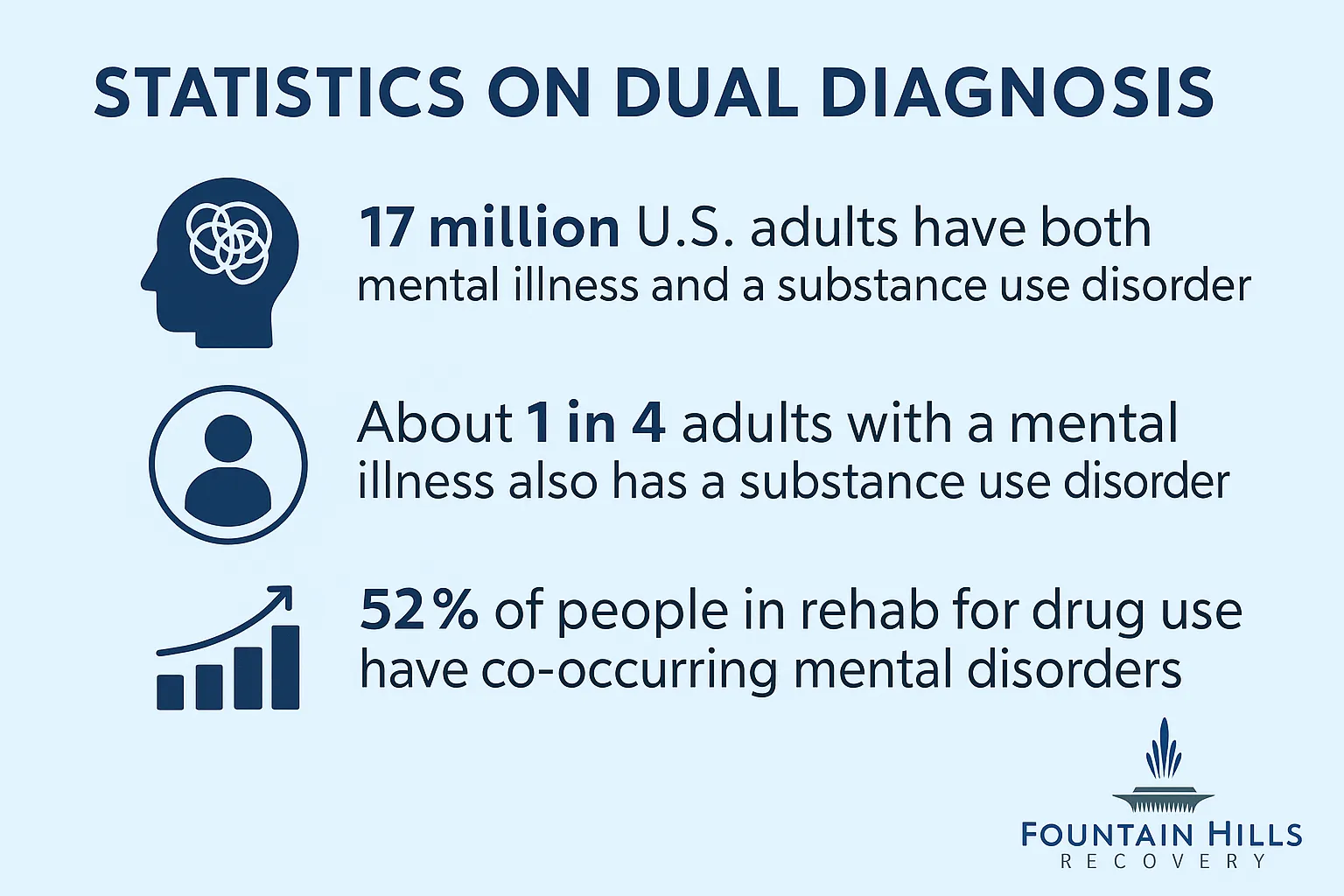
Dual diagnosis refers to a person experiencing both a mental health disorder and a substance use disorder—at the same time. These challenges often fuel each other in a loop that’s hard to break:
- A young adult with anxiety starts using alcohol or weed to calm their nerves.
- A teen who’s depressed starts experimenting with pills to feel anything at all.
- Someone with undiagnosed trauma finds relief in substances—until it backfires.
The truth is, many people with substance use issues are also struggling with untreated or misunderstood mental health conditions. And many who seek mental health help are using substances to manage symptoms they haven’t put words to yet.
Dual diagnosis treatment doesn’t separate these issues into boxes. It treats them as what they are—interwoven. This means your child doesn’t have to fake stability in therapy or downplay mental health in addiction treatment. They can be treated as a whole person.
Why the Holidays Can Be a Flashpoint for Crisis
The holiday season puts pressure on everything—family roles, expectations, emotional triggers, and unspoken grief. It’s no surprise that for many families, this is the time when things come to a head.
If your child is acting out more than usual, isolating, disappearing, or exploding—please know it’s not “just the holidays.” It’s not a phase. It might be a flashing red light that something deeper needs attention.
Sometimes the hardest part of being a parent in crisis isn’t the chaos. It’s the gaslighting you do to yourself: Maybe I’m overreacting. Maybe they just need space.
But your gut isn’t broken. And if your child is drowning in a mix of depression, psychosis, anxiety, or addiction—what they need isn’t space. It’s support that sees the full picture.
Signs Your Child Might Need Dual Diagnosis Treatment
You don’t have to wait for a full breakdown to seek help. If your young adult is showing a combination of these signs, it’s worth exploring dual diagnosis care:
- Extreme emotional swings—beyond typical moodiness or stress
- Withdrawal from family during a time they used to love
- Substance use becoming more frequent or secretive
- Paranoia, confusion, or behaviors that feel unrecognizable
- Apathy toward responsibilities or relationships they used to care about
- Bouncing between therapists, medications, or detox programs without real change
- A deep sense that “something is really wrong”—even if you can’t name it
It’s okay not to have all the answers. That’s what assessments and care teams are for.
How Dual Diagnosis Treatment Helps Young Adults Stabilize
At Fountain Hills Recovery, our dual diagnosis program is built to hold complexity—not avoid it.
That means we can support young adults dealing with:
- Co-occurring diagnoses like bipolar disorder and addiction, or trauma and alcohol use
- Psychosis or dissociation that gets dismissed as “drug-induced”
- Multiple failed attempts at one-size-fits-all therapy or short-term treatment
- Emotional volatility that masks deeper suffering
Our team includes licensed therapists, psychiatrists, case managers, and recovery specialists who work together—not in silos. We focus on:
- Stabilization: Getting symptoms under control with the right psychiatric care
- Trauma-informed therapy: Helping your child process without re-traumatizing
- Skill-building: So they can manage life beyond treatment
- Family inclusion: So you aren’t shut out of their healing
What Parents Say After Choosing Dual Diagnosis Treatment
“We finally felt like someone understood the whole picture.”
“I didn’t have to explain everything again—they just got it.”
“They didn’t see my son as broken. They saw him as overwhelmed. That changed everything.”
Parents often arrive at our doors exhausted, ashamed, and terrified. We meet them with clarity, warmth, and a plan. We believe no parent should feel alone in this kind of storm.
A Safe Setting for a Complicated Time
Fountain Hills Recovery, located in the serene foothills of Arizona, offers more than just clinical treatment. Our space is designed to calm the nervous system and help clients reconnect with themselves.
The pace here is steady but gentle. We combine structure with compassion. That’s important for young adults who have felt shamed, shuffled through programs, or stuck in systems that never seemed to help.
We’re not here to “fix” your child. We’re here to help them heal—at a pace that honors their readiness and respects their pain.
Want a closer look? Explore our Dual Diagnosis Treatment in Fountain Hills, AZ.
What If My Child Refuses Help?
It’s one of the most heartbreaking dynamics we see—parents who are ready, and kids who aren’t.
Here’s what we want you to know:
- Resistance doesn’t mean hopelessness.
- Denial often comes from fear—not defiance.
- Crisis can open a door that conversation alone never could.
Sometimes it’s a safety concern. Sometimes it’s quiet desperation behind the “I’m fine.” Our team can help you assess the situation, offer next steps, and even assist with interventions or crisis planning.
You don’t have to hold this alone.
FAQ: Understanding Dual Diagnosis Treatment
What if my child has never been diagnosed with a mental illness?
That’s okay. Our intake process includes comprehensive psychiatric and psychological assessments. Many clients begin care without a formal diagnosis—and finally get answers that make sense.
Is dual diagnosis treatment just for “severe” cases?
Not necessarily. It’s designed for complex cases—where mental health and substance use overlap. Whether your child is high-functioning or deeply in crisis, this level of care can provide clarity, structure, and support.
Can I be involved in their treatment?
Yes. Family therapy is a core part of our approach. We believe healing happens faster when families are included—not excluded.
What if they’ve already tried therapy or rehab?
That doesn’t mean treatment failed—it might mean the treatment wasn’t the right fit. Dual diagnosis care often helps clients who didn’t connect with previous providers because the full picture was never addressed.
Is this a locked facility?
No. Our program is structured and supportive, but not locked. We aim to foster intrinsic motivation—not fear-based compliance. We also work with families to determine safety protocols as needed.
One Last Thing (For You, Not Them)
You are not a bad parent. You didn’t cause this. And you’re not crazy for feeling scared, tired, or unsure.
There is help that can hold this kind of pain. There are providers who won’t just label your child or blame your parenting.
If your gut says something deeper is going on, we want to listen. And we want to help you find the version of support that finally fits.
Call (800) 715-2004 or visit Fountain Hills Recovery’s Dual Diagnosis Treatment page to learn more about how we support young adults and families facing behavioral health crises in Fountain Hills, AZ.