


I was the reliable one.
The one people called when things got hard. The one who hit deadlines, showed up polished, kept the calendar full and the fridge stocked.
From the outside, I was winning.
But at night — when the house went quiet — I felt like I was slowly losing myself.
If you’re here because you’ve searched “intensive outpatient program” in a private browser window while still keeping your life together in public, I see you.
And I want to talk to you like someone who’s been there.
If you’re wondering whether an intensive outpatient program could actually fit into your life — not derail it — keep reading.
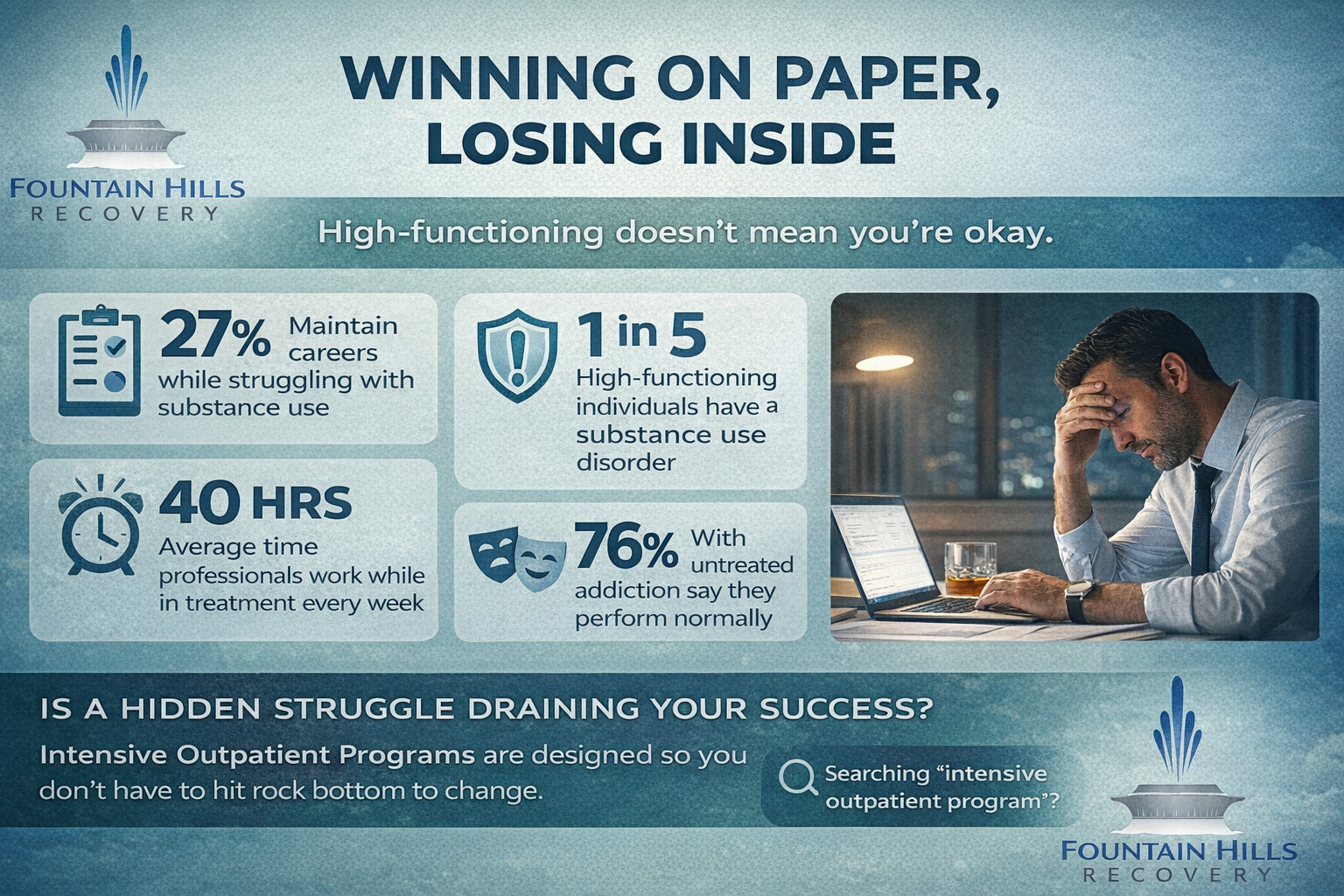
High-Functioning Doesn’t Mean You’re Okay
I never missed work.
I didn’t have legal trouble.
I paid my bills on time.
I exercised.
I networked.
I looked stable.
But I couldn’t unwind without drinking. I couldn’t handle stress without something to take the edge off. My “reward” system became survival.
And the most dangerous part? No one questioned me.
High-functioning addiction hides behind achievement.
It whispers:
“You’re fine. Look at your life.”
“Real addicts don’t have what you have.”
“Just manage it better.”
But managing it was exhausting.
I was constantly calculating:
How much did I drink?
Did anyone notice?
Can I do this again tomorrow?
I wasn’t falling apart publicly.
I was unraveling privately.
The Moment I Realized I Was Tired of Performing
There wasn’t a dramatic rock bottom.
No DUI.
No intervention.
No public meltdown.
Just a quiet moment in my kitchen where I realized I felt like a fraud in my own life.
I wasn’t drinking because I was celebrating anymore.
I was drinking because I didn’t know how to feel normal without it.
That’s the part high-functioning people don’t talk about.
You don’t look chaotic.
You look accomplished.
But inside, everything feels fragile.
What an Intensive Outpatient Program Actually Is (And Isn’t)
I thought an intensive outpatient program meant rehab-light. Or that it was for people who had already “failed.”
It’s not.
An intensive outpatient program (IOP) is structured treatment several days a week — therapy, group work, accountability — while you continue living at home and often continue working.
It’s intensive enough to create change.
Flexible enough to fit real life.
For someone like me — someone who couldn’t disappear for 30 days — it was the first option that felt possible instead of catastrophic.
What It Gave Me:
- Consistent therapy multiple times per week
- Honest conversations with people who also looked “fine” on paper
- Tools for stress that didn’t involve alcohol
- Structure without total disruption
I didn’t need to burn my life down.
I needed support strong enough to hold me up.
The Hidden Cost of Keeping It Together
High-functioning addiction is expensive.
Not just financially. Emotionally.
It costs:
- Sleep
- Authentic connection
- Mental clarity
- Self-respect
You become the CEO of damage control.
Always alert.
Always performing.
Always “almost” overwhelmed.
The pressure builds slowly.
You don’t notice how much you’re carrying until someone asks you to put it down.
The Ego Hit No One Warns You About
Walking into an intensive outpatient program felt like admitting defeat.
I had degrees.
I had leadership roles.
I was the responsible one.
But here’s what I learned:
Intelligence doesn’t immunize you.
Success doesn’t protect you.
Discipline doesn’t cure dependency.
Addiction doesn’t care about your résumé.
And honestly? Letting go of the performance was the most relieving thing I’d done in years.
Why an Intensive Outpatient Program Works for High Performers
If you’re like I was, you need structure — not chaos.
An intensive outpatient program provides:
- Scheduled accountability
- Evidence-based therapy
- Peer connection without stigma
- Continued integration with real life
You don’t press pause on everything.
You learn how to live differently inside the same life.
That mattered to me.
Because I didn’t want to escape my life. I wanted to stop escaping inside it.
If you’re local and wondering whether this kind of structured support exists without uprooting everything, there are real treatment options in Scottsdale Addiction Rehab and Mental Health that meet you where you are — professionally and personally.
You Don’t Have to Crash to Qualify
This is important.
You do not need:
- A public breakdown
- A hospital stay
- A destroyed career
- An ultimatum
You just need to be honest.
If you feel like you’re winning on paper and losing inside — that’s enough.
If alcohol (or anything else) has quietly become your primary coping strategy — that’s enough.
If you’re exhausted from maintaining the image — that’s enough.
There are options for care in Fountain Hills Drug recovery settings designed for people who still look successful — but know something isn’t right.
Getting help before the crash isn’t weakness.
It’s leverage.
FAQ: Intensive Outpatient Program for High-Functioning Professionals
What is an intensive outpatient program exactly?
An intensive outpatient program (IOP) is a structured treatment program that typically meets several days per week for a few hours at a time. It includes group therapy, individual counseling, and skills-based work focused on substance use and mental health.
You live at home and often continue working.
It’s more structured than weekly therapy but less disruptive than residential treatment.
Can I keep working while in an intensive outpatient program?
In many cases, yes. IOP schedules are often designed around work hours — mornings, afternoons, or evenings. Many professionals continue working full-time while participating.
It’s demanding, but it’s manageable — especially compared to the emotional toll of continuing untreated.
Is an intensive outpatient program only for “severe” addiction?
No. IOP is appropriate for people at many stages — including high-functioning individuals who haven’t experienced catastrophic consequences.
You don’t have to prove how bad it is. If your use is affecting your mental health, relationships, or sense of control, that’s enough.
What if I’m not sure I’m “an addict”?
You don’t have to adopt a label on day one.
Many people enter treatment because they know something feels off — not because they’ve embraced a specific identity.
Treatment is about clarity and support, not forcing definitions.
Will people at work find out?
Treatment programs are confidential. Your participation is protected under privacy laws.
Many people choose not to disclose unless they want to. Some take medical leave if needed, but many continue working without formal disclosure.
What happens if I try an intensive outpatient program and it’s not enough?
That’s okay. IOP can be a starting point. If more support is needed, your care team will guide you toward appropriate next steps.
Getting help is not a one-shot test you either pass or fail. It’s a process.
Is IOP covered by insurance?
Many insurance plans cover intensive outpatient programs, though coverage varies. A treatment center can verify your benefits and explain your options clearly.
You don’t have to navigate that alone.
If you’ve been carrying this quietly — functioning, achieving, smiling — but inside you feel worn down and dependent, you don’t have to wait for things to implode.
Call (800) 715-2004 or visit to learn more about our intensive outpatient program services in Scottsdale, AZ.