


There’s a quiet that hits differently in early sobriety.
It’s not just the absence of alcohol—it’s the space where noise used to live. The rituals, the distractions, the parties, the numbing. Suddenly there’s stillness. Maybe even silence. And in that space, it’s easy to wonder:
Is this all sobriety is? Empty nights and awkward mornings?
If you’re feeling raw, lonely, or like you gave up something huge and now don’t know what to do with yourself—this blog is for you.
At Fountain Hills Recovery’s Alcohol Rehab Center, we walk with people through the most fragile days of early sobriety. Not just the cravings. Not just the physical healing. But the emotional ache that no one talks about.
Let’s talk about what treatment actually offers—especially when you’re feeling hollow, unsure, or overwhelmed by the weight of your own quiet life.
Will an Alcohol Rehab Center Help Me Feel Less Alone?
Yes—and not just because you’re around other people.
Loneliness in early recovery is complicated. Sometimes you’re surrounded by people but still feel miles away. Sometimes you’re isolated by choice—because friends feel unsafe, parties feel risky, and small talk feels fake.
Inside an alcohol rehab center, connection is intentional. We don’t expect you to instantly trust people or share your whole story. But we do create spaces where real connection is possible:
- Group therapy with people who aren’t perfect—but are honest
- Shared meals, routines, and check-ins that slowly build trust
- Therapists who listen like humans, not note-takers
- A community that doesn’t expect you to be okay all the time
You don’t have to perform connection. You just have to show up. We’ll help you with the rest.
What If I Don’t Recognize Myself Anymore?
That’s actually a sign you’re sober—not lost.
In addiction, many people build identities around drinking: the funny one, the life of the party, the person who “can handle it.” Take away the alcohol, and suddenly you’re face-to-face with feelings, fears, and memories you’ve been outrunning.
This isn’t you losing yourself. It’s you meeting yourself—maybe for the first time.
Treatment helps with that by:
- Offering therapy that explores your values, strengths, and grief
- Supporting you in naming and releasing shame
- Reconnecting you with the parts of yourself alcohol muted or magnified
- Helping you rebuild an identity based on who you are—not what you drank
You’re not broken. You’re early. And early can be disorienting. That doesn’t mean you’re on the wrong path.
What Happens When I Feel Loneliest In Treatment?
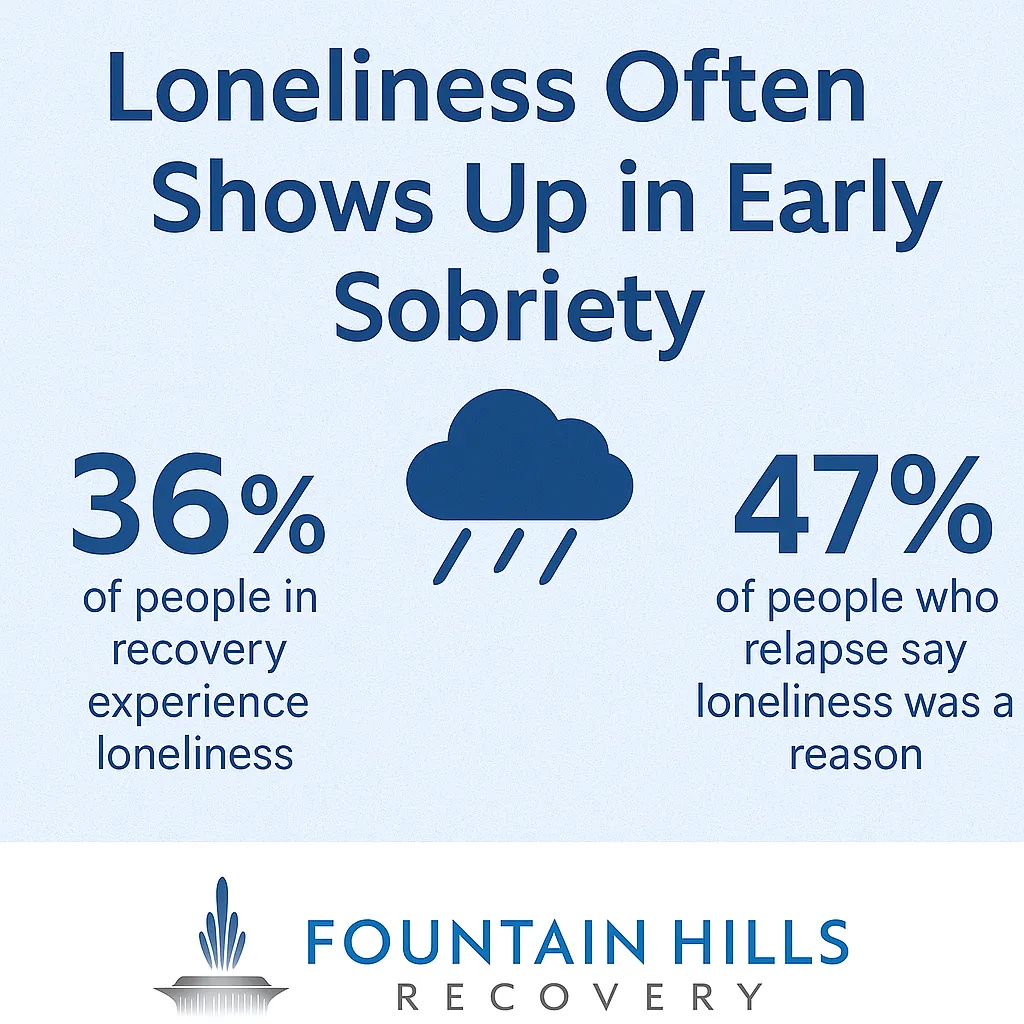
Let’s say it plainly: loneliness doesn’t disappear the second you walk into rehab. In fact, it might sharpen at first.
Because suddenly you’re sober and aware. You’re surrounded by people, but none of them are “your people” yet. You might feel like everyone else is doing better, adjusting faster, smiling more.
But loneliness doesn’t mean you’re failing. It means you’re feeling. And that’s new. That’s good. That’s growth.
At Fountain Hills Recovery, we train our team to spot isolation patterns—especially in clients who are quiet, guarded, or slow to engage. We support you gently:
- Encouraging group participation without forcing it
- Offering one-on-one sessions to process discomfort
- Helping you find moments of connection in low-pressure ways
- Reassuring you that early recovery is awkward for everyone at first
Loneliness isn’t permanent. It’s just part of the un-numbing process.
Will I Ever Feel Normal Again Without Drinking?
Yes. But not in the way you might think.
You might never go back to what felt “normal” during drinking—because that normal often wasn’t sustainable. But you will find new rhythms. New rituals. New joy.
In treatment, you’ll explore:
- How to celebrate without alcohol
- What stress management looks like without escape
- Ways to socialize that don’t leave you drained or fake
- How to create a life that doesn’t need numbing
Eventually, you’ll feel more like yourself—not the version of you that could chug five beers—but the version that wakes up rested and looks people in the eye.
What About the Friends I Used to Drink With?
Letting go is painful. So is staying in situations that don’t support your healing.
In early sobriety, there’s often grief around:
- Losing “fun” friendships
- Realizing some friends were more like drinking buddies than soul friends
- Being the one who changed—and watching others not
We don’t sugarcoat that. But we also don’t let you stay stuck there.
Inside rehab, we help you process relationship changes and prepare for:
- Setting boundaries with friends who still drink
- Having real conversations (if safe and appropriate)
- Building new friendships through alumni support and sober communities
- Developing a sense of belonging that isn’t tied to the past
Some friendships may shift or fall away. Others might evolve. Either way, you’ll have tools—and people who walk through it with you.
What If I’m Not Sure I Want to Stay Sober Forever?
That’s okay. You don’t have to promise forever. You just have to show up today.
In fact, being honest about ambivalence is way healthier than faking confidence. Our approach isn’t about scaring you straight or forcing you into a binary. It’s about helping you:
- Explore your relationship with alcohol
- Understand what drinking cost you—and what it gave you
- Find alternatives that don’t feel like deprivation
- Reconnect with your own reasons—not someone else’s
Treatment isn’t a contract. It’s a container—for exploration, support, and decision-making rooted in reality.
Can I Get Support After Treatment Ends?
Yes. And you should.
One of the biggest mistakes in recovery is thinking you’re “good now” just because rehab is over. The structure goes away, the group chats slow down, and suddenly you’re back to late nights and old patterns—alone again.
That’s why Fountain Hills Recovery builds aftercare into your plan from the beginning:
- Alumni programming that doesn’t feel like homework
- Therapy referrals in your area (or virtual)
- Peer connections that last beyond discharge
- Community support in Fountain Hills, AZ that’s built to be ongoing
Loneliness doesn’t wait for a relapse to creep in. That’s why we stay connected—especially in the quiet.
Is This Feeling Really Normal?
Yes. And you are not alone.
If you’re sitting in bed at 11 p.m. feeling restless and weird and kind of like a ghost version of yourself—you are not alone.
If you’re celebrating a sober milestone and feel more sad than proud—you are not alone.
If you’re tired of hearing “it gets better” but still holding on anyway—you are not alone.
Loneliness in early sobriety is not a sign that something’s wrong. It’s a sign that everything is adjusting. Your brain. Your habits. Your relationships. Your rhythms.
You are not doing this wrong. You’re just doing something real—for the first time in a long time.
Ready to turn the silence into something stronger?
Call (800) 715-2004 or visit our Alcohol Rehab Center in Fountain Hills, AZ, Scottsdale to learn how we support newly sober clients through the quietest, most tender parts of recovery—with structure, support, and people who actually understand.