


“I feel like the only sober person in the room.”
If that thought’s ever crossed your mind—at a party, in a group chat, or scrolling through stories—you’re not imagining it. It’s not that nobody else is sober. It’s just that nobody talks about it.
Being young and sober can feel like showing up to a concert with noise-canceling headphones. You’re still there. Still yourself. But slightly out of sync with what everyone else seems to be doing. That disconnect can make you second-guess whether recovery is worth it—especially if alcohol felt like a confidence boost, a creativity kickstart, or just a way to not feel so awkward in your own skin.
But here’s what most people don’t tell you: alcohol addiction treatment isn’t about changing who you are. It’s about giving you more access to who you actually are—without the haze, the hangovers, or the “wait, what did I say last night?” panic.
Here’s how alcohol addiction treatment helps you feel more like yourself—and less like a person trying to be okay by pretending.
1. You Learn to Back Yourself—Even When You’re Anxious
Most people think confidence is about always feeling sure of yourself. But in recovery, you learn it’s about having your own back even when you’re not. Whether you’re sitting in a group therapy session or telling a friend “I’m not drinking tonight,” treatment helps you build micro-moments of self-trust. Those small choices—over time—become a quiet confidence that doesn’t need a buzz to show up.
2. You Get to Untangle What’s Actually Social Anxiety
For a lot of young people, alcohol becomes a default way to deal with social discomfort. If you’ve ever had to pregame just to feel okay at a party, you’re not alone. But that anxiety doesn’t disappear when you stop drinking. Treatment helps you identify the real roots—whether it’s self-doubt, perfectionism, trauma, or simply the stress of not knowing how to be seen without a filter. When you name the real stuff, you can actually start healing it.
3. You Keep Your Personality—You Just Lose the Self-Sabotage
Sobriety doesn’t require a full personality transplant. You’re still funny, creative, sarcastic, introverted, extroverted—whatever made you you. What treatment helps you shift is the stuff that’s dragging your mental health into the mud: blackouts, regrets, impulsivity, the sense that you can’t trust your own choices. The real you isn’t what shows up drunk at 2 a.m. The real you is what’s left when the chaos is quiet.
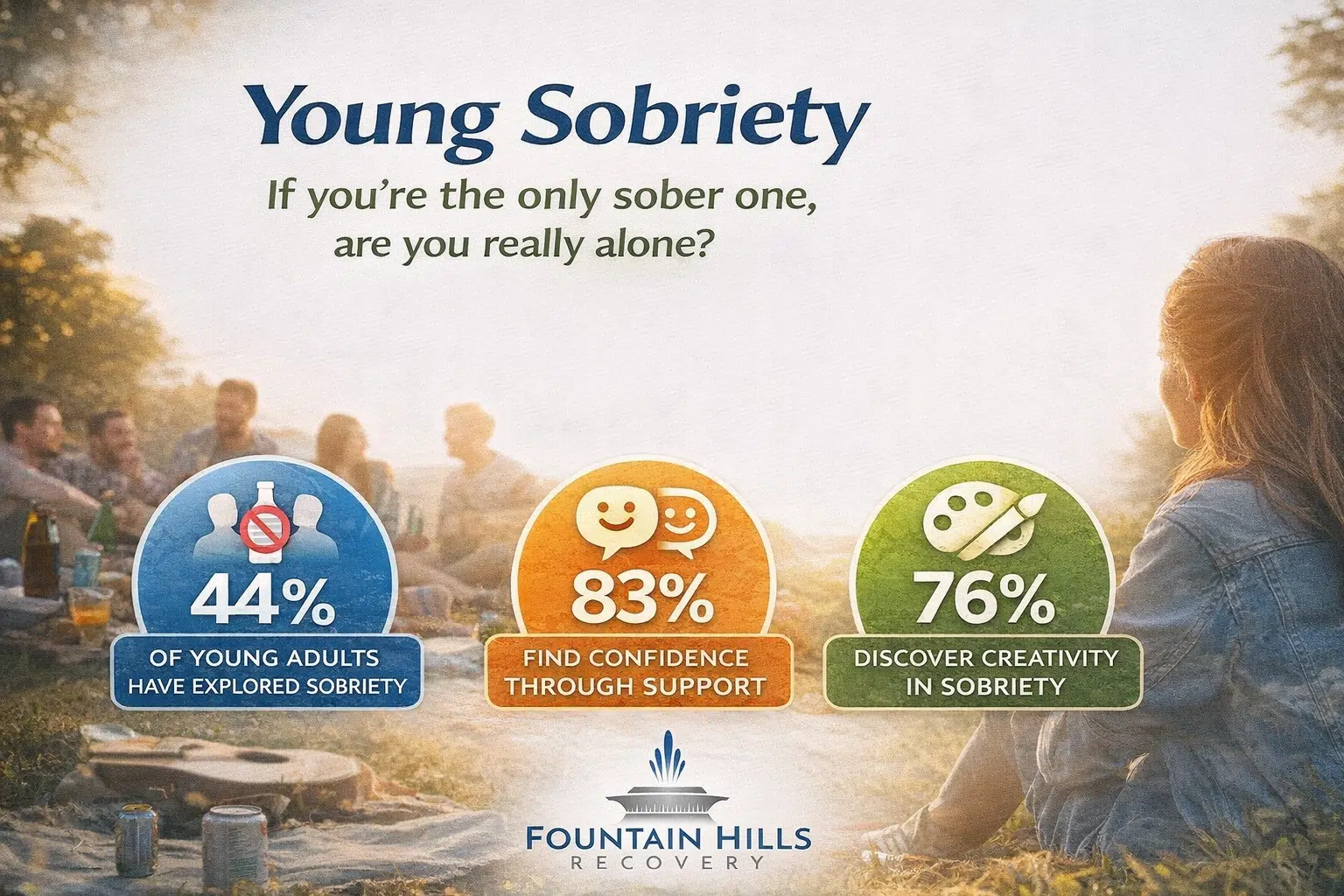
4. You Start Owning Your Story (Instead of Avoiding It)
Most people in early sobriety carry stories they’re afraid to say out loud—nights that ended badly, words they can’t unsend, or memories they wish they could erase. In treatment, you learn how to say the truth without it taking you out. There’s something incredibly powerful about being able to tell your own story without shame—and having someone else nod like, “Yeah, me too.”
5. You Rebuild Real Self-Worth
Alcohol can feel like a shortcut to confidence—until it isn’t. You’re funny until you’re too loud. Relaxed until you’re reckless. The highs are quick, and the crash comes quietly. Treatment helps you build a kind of self-worth that doesn’t need a substance to spark it. Through honest conversations, healthy boundaries, and hard work, you start to believe in yourself again. And that belief doesn’t vanish when the bottle’s gone.
6. You Learn How to Handle Feelings Without Numbing Out
Let’s be real: sobriety means feeling stuff. Not just the deep, emotional revelations—but the weird, awkward, restless energy that hits on a Tuesday afternoon for no reason. Treatment doesn’t promise to make that go away. What it offers is tools—ways to name, manage, and ride through discomfort without needing to drink it away. And once you realize you can survive your own emotions? You get a whole new level of confidence.
7. You Find Friends Who Like You—Sober You
Here’s a secret most people in treatment eventually learn: there’s a whole group of young people out there doing life sober. You just don’t see them because they’re not usually the loudest in the room. In treatment, you meet others who get it—people who understand what it’s like to be the only one with a soda at brunch or the one who actually remembers what happened at the afterparty. These friendships aren’t surface-level. They’re real. And they remind you that you don’t have to pretend to belong.
Looking for community support or treatment options in Fountain Hills? Check out our Arizona location options for young adults ready to explore sobriety on their own terms.
8. You Get Your Creativity Back
If alcohol felt like your creative unlock, you’re not wrong. It can lower inhibitions and silence self-judgment—temporarily. But it also steals your follow-through. It scrambles your focus. It erodes the very self-belief that creativity needs to thrive. In treatment, you learn how to write, make, express, or perform without depending on the buzz to feel worthy. And when your creativity flows from clarity instead of chaos? That’s real power.
9. You Stop Feeling Like a Fraud
Pretending to be fine is exhausting. And when your nights are filled with drinking but your mornings are filled with shame and self-loathing, the disconnect gets harder to live with. Treatment gives you space to stop fronting—to name what’s not working, to ask for help, to be honest about what hurts. And the more honest you get, the less you feel like a fraud. You’re not pretending to be okay anymore. You are okay—or on your way there.
You Don’t Have to Disappear to Get Better
Young sobriety is real. And it’s messy. And yes—it can feel lonely at first. But it’s also a chance to rebuild your life without the parts that keep breaking it.
At Fountain Hills Recovery, we believe you don’t need to change who you are to recover. Our alcohol addiction treatment services are designed to help you uncover your confidence, creativity, and sense of self—without losing the spark that makes you unique.
Whether you’re local or exploring help in Scottsdale Addiction Rehab and Mental Health, our programs are built with young adults in mind—people navigating sobriety in a world that acts like everyone’s still drinking.
Frequently Asked Questions
Is alcohol addiction treatment only for people who hit “rock bottom”?
No. Treatment is for anyone who feels like their relationship with alcohol is getting in the way of their life—even if you’re still functioning. You don’t have to crash your car or lose your job to ask for help.
Will treatment make me boring or take away my personality?
Absolutely not. In fact, many people find that they become more themselves in recovery. You get to feel clearer, more creative, and more connected without relying on alcohol to get there.
I’m in my early 20s and none of my friends are sober. Will I feel out of place?
It’s normal to feel different at first, but you are not alone. Our programs often include people your age who understand exactly what you’re going through. Community makes a big difference.
Do I have to be 100% sure I want to quit forever?
Nope. Many people come into treatment unsure or ambivalent. You don’t have to have it all figured out. We’ll meet you where you are and help you explore what’s right for you—no pressure.
Can I still hang out with my friends who drink?
That’s up to you—and it’s something we explore in treatment. Boundaries, social settings, and friendship dynamics are all part of recovery. You’ll learn how to navigate them in ways that feel right for you.
Want to feel like yourself again—without the alcohol?
Call (800) 715-2004 to learn more about our alcohol addiction treatment services in Arizona.