

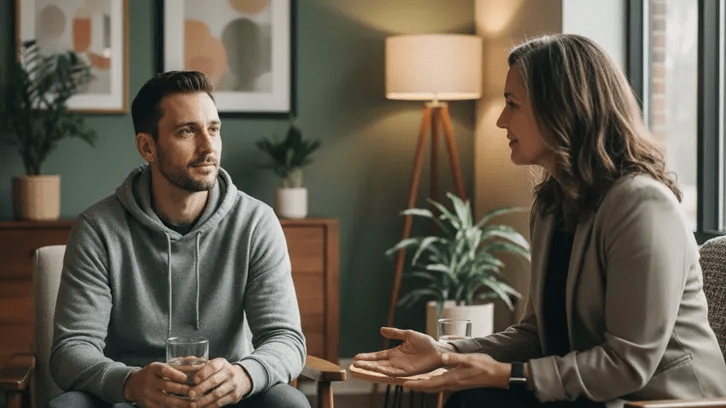




You’ve watched your child change.
They used to laugh easily. They had plans. Even their chaos had energy. Now everything feels flat. Heavy. Uncertain.
And maybe they’re using again.
As a clinician, I’ve sat with many parents in this exact moment. The mix of fear, anger, heartbreak, and exhaustion is real. You want to help. You’ve tried to help. And still, it feels like you’re watching something unravel.
Let’s talk clearly about what can happen when depression goes untreated in young adults—and what is still possible.
If you’re unsure where to begin, understanding what comprehensive, compassionate Depression Treatment actually looks like can be a grounding first step.
Depression Doesn’t Freeze in Place — It Progresses
At 20 years old, your child is still neurologically developing. The prefrontal cortex—the part responsible for impulse control, planning, and long-term thinking—is not fully mature.
Untreated depression during this stage doesn’t just create sadness. It can quietly reshape:
- Motivation
- Risk assessment
- Self-worth
- Decision-making
- Emotional regulation
What begins as low energy or withdrawal can slowly harden into hopelessness.
And hopelessness is dangerous because it convinces a young person that nothing will change—so why try?
Depression untreated over months or years often becomes more entrenched. The brain adapts to that darker emotional baseline. The longer it sits, the harder it feels to imagine anything different.
But harder is not the same as impossible.
Self-Medication Is Often a Symptom, Not the Root
If your 20-year-old is using again, it may look like rebellion or irresponsibility.
Clinically, it often looks like relief-seeking.
Alcohol, marijuana, stimulants, or other substances can temporarily:
- Numb intrusive thoughts
- Boost low energy
- Reduce social anxiety
- Interrupt emotional pain
For a young adult drowning in depression, that relief can feel life-saving in the moment.
But substances amplify depression over time. They disrupt sleep cycles. They affect neurotransmitters. They increase impulsivity. They deepen shame.
So what began as “helping them cope” becomes a feedback loop:
Depression → Use → Consequences → Shame → More Depression → More Use.
When mental health and substance use collide, untreated depression tends to worsen faster and more dramatically.
That doesn’t mean your child is broken. It means their pain hasn’t been addressed at its source.
Functional Decline Can Happen Quickly
Depression at 20 can derail key developmental milestones.
You may see:
- Dropping or failing out of college
- Losing jobs
- Pulling away from long-term friends
- Sleeping all day and up all night
- Abandoning goals they once cared about
Parents often describe this stage as watching their child “disappear.”
What’s happening internally is often this:
“I already messed up. I’m behind everyone else. I can’t catch up.”
Depression distorts identity. It tells young adults that one setback defines them permanently.
The longer it goes untreated, the more those distorted beliefs settle in.
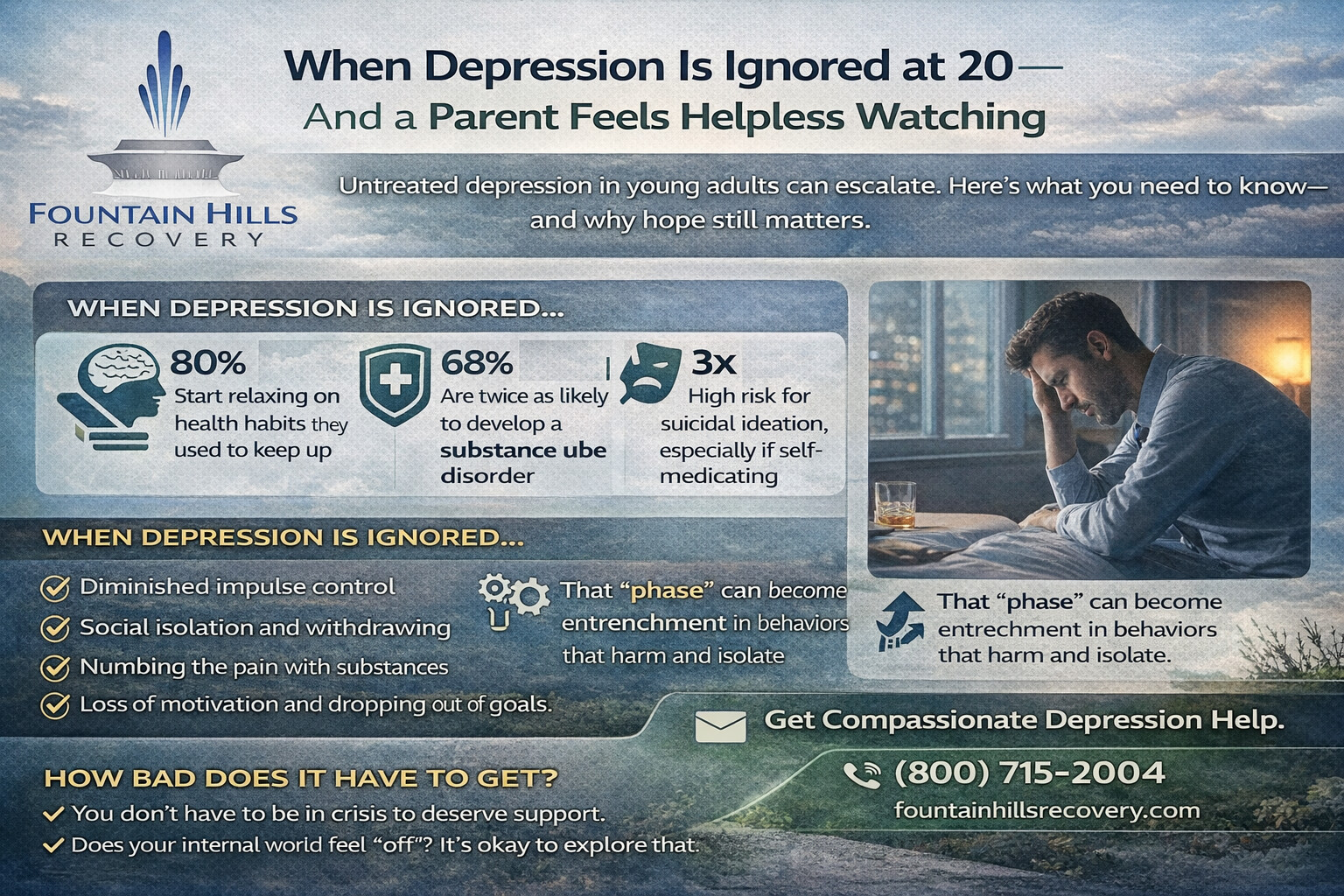
Increased Risk of Suicidal Thinking
This is the part no parent wants to hear—but needs to.
Untreated depression significantly increases risk for suicidal ideation.
It doesn’t always look dramatic.
Sometimes it looks like:
- Reckless behavior
- Apathy about consequences
- Statements like “It doesn’t matter”
- Giving away belongings
- Emotional numbness
When substances are involved, risk increases further because impulse control drops.
If your child seems detached, hopeless, or unusually risk-taking, it’s appropriate to take that seriously.
Concern is not overreaction. It is protection.
The Emotional Toll on You
Parents often carry silent guilt.
“I should’ve forced therapy earlier.”
“I shouldn’t have let them move back home.”
“I was too strict.”
“I wasn’t strict enough.”
Depression is not caused by loving parents.
It is influenced by complex interactions between genetics, brain chemistry, stress exposure, trauma, social pressure, and developmental timing.
Your love did not create this.
But your love can be part of stabilizing it.
And even if your child pushes you away, the consistency of your presence matters more than you realize.
Why Early Intervention Matters — Even If It Feels Late
You might think, “It’s already been years.”
From a clinical standpoint, 20 is still early.
The brain remains highly adaptable. Neural pathways can shift. Coping skills can be built. Identity can be reshaped.
With structured support—whether that’s multi-day weekly care, structured daytime programming, psychiatric support, or integrated mental health services—young adults can stabilize significantly.
When depression is actively treated:
- Substance use often decreases
- Motivation gradually returns
- Sleep patterns improve
- Decision-making strengthens
- Hope reappears
I’ve seen young adults who were failing out of school return and graduate.
I’ve seen parents who were certain they were losing their child rebuild connection.
Recovery doesn’t happen overnight. But it happens.
If you’re in Arizona, exploring options for care in Fountain Hills Drug can help you access support without uprooting your entire family system.
Local access reduces barriers. And when families are exhausted, fewer barriers matter.
What Happens If Nothing Changes?
This is the quiet question underneath everything.
If depression remains untreated long-term, risks increase:
- Chronic substance dependency
- Repeated hospitalizations
- Legal or financial consequences
- Entrenched negative identity
- Escalating suicidal risk
But here’s what I want you to hear clearly:
Untreated depression predicts worsening.
Treated depression predicts improvement.
The trajectory is not fixed. It’s responsive.
And it’s responsive to intervention.
FAQ for Parents Watching a Young Adult Struggle
How do I know if this is “just a phase” or something serious?
Mood swings alone can be developmental. But persistent symptoms lasting more than two weeks—especially when paired with withdrawal, hopelessness, substance use, or functional decline—warrant professional evaluation.
If daily life is deteriorating, it’s more than a phase.
What if my child refuses help?
This is common at 20.
Focus first on relationship safety. Keep communication open. Express concern without ultimatums when possible. You can say:
“I’m not here to control you. I’m here because I love you and I’m worried.”
Sometimes family consultations or parent support sessions can help you learn how to shift the dynamic in ways that increase the likelihood of engagement.
Should we address the depression or the substance use first?
In many cases, both need attention simultaneously.
If depression is driving substance use, treating only the substance use often leads to relapse. Integrated care models address both at the same time because they are often intertwined.
Is medication always necessary?
Not always—but sometimes it’s appropriate.
A psychiatric evaluation can determine whether medication may reduce symptom severity enough for your child to engage more effectively in therapy and behavioral support.
Medication isn’t a shortcut. It can be a stabilizer.
Can untreated depression cause permanent damage?
The longer depression persists, the more it can affect identity and behavior patterns. But the brain remains adaptable.
Even after years of struggle, meaningful recovery is possible with the right intervention.
Permanent damage is far less common than parents fear.
How do I take care of myself during this?
This part matters.
Parenting a struggling young adult is emotionally exhausting. Seek your own support—therapy, parent groups, trusted friends. Boundaries are not abandonment. They are sustainability.
You are allowed to protect your own nervous system too.
A Final Word to You
If you’re reading this, you are not a neglectful parent.
You are a worried one.
And worry, when paired with action, becomes advocacy.
Depression left untreated can narrow a young adult’s world. But treatment—real, structured, compassionate support—can widen it again.
Call (800) 715-2004 or visit our Depression Treatment services to learn more about our Depression Treatment services in Scottsdale, AZ.