
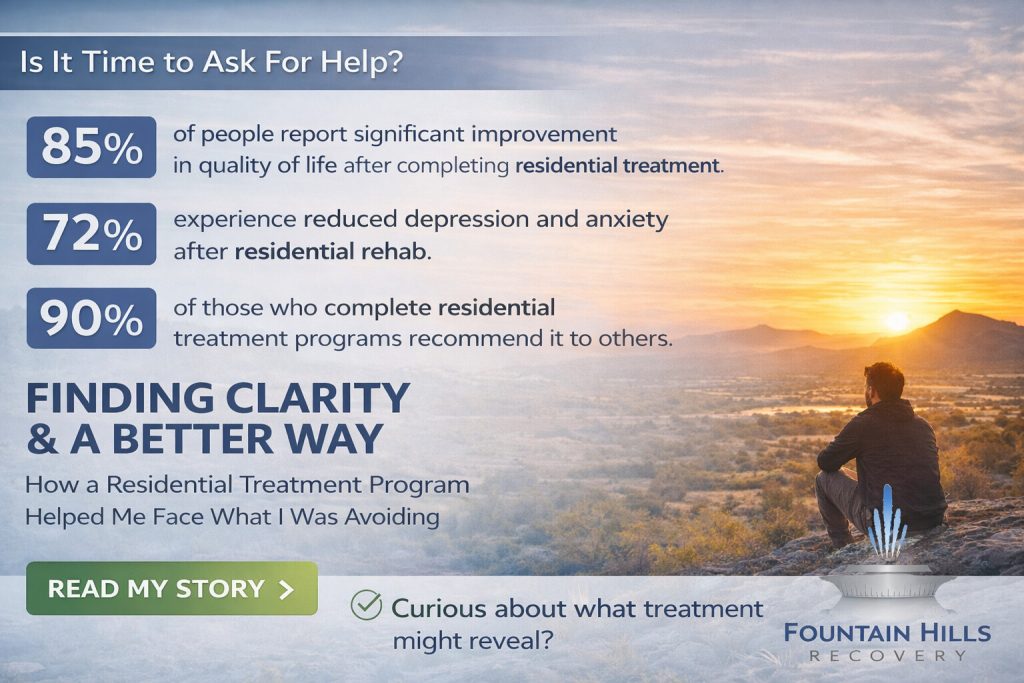
It didn’t take a crisis for me to ask, “Is this really working?”
That question came on quietly—after a wedding weekend hangover that felt more emotional than physical, a few too many nights spent half-watching shows with a glass in hand, and the slow realization that my life looked full but felt flat.
I wasn’t spiraling. I wasn’t “an addict.” I was just tired of feeling… dull. Disconnected. Numb, even when things were “fine.”
That’s what brought me to a residential treatment program. Not a breakdown—just a quiet nudge that I couldn’t ignore anymore.
I thought I was going in for clarity. What I found was so much more.
1. The Stillness Was Uncomfortable—and Exactly What I Needed
For the first few days in treatment, the silence was deafening. No notifications. No to-do list. No alcohol. No hiding behind “I’m just busy.”
Without all my usual noise, I had to sit with myself. And that was hard.
But it was also revealing.
In that space, I started to realize how often I’d been running—not from disaster, but from discomfort. From boredom. From anxiety. From feelings I hadn’t had time or tools to process.
It turns out, stillness is where the truth shows up.
2. Functioning Isn’t the Same as Flourishing
I used to wear “high-functioning” like a badge of honor. I paid my bills. Met deadlines. Showed up to brunches. So how could anything be wrong?
In treatment, nobody cared about my job title or my social calendar. They cared about how I felt.
That’s when it hit me: I’d built a life that looked fine but didn’t feel good. And the biggest thing I was avoiding? Admitting that “fine” wasn’t enough for me.
3. I Mistook Avoidance for Strength
I always thought I was strong for not needing help. Independent. Self-aware. “I’ve got this” was my mantra.
But that mantra was covering up a fear of being vulnerable. Of letting anyone see the mess behind the mask.
What I learned in residential treatment is this: Avoidance isn’t strength—it’s self-protection. And when you’re ready, letting someone in isn’t weakness. It’s wisdom.
Programs like the one at Fountain Hills Recovery didn’t try to fix me. They simply created a space where I could stop fixing and start feeling.
4. I Started Naming What I Used to Numb
No one forced labels on me. No one told me I had to call myself anything. What they did do was ask thoughtful questions:
- “What do you feel right before you pour a drink?”
- “What part of you are you trying to quiet?”
- “What would you do if you weren’t afraid of feeling too much?”
And when I answered those questions, I realized I wasn’t just numbing for fun—I was numbing sadness. Pressure. Shame I didn’t even know I was carrying.
The patterns weren’t random. They were survival strategies. And once I saw them clearly, I could start choosing differently.
5. People Didn’t Try to Diagnose Me—They Just Saw Me
One of my biggest fears going in? That someone would look at me and say, “You don’t belong here.”
Instead, I was met with warmth. With curiosity. With people—staff and peers—who didn’t ask me to prove anything.
No one made me perform my pain. I didn’t have to hit a “bottom” to be worthy of care.
That’s the beauty of a thoughtful residential treatment program. It doesn’t wait for you to break. It meets you where you are—and walks with you toward something better.
6. I Saw What Sobriety Could Give Me—Not Just What It Took Away
I used to worry that getting sober would make me boring. Would I lose my social life? My edge? My ability to relax?
But what I found was this: I didn’t lose my spark—I found my center.
In the absence of substances, I didn’t feel bland. I felt present. Awake. Creative again. My joy didn’t disappear. It just stopped needing a drink to show up.
7. I Realized Wanting Help Doesn’t Mean You’re Broken
Maybe the most healing truth of all? I wasn’t broken. I was just brave enough to want more.
More peace. More clarity. More real connection.
I didn’t need to hit a crisis point to deserve care. I just had to be willing to say, “What if I don’t want to feel this way anymore?”
If you’re asking that question, you’re not alone—and you’re not too early. You’re right on time.
Need Help Deciding If It’s Time?
Whether you’re local or exploring your options, real support in Scottsdale or care in Fountain Hills is available. You don’t need a diagnosis to ask for clarity. You don’t need a label to start healing.
Curiosity is enough. And change is possible.
Frequently Asked Questions About Residential Treatment Programs
What is a residential treatment program?
A residential treatment program is a structured, live-in environment where individuals receive 24/7 care for substance use, mental health, or both. It offers therapy, group work, wellness support, and time away from daily distractions to focus on healing.
Do I have to identify as an addict to go?
No. Many people in treatment are exploring their relationship with substances, mental health patterns, or emotional stress—not necessarily addiction. A good program welcomes you without labels or pressure.
How long do residential programs last?
Typical stays range from 30 to 90 days, depending on your needs and goals. At Fountain Hills Recovery, treatment plans are tailored to your pace and progress.
Will I have privacy and comfort?
Yes. Luxury inpatient programs like those at Fountain Hills prioritize both healing and dignity—offering upscale amenities, private rooms, and a peaceful setting designed to support reflection and recovery.
Is it worth it if I’m just feeling “off” but not in crisis?
Absolutely. Many people enter treatment not because things are falling apart, but because they don’t want to wait for that. Feeling disconnected, burned out, or emotionally numb are valid reasons to seek help.
📞 You Don’t Have to Be at Rock Bottom to Want a Better Life
Call (800) 715-2004 or visit to learn more about our residential treatment program services in Scottsdale, AZ.