

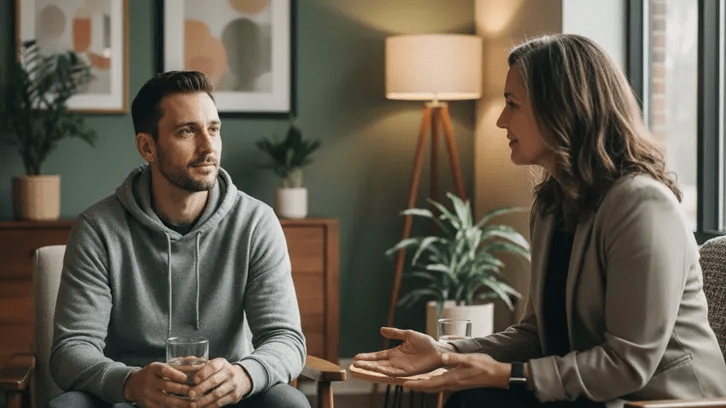




I didn’t think I needed treatment because, on paper, nothing was broken.
My email inbox was a mess, sure—but my reputation wasn’t. I was still showing up, still earning, still smiling through client calls and school pickups and Sunday brunch like a damn pro. I wasn’t spiraling. I was spinning—fast and high-functioning.
So when someone gently suggested I look into an intensive outpatient program, my knee-jerk reaction was: Seriously? I don’t have time for group therapy three nights a week. I’m holding down a life.
But here’s the truth I couldn’t admit then:
The life I was holding together was slowly holding me hostage.
And that program I resisted? It didn’t ruin my rhythm. It helped me remember it.
High-Functioning Isn’t Freedom
There’s a strange kind of trap that lives in the term “high-functioning.”
People see the job title, the deadlines met, the smiles in public—and they assume you’re okay. But function without feeling isn’t thriving. It’s surviving on autopilot.
I was the parent who never missed a recital, the team member who hit every deliverable, the friend who always texted back. But inside? I was exhausted. Empty. And quietly scared I was one bad week away from unraveling everything.
No one intervenes when you’re high-functioning.
So if you’re the one hiding it—you’re also the only one who can call it out.
IOP Didn’t Blow Up My Schedule—It Gave It Meaning
I assumed I’d have to choose between healing and maintaining my life. But the intensive outpatient program at Fountain Hills Recovery wasn’t designed to take everything away. It was designed to give me something back—presence.
Three days a week. A few hours a night. And slowly, I stopped filling my evenings with rituals of numbing—scrolling, drinking, zoning out. I started showing up for myself. For my actual life.
IOP didn’t ask me to quit my job, abandon my kids, or turn my world upside down. It just asked me to stop abandoning myself.
IOP Wasn’t a Breakdown—It Was a Pattern Interrupt
I didn’t go into treatment because I hit rock bottom. I went because I couldn’t remember what it felt like to look forward to anything.
I wasn’t panicked—I was just… gray. And that was scary in its own way.
Treatment didn’t magically bring joy back. But it interrupted the deadening. It stopped the daily rhythm that told me, “Just push through. Everyone’s tired. You’re fine.”
Instead, I started asking new questions:
- Why am I actually drinking?
- What am I scared of if I slow down?
- What am I avoiding under the banner of productivity?
It wasn’t about getting answers right away. It was about finally being brave enough to ask them.
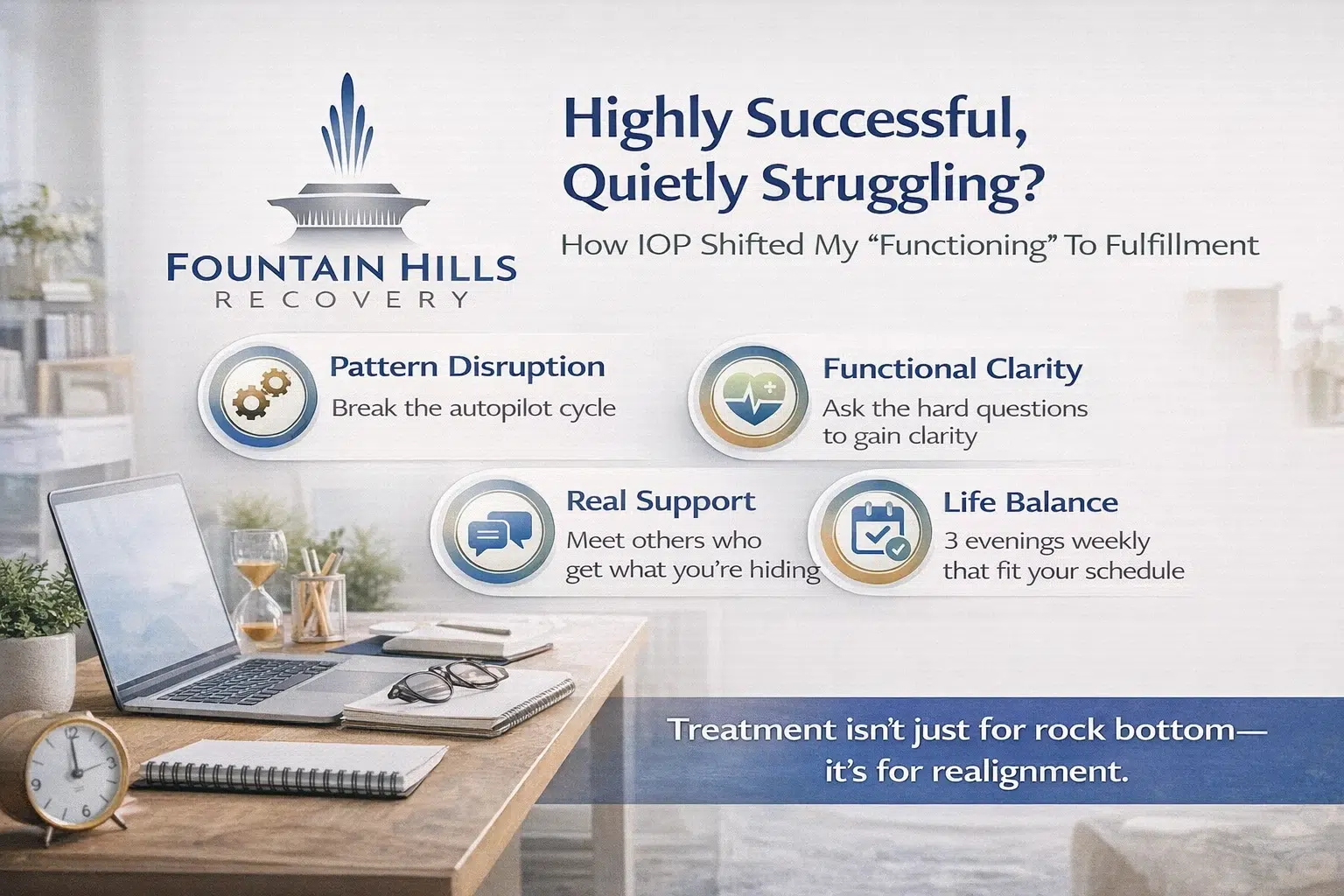
The Loneliness I Didn’t Know I Had
One of the weirdest gifts of IOP was realizing I wasn’t the only one faking fine.
I met people who ran companies, taught school, raised kids. People who also walked into their closets with a drink in hand and a pit in their stomach. People who were charming and burnt out. Smart and scared. Functional and falling apart behind closed doors.
That room didn’t feel like defeat. It felt like relief.
I wasn’t alone. And more than that, I wasn’t strange for needing help before everything exploded. If you’re in Scottsdale or nearby and you’re holding it together on the outside while unraveling inside, there’s care in Scottsdale Addiction Rehab and Mental Health that gets it.
Sobriety Wasn’t the Goal—Clarity Was
Not everyone in IOP was sober when they started. Not everyone chose abstinence long-term. But we all shared one thing: we wanted to stop living in fog.
My relationship with alcohol wasn’t about quantity—it was about function. I used it to smooth the edges, hide the exhaustion, avoid the silence. Treatment helped me see how much I was using substances to stay performative, not present.
And once I saw it, I couldn’t unsee it.
IOP didn’t demand I label myself. It invited me to observe myself. And that shift—from judgment to curiosity—changed everything.
I Still Had My Life. I Just Started Living It Differently.
I didn’t lose my job. I didn’t lose my home. I didn’t even lose most of my routines.
But I did lose some things:
- The urge to constantly prove I was okay
- The nightly shame spiral that I masked with jokes
- The belief that I had to suffer in silence because I was still “functioning”
I gained things, too:
- Sleep
- Honesty
- A nervous system that didn’t feel like it was humming with static all the time
- Conversations that didn’t end with “I’m just tired” as a cover for “I’m unraveling”
I started showing up differently—to work, to my family, to my own damn reflection.
If you’re feeling that whisper that something’s off, there are treatment options in Fountain Hills that are built for people exactly like you—people who don’t need to lose everything to want more.
FAQ: The Questions I Was Too Polished to Ask (But Did Anyway)
What if I’m too “put together” for treatment?
You’re not. Looking “put together” is often the mask for internal collapse. If your insides don’t match the outside image, that gap deserves attention.
What does a typical IOP schedule look like?
It varies, but many programs run 3–5 days a week, 3–4 hours per session. Fountain Hills Recovery offered flexible options that fit my full-time life.
Will people in IOP be like me?
Yes—and no. I met people from all walks of life. But what united us was real: pain beneath performance, and a deep hunger to feel something true again.
What if I don’t want to stop completely?
That’s okay. Many IOP programs focus on harm reduction and clarity. You don’t need to commit to forever to get started.
Can I keep living at home during IOP?
Absolutely. That’s what makes it powerful. You integrate the work into your real life—not in isolation, but in context.
Will I have to explain this to my job or family?
Only if you want to. IOP is often structured around evenings or partial days, so many people maintain their normal commitments. Privacy is respected.
Here’s the Line That Finally Broke Me (In a Good Way)
Someone in group said,
“You don’t have to be in crisis to want more than survival.”
I wrote that down and underlined it twice.
Because I wasn’t in crisis. I was “fine.” High-functioning. Accomplished. Exhausted.
And I wanted more.
Not more success. Not more performance. Just more peace. More clarity. More mornings that didn’t begin with self-doubt and end with a drink disguised as “just unwinding.”
I got that in IOP—not because it was easy, but because it was honest. And I haven’t forgotten how that honesty felt in my body: like exhaling after holding my breath for years.
Call (800) 715-2004 to learn more about our intensive outpatient program in Scottsdale, Arizona.