





There’s a specific kind of panic that can hit the morning after drinking. Your heart races before your feet even touch the floor. Your hands shake. Your thoughts spiral. You replay conversations from the night before, convinced something terrible happened — even if nothing did.
As a clinician, I’ve watched people mistake this feeling for “just anxiety” for years. Sometimes it is anxiety. But sometimes it’s your nervous system sounding an alarm.
And for many people, this is one of the earliest signs that alcohol is affecting the body more deeply than they realized.
If you’ve been searching for answers, it may help to understand how alcohol addiction treatment can support both the physical and emotional side of what’s happening.
Your Brain May Be Rebounding Harder Than You Think
Alcohol slows the nervous system down. That’s part of why people initially feel calmer, looser, or less overwhelmed after drinking.
But the brain likes balance.
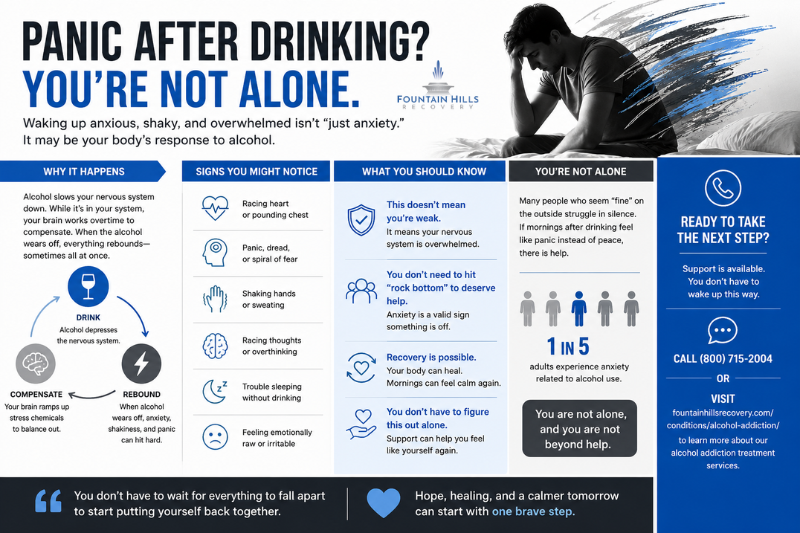
So while alcohol is suppressing activity, your body is quietly trying to compensate in the background — increasing stress chemicals, alertness, and stimulation to keep you functioning. By morning, especially after heavy or repeated drinking, that rebound effect can hit all at once.
That’s why people often wake up with:
- Racing thoughts
- Sweating or shakiness
- Panic attacks
- A pounding heart
- Intense dread
- Sudden emotional sensitivity
For some people, these experiences overlap with early alcohol withdrawal symptoms, even if they don’t think of themselves as physically dependent.
And that realization can feel scary.
Panic After Drinking Doesn’t Always Mean “Rock Bottom”
One of the biggest misconceptions I hear is: “If I were really struggling, I’d know.”
But alcohol problems rarely arrive all at once. They usually creep in quietly.
The parent who drinks wine every night after everyone goes to bed.
The young adult who only binges on weekends but can’t handle the emotional crash afterward.
The professional who seems completely functional but secretly dreads mornings.
I’ve worked with people who still had jobs, families, routines, and social lives — yet every morning after drinking felt emotionally catastrophic.
That doesn’t make them weak. It makes them human.
Sometimes the body notices the strain before the mind fully catches up.
The Nervous System Remembers More Than We Think
One thing families often notice before their loved one does is the emotional volatility.
A person drinks to relax, but the next morning they’re irritable, terrified, withdrawn, or emotionally flooded. Parents especially describe feeling confused by how quickly the mood shifts happen.
What’s difficult is that shame tends to amplify the cycle.
People wake up panicked, promise themselves they’ll stop, feel physically awful all day, then drink again later to calm the discomfort they created in the first place. It becomes less about partying and more about relief.
Like trying to put out a fire with gasoline.
Some People Experience Anxiety Long Before They Experience “Consequences”
This part matters.
You do not need to lose everything for alcohol to be hurting you.
A lot of people wait for dramatic evidence before they allow themselves to ask for help. But clinically, we often see emotional symptoms appear first:
Signs the body may be struggling with alcohol more than you realize
- Panic or dread after drinking
- Needing alcohol to “feel normal” socially
- Shaking hands in the morning
- Trouble sleeping without drinking
- Increased anxiety between drinking episodes
- Drinking earlier in the day than before
- Feeling emotionally fragile after nights out
For some, these patterns develop slowly enough that they become normalized.
Until one morning feels different. Louder. Harder to ignore.
Recovery Often Starts With Relief, Not Perfection
One of the most surprising things clients tell me after getting help is this:
“I forgot what calm felt like.”
Not euphoric. Not perfect. Just calm.
The nervous system can heal. Sleep can stabilize. Mornings can stop feeling like emotional emergencies.
And recovery doesn’t have to begin with certainty. It often begins with exhaustion. With honesty. With someone quietly admitting, “I can’t keep feeling like this.”
For families trying to support a loved one, that matters too. You do not have to solve everything alone before reaching out for guidance.
Some people start with outpatient support. Others need more structure for a while. The important thing is that there are options — including compassionate help in Scottsdale Addiction Rehab and Mental Health and individualized care designed to meet people where they are emotionally, not where they “should” be.
You’re Not Weak for Being Affected by Alcohol This Way
The people who struggle most silently are often the ones who’ve spent years appearing “fine.”
They’re caretakers. Students. Parents. Professionals. The friend everyone assumes is okay.
But the body keeps score eventually.
And if drinking now leads to panic, dread, or fear the next morning, that experience deserves attention — not minimization.
There is real help available, and it does not require you to hit some imaginary threshold first.
Call (800) 715-2004 or visit our alcohol addiction treatment services to learn more about treatment options and compassionate support.