Personalized care. Real recovery. A path forward that lasts.
Cocaine addiction can take hold quickly, impacting your health, relationships, and sense of control. At Fountain Hills Recovery, we provide a structured, supportive environment where individuals can safely step away from cocaine use and begin rebuilding their lives with clarity and purpose.
Whether you’re seeking help for yourself or someone you love, addiction treatment starts with one decision and the right team beside you.
What Is Cocaine Addiction?
Cocaine is a powerful stimulant that affects the central nervous system, creating intense but short-lived feelings of energy and euphoria. Over time, repeated use changes how the brain processes reward, making it increasingly difficult to feel normal without the drug.
Cocaine addiction, clinically known as cocaine use disorder is defined by:
- Continued use despite negative consequences
- Strong cravings and loss of control
- Increased tolerance and dependence
Even occasional use can escalate into a pattern that’s difficult to stop without professional support.
Signs & Symptoms of Cocaine Addiction
Recognizing the signs early can make a critical difference.
- Loss of control over cocaine use
- Neglecting work, school, or family responsibilities
- Risky decision-making
- Social withdrawal or secrecy
- Continued use despite consequences
- Increased energy or restlessness
- Anxiety, paranoia, or panic
- Decreased appetite and sleep
- Rapid heart rate or chest discomfort
- Mood swings, irritability, or depression
Short-Term & Long-Term Effects of Cocaine Use
Cocaine use affects nearly every system in the body
Short-Term Effects
- Euphoria and heightened energy
- Increased heart rate and blood pressure
- Reduced need for sleep
- Impulsivity and risk-taking behavior
Long-Term Effects
- Cardiovascular damage (heart attack, stroke risk)
- Cognitive impairment and memory issues
- Chronic anxiety, depression, or paranoia
- Increased risk of overdose
Cocaine Withdrawal & Crash
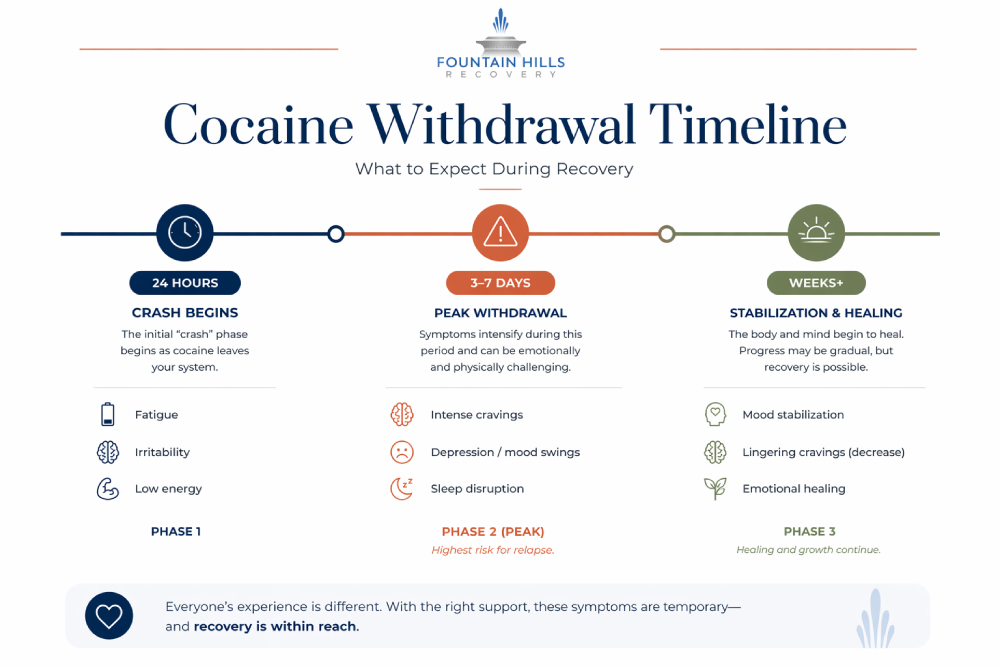
When cocaine use stops, the body and brain go through a “crash” period that can feel overwhelming.
Common withdrawal symptoms include:
- Intense cravings
- Fatigue and low energy
- Depression or emotional numbness
- Sleep disturbances
- Irritability or agitationIrritability or agitation
While not always physically dangerous, this phase is one of the highest risk periods for relapse, making professional support essential.
How Cocaine Addiction Is Treated
Effective cocaine addiction treatment addresses both the physical and psychological aspects of addiction.
At Fountain Hills Recovery, treatment is structured around your individual needs and may include:
A highly structured environment for individuals needing full-time support and stabilization.
A step-down level of care offering intensive treatment during the day with more flexibility.
Designed for individuals balancing recovery with work, school, or family responsibilities.
Ongoing support to maintain progress and prevent relapse.
Each level of care is designed to meet you where you are, and help you move forward with confidence.
Not Sure Which Program Is Right for You?
We’ll walk you through your options and help you find the right level of care.
+1 (888) 788-7033
Therapies Used in Cocaine Addiction Treatment
Treatment goes beyond stopping substance use, it focuses on understanding and changing the patterns behind it.
Evidence-Based Therapies Include:
- Cognitive Behavioral Therapy (CBT): Helps identify and change harmful thought patterns
- Motivational Interviewing (MI): Strengthens internal motivation for change
- Group Therapy: Builds connection, accountability, and support
- Trauma-Informed Therapy: Addresses underlying emotional pain
- Dual Diagnosis Care: Treats co-occurring mental health conditions
Cocaine Addiction & Mental Health
Many individuals struggling with cocaine addiction also experience mental health challenges such as:
- Anxiety
- Depression
- Trauma or PTSD
Without addressing both conditions together, long-term recovery becomes much more difficult. Our dual diagnosis approach ensures that both substance use and mental health are treated simultaneously.
What Recovery Can Look Like
Recovery is about more than quitting cocaine, it’s about rebuilding your life.
With the right support, you can experience:
- Clearer thinking and emotional stability
- Improved physical health
- Stronger relationships
- A renewed sense of purpose
Why Choose Fountain Hills Recovery?
At Fountain Hills Recovery, we combine clinical expertise with a deeply human approach to care.
- Private, supportive setting in Arizona
- Personalized treatment plans
- Experienced and compassionate clinical team
- Focus on long-term recovery, not quick fixes
- Unique therapies, including experiential and equine therapy
- A strong connection to supporting first responders
Get Help for Cocaine Addiction Today
If cocaine use is affecting your life or the life of someone you love, help is available.
You don’t have to wait for things to get worse.
Call Us to Check Availability
+1 (888) 788-7033