






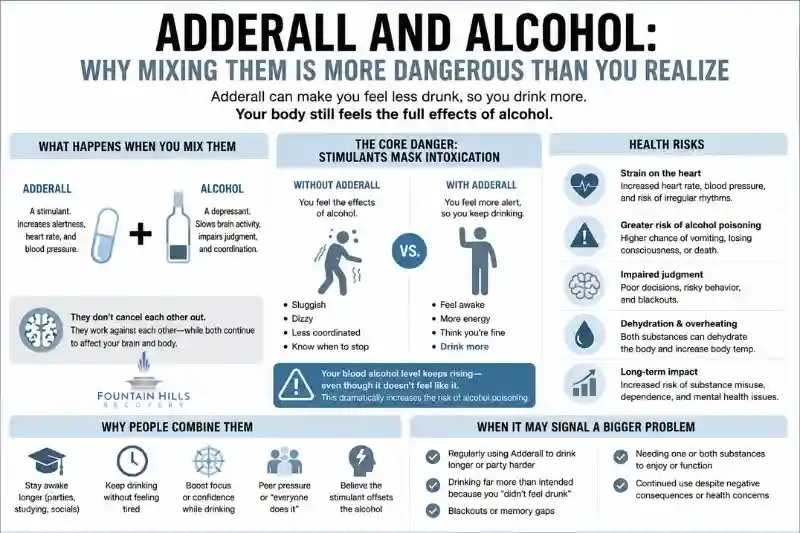
People often assume that taking Adderall and alcohol together simply means mixing a stimulant with a depressant. While that’s true, it misses the biggest reason this combination can become so dangerous.
The real problem is that Adderall can make you feel less intoxicated than you actually are. That false sense of control often leads people to drink far more alcohol than they otherwise would, increasing the risk of alcohol poisoning, dangerous behaviors, and serious strain on the heart.
Whether Adderall has been prescribed for ADHD or is being used recreationally, understanding how these substances interact is important. The fact that you don’t feel drunk doesn’t mean your body isn’t experiencing the full effects of alcohol.
What Happens When You Mix Adderall and Alcohol
Adderall is a prescription stimulant that increases activity in the brain and nervous system. Alcohol does the opposite. It slows brain activity, impairs coordination, and affects judgment.
Because these drugs push the body in different directions, some people mistakenly believe they “balance each other out.” They don’t.
Instead, both substances continue to work at the same time. Alcohol still impairs reaction time, decision-making, and motor skills. Adderall continues to increase alertness, heart rate, and blood pressure. Rather than canceling each other out, they create competing demands on the brain and cardiovascular system.
The result is often someone who feels awake and energized while their judgment, coordination, and blood alcohol level continue to worsen.
Why the Stimulant Masks How Drunk You Are
This is the most dangerous part of mixing Adderall and alcohol.
Normally, alcohol gives people warning signs that it’s time to stop drinking. Feeling tired, sluggish, dizzy, or unsteady often causes someone to slow down or head home.
Adderall can suppress many of those warning signals.
A person may feel alert enough to keep socializing, continue drinking, or believe they’re capable of driving or making good decisions. Meanwhile, their blood alcohol concentration continues to rise exactly as it would without the stimulant.
In other words, Adderall changes how intoxication feels, not how alcohol affects the body.
That disconnect can lead people to drink much more than intended because they never experience the normal cues that tell them they’ve had enough.
This is why mixing Adderall and alcohol significantly increases the risk of alcohol poisoning. Someone may consume dangerous amounts of alcohol before realizing how impaired they truly are.
It’s similar to driving a car with the dashboard warning lights disconnected. The engine is still overheating—you’ve just lost the signals telling you something is wrong.
The Health Risks: Heart Strain, Alcohol Poisoning, and Long-Term Effects
Beyond masking intoxication, combining Adderall and alcohol places significant stress on the body.
Some of the most concerning risks include:
- Increased heart rate and elevated blood pressure
- Irregular heart rhythms
- Greater risk of dehydration and overheating
- Poor judgment that can lead to accidents or injuries
- A higher likelihood of binge drinking
- Increased risk of alcohol poisoning because intoxication feels less severe
Repeatedly combining stimulants and alcohol can also reinforce risky drinking patterns. Someone may begin relying on Adderall to stay out longer, drink more, or recover from fatigue, making the combination feel normal even as the risks increase.
For people with underlying heart conditions or high blood pressure, these dangers can become even more serious.
Why People Combine Adderall and Alcohol
There are several reasons people intentionally mix these substances.
College students sometimes use Adderall to stay awake during parties or long nights out. Others believe it helps them drink more without getting tired. Some people misuse prescription stimulants because they think they’ll remain focused or productive while drinking.
People with ADHD may also find themselves mixing the two in social settings without realizing how the interaction changes their perception of intoxication.
Regardless of the reason, the underlying misconception is usually the same:
“If I don’t feel that drunk, I’m probably okay.”
Unfortunately, that’s exactly what makes the combination so risky.
When Mixing Adderall and Alcohol Signals a Bigger Problem
Not everyone who combines Adderall and alcohol has a substance use disorder.
However, it’s worth paying attention if this becomes a pattern rather than an isolated mistake.
Some warning signs include:
- Regularly using Adderall to drink longer or party harder
- Feeling unable to enjoy social situations without one or both substances
- Drinking far more than intended because you “didn’t feel drunk”
- Experiencing blackouts or memory gaps
- Continuing to mix the two despite frightening experiences or health concerns
These patterns may indicate that alcohol use, stimulant misuse, or both deserve a closer look.
If you’re beginning to notice that substance use is becoming harder to control, learning more about professional drug addiction treatment can be an important next step. If your prescribed Adderall is part of ADHD treatment, it’s also worth discussing alcohol use honestly with your healthcare provider so your treatment plan reflects how these substances interact.
Frequently Asked Questions
Is it dangerous to mix Adderall and alcohol?
Yes. One of the biggest dangers is that Adderall can make you feel less intoxicated without reducing your actual blood alcohol level. This can lead to drinking much more than intended, increasing the risk of alcohol poisoning, heart problems, accidents, and poor decision-making.
Why do people combine Adderall and alcohol?
People often combine them to stay awake longer, continue partying, reduce feelings of fatigue, or because they believe the stimulant will offset alcohol’s effects. In reality, Adderall does not make someone less drunk. It simply changes how intoxication feels.
What are the risks of mixing stimulants and alcohol?
Mixing stimulants and alcohol increases the risk of binge drinking, alcohol poisoning, cardiovascular strain, dehydration, impaired judgment, accidents, and long-term substance misuse. The combination is especially dangerous because it masks many of alcohol’s normal warning signs.