





If you’re the parent of a young adult who seems trapped in a cycle of drinking, stopping, and starting again, it’s easy to wonder where the line is between “partying too much” and something more serious.
Many parents tell me the same thing: “I thought this was a phase.” Then months or years pass, and the pattern keeps repeating.
The connection between binge drinking and alcohol addiction isn’t always obvious at first. But understanding how one can lead to the other may help you recognize what your child is facing and what options are available. If you’re already exploring alcohol addiction treatment, knowing how these patterns develop can provide clarity during an overwhelming time.
Binge Drinking Is About More Than Quantity
Binge drinking is often associated with college life, parties, and young adulthood. Because it’s common, it can be easy to dismiss.
What matters isn’t just how much someone drinks. It’s what happens when they do.
A person may go days without alcohol and then drink until they black out, become reckless, experience memory gaps, or lose control over their decisions. Over time, repeated episodes of binge drinking can begin changing how the brain responds to alcohol.
The brain learns to associate drinking with relief, reward, confidence, or escape. The more often that cycle repeats, the stronger those pathways can become.
Why Some People Seem Unable to Stop Once They Start
One of the most frightening things parents witness is watching their child promise to have “just a few drinks” and then continue drinking far beyond what they intended.
This isn’t always about willpower.
Alcohol affects areas of the brain responsible for judgment, impulse control, and decision-making. For some people, once drinking begins, the ability to regulate consumption becomes significantly impaired.
Parents often describe hearing statements like:
- “I wasn’t planning on drinking that much.”
- “I don’t know why I kept going.”
- “I’ll do better next time.”
Sometimes those statements are excuses. Other times, they’re an honest reflection of a growing loss of control.
The Shift From Habit to Dependence
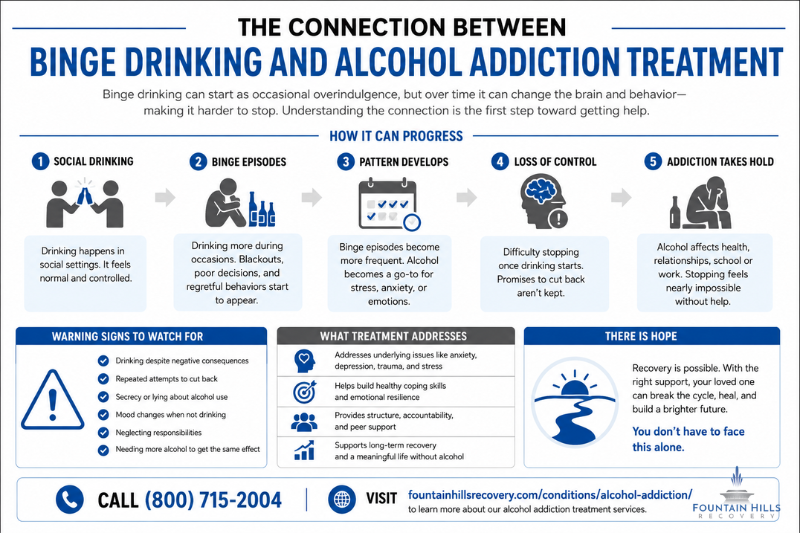
Not everyone who binge drinks develops alcohol addiction. But binge drinking is one of the strongest risk factors for developing a serious alcohol use disorder.
The progression is often gradual.
At first, alcohol may only be present at social events. Then it becomes a way to manage stress. Eventually it may become the default response to uncomfortable emotions, disappointment, anxiety, loneliness, or frustration.
Families may notice:
Signs the Pattern Is Becoming More Serious
- Drinking despite negative consequences
- Repeated attempts to cut back without success
- Increased secrecy around alcohol use
- Mood changes when alcohol isn’t available
- Neglecting responsibilities, school, or work
- Needing larger amounts of alcohol to achieve the same effect
- Continuing to drink despite family concerns
Many people searching online for can’t stop drinking help are experiencing some version of this loss of control. By the time that concern surfaces, alcohol is often affecting far more than drinking behavior alone.
What Parents Often Get Wrong About Addiction
Parents frequently blame themselves.
They wonder whether they were too strict, too lenient, too trusting, or too protective.
In my experience as a clinician, that guilt rarely reflects reality.
Addiction develops through a combination of biological, psychological, environmental, and social factors. Family dynamics can influence behavior, but parents do not cause addiction through a single mistake or parenting decision.
A helpful image is to think of addiction like a wildfire. Many conditions may contribute to its spread, but no single spark explains the entire fire.
Your love for your child is not the reason they are struggling.
In many cases, that love becomes one of the most important resources supporting recovery.
How Treatment Addresses More Than Drinking
Many parents assume treatment focuses only on stopping alcohol use.
Effective treatment goes deeper.
It helps people understand why alcohol became necessary in the first place. That may involve addressing anxiety, depression, trauma, self-esteem challenges, family stress, or other underlying concerns.
Treatment also helps people develop practical skills for handling life without relying on alcohol as their primary coping mechanism.
For some individuals, support may involve structured daytime care. Others may benefit from multi-day weekly treatment that allows them to continue working or attending school while receiving support.
The goal isn’t simply to remove alcohol. The goal is to help a person build a life that no longer requires it.
Families seeking local support may also find resources and treatment options available through help in Scottsdale Addiction Rehab and Mental Health or help in Fountain Hills Drug.
Hope Matters More Than Perfect Timing
Parents often ask me when they’ll know their child is “ready.”
The truth is that readiness isn’t always obvious.
Some people enter treatment after a crisis. Others enter because they’re exhausted from living the same cycle over and over again.
What matters is that support remains available.
Recovery doesn’t begin because someone suddenly becomes fearless. It often begins because they become willing to take one step while still scared.
That possibility exists even if your child has returned to drinking, rejected help before, or seems stuck today.
The story is not over.
If you’re watching someone you love struggle with alcohol, remember this: binge drinking is not always a harmless phase, but it also doesn’t mean hope is gone. Understanding the connection between binge drinking and addiction can help families recognize the need for support earlier and respond with compassion instead of blame.
Call (800) 715-2004 or visit our alcohol addiction treatment services to learn more about our alcohol addiction treatment services.