





There’s a moment a lot of people hit before they ever call a treatment center. It usually doesn’t look dramatic from the outside.
You’re functioning. Maybe even succeeding. But inside, everything feels heavy. Drinking has stopped feeling fun. Depression has stopped feeling temporary. And somewhere in the middle of another exhausted morning, a question shows up:
How long would I actually have to disappear from my life to get help?
If you’ve been quietly searching for answers about treatment for alcohol use and depression together, you’re not alone. And the answer is more human than most people expect.
For many people, live-in treatment with round-the-clock support isn’t about “checking into rehab forever.” It’s about getting enough space from the noise to finally stabilize.
Most People Stay Longer Than a Weekend — But Shorter Than They Fear
A lot of people imagine inpatient treatment as either a 3-day detox or a six-month disappearance.
Reality usually lands somewhere in between.
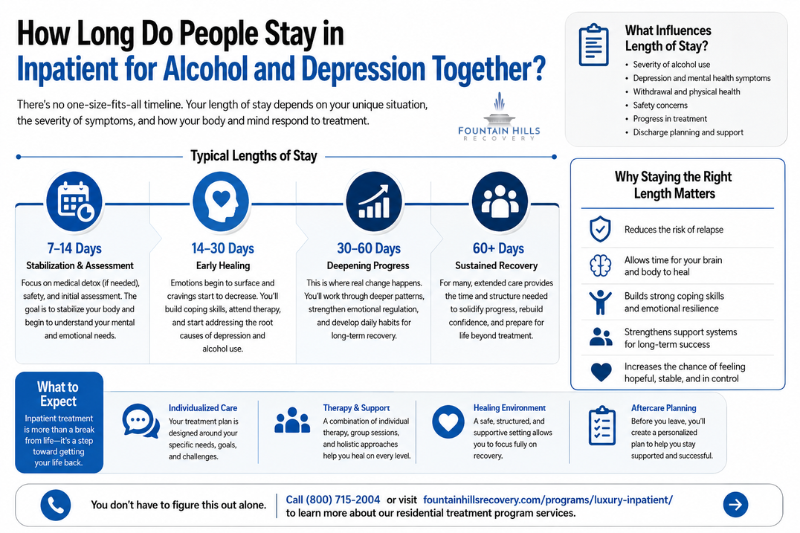
The length of stay depends on several things:
- How severe the alcohol use has become
- Whether depression symptoms are active or longstanding
- Safety concerns like suicidal thoughts, panic, or emotional instability
- Physical withdrawal symptoms
- How someone responds once alcohol is removed from the equation
Some people stay a few weeks. Others benefit from a longer stretch of care.
The important thing is this: treatment timelines are not punishments. They’re based on stabilization, emotional clarity, and whether someone is finally starting to feel like themselves again.
And honestly? A lot of people arrive convinced they need to “get fixed fast,” only to realize their nervous system has been running on fumes for years.
Alcohol and Depression Tend to Feed Each Other
This is one reason treatment can take more time than people initially expect.
Alcohol can deepen depression. Depression can increase drinking. Eventually, it becomes hard to tell which came first.
Someone may come into treatment believing they “just drink too much,” then realize they’ve also been carrying:
- Persistent hopelessness
- Emotional numbness
- Anxiety hidden underneath exhaustion
- Isolation
- Burnout that crossed into depression long ago
That doesn’t mean something is wrong with you beyond repair.
It means your brain and body may need time to recalibrate without alcohol constantly interrupting the process.
A good treatment environment doesn’t rush that.
The First Few Days Usually Feel Different Than People Expect
People often fear inpatient care will feel cold, restrictive, or humiliating.
What many actually experience is relief.
No pretending.
No hiding how bad things feel.
No waking up and immediately negotiating with yourself about drinking.
For some people, the first real sleep they’ve had in months happens during the first week.
Others finally cry after feeling emotionally flat for years.
That’s why asking “how long is inpatient rehab” sometimes misses the deeper question underneath it:
How long does it take to feel safe inside your own mind again?
There isn’t one universal answer. But healing usually starts once the pressure to perform disappears.
Depression Doesn’t Always Lift the Minute Drinking Stops
This part matters.
Some people expect that if they stop drinking, their depression will instantly disappear. Sometimes mood improves quickly. Sometimes it takes longer.
Alcohol affects sleep, brain chemistry, motivation, emotional regulation, and energy levels. Depression recovery often happens in layers.
The first layer may simply be:
- Eating consistently again
- Sleeping through the night
- Feeling less emotionally raw
- Having thoughts slow down
- Experiencing moments of calm
That may not sound dramatic. But for someone who’s been silently struggling for a long time, it can feel life-changing.
Like finally setting down a backpack you forgot you were carrying.
Leaving Too Early Is More Common Than People Think
A lot of people start treatment wanting to leave after a few days.
Not because treatment “isn’t working.”
Usually because emotions are returning.
Once alcohol is gone, people often start feeling grief, fear, anger, loneliness, or exhaustion more clearly. That can feel uncomfortable at first — especially for high-functioning people used to staying busy and emotionally contained.
This is where support matters.
Staying long enough to move through the emotional fog instead of immediately escaping it can make an enormous difference in long-term recovery and mental health stability.
Sometimes the bravest thing a person does is stay one more week after they stop wanting to.
Recovery Often Starts Quietly
Not with a dramatic breakthrough.
Not with instant happiness.
Usually, it starts with smaller moments:
- Laughing without forcing it
- Eating breakfast without nausea
- Calling family back
- Feeling present in a conversation again
- Realizing your mind feels quieter than it did two weeks ago
That’s why treatment timelines vary so much. Recovery isn’t measured by a calendar alone. It’s measured by emotional steadiness, physical safety, and whether someone is beginning to reconnect with themselves.
For people looking for compassionate support in Scottsdale Addiction Rehab and Mental Health or more personalized care options near Fountain Hills, treatment can become less about “being away” and more about finally being supported.
You do not have to wait until everything falls apart to deserve help.
Call (800) 715-2004 or visit our residential treatment program services to learn more about our residential treatment program services.