





The first month sober is often imagined as a turning point. Many people expect that once enough days pass, the cravings will fade, emotions will settle, and life will start feeling easier.
Then something unexpected happens.
Thirty days arrive. Maybe even sixty. And the same triggers still show up.
If you’ve found yourself wondering why more sober time hasn’t automatically made things easier, you’re not alone. At Fountain Hills Recovery, we’ve seen many people feel discouraged by this experience. The good news is that it doesn’t mean recovery isn’t working. It may simply mean there’s another layer of healing still happening.
For people looking for additional support after treatment, understanding this difference can be an important next step.
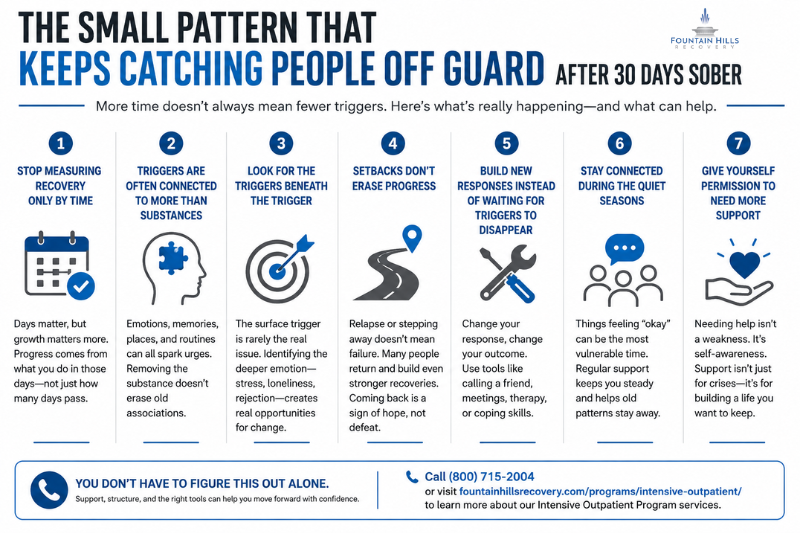
Step 1: Stop Measuring Recovery Only by Time
Time matters. Every sober day creates distance from active substance use.
But recovery isn’t just about how many days have passed. It’s also about what happens during those days.
Someone can spend 30 days avoiding alcohol or drugs while still carrying the same stress patterns, relationship conflicts, or emotional triggers that existed before treatment. Another person might spend those same 30 days actively building coping skills, attending therapy, and practicing new responses to difficult situations.
The calendar tells part of the story. Growth tells the rest.
Step 2: Understand That Triggers Are Often Connected to More Than Substances
Many people expect triggers to disappear once the substance is gone.
In reality, triggers are often connected to emotions, memories, environments, and routines.
A stressful work meeting might trigger the same urge to escape that alcohol once provided. A difficult conversation with a partner might bring back the desire to numb out. Even positive events can create unexpected cravings if celebrations were historically tied to substance use.
Removing the substance doesn’t automatically erase the associations built over months or years.
Think of it like taking a well-worn path through a field. The grass doesn’t grow back overnight simply because you stop walking there.
Step 3: Look for the Triggers Beneath the Trigger
One reason people become frustrated after early sobriety is that they’re only noticing the surface-level trigger.
For example:
- The craving may seem to start after work.
- The real trigger might be exhaustion.
- The craving may appear during weekends.
- The real trigger might be loneliness.
- The urge may show up after an argument.
- The real trigger might be feeling rejected or misunderstood.
Finding the deeper emotional trigger often creates opportunities for change that weren’t visible before.
This is one reason many people benefit from continuing support after residential care or returning to treatment if they stepped away too early.
Step 4: Remember That Setbacks Don’t Erase Progress
One of the most common fears among people who stopped attending treatment is the belief that they’ve fallen too far behind.
We hear versions of the same thought all the time:
“I already left.”
“I stopped showing up.”
“They probably don’t want me back.”
The reality is much different.
Many recovery stories include pauses, detours, missed appointments, and periods of struggling. Progress is rarely a straight line.
Some of our strongest success stories come from people who returned after weeks or months away because they realized they still wanted support. Coming back wasn’t a sign of failure. It was a sign they hadn’t given up.
Step 5: Build New Responses Instead of Waiting for Triggers to Disappear
The goal isn’t necessarily to eliminate every trigger.
The goal is to change your response to them.
A trigger that once led directly to substance use can eventually lead to:
- Calling a supportive friend
- Attending a meeting
- Going for a walk
- Talking with a therapist
- Practicing a coping skill learned in treatment
Recovery often becomes more manageable not because triggers vanish, but because your toolkit grows stronger.
Step 6: Stay Connected During the Quiet Seasons
Some people leave treatment because things start feeling better.
That makes sense.
The challenge is that recovery often becomes most vulnerable during periods that seem stable. Without regular support, old patterns can slowly reappear before they’re fully noticed.
Programs that provide structured support several days each week can help people continue strengthening recovery while managing everyday responsibilities. For many individuals, this bridge between intensive care and independent living creates valuable momentum.
People exploring options for ongoing support may also benefit from learning about available care in Scottsdale Addiction Rehab and Mental Health or reviewing other treatment options in Fountain Hills Drug recovery services.
Step 7: Give Yourself Permission to Need More Support
One of the biggest misconceptions in recovery is that needing help means something has gone wrong.
Sometimes it means the opposite.
Recognizing that triggers are still affecting you can be a sign of increased self-awareness. It means you’re paying attention. It means you’re noticing patterns before they become crises.
If you’ve been searching for relapse help after sobriety, it’s worth remembering that support isn’t reserved for emergencies. Many people reconnect with treatment before things completely unravel, and that decision often makes recovery feel far more manageable.
Recovery Doesn’t End Because You Hit a Milestone
Thirty days sober is meaningful. Sixty days is meaningful. Every milestone deserves recognition.
But recovery isn’t a countdown clock where triggers automatically disappear once enough time passes.
Healing often happens through practice, support, self-awareness, and repetition. The people who continue growing in recovery aren’t necessarily the ones with the fewest triggers. They’re often the ones who learned how to respond differently when triggers show up.
If you’ve stepped away from support, struggled after treatment, or simply feel stuck, the door may be more open than you think.
Call (800) 715-2004 or visit our Intensive Outpatient Program services to learn more about our Intensive Outpatient Program services.