
Conditions We Treat

Cocaine Addiction Treatment Near Scottsdale, AZ

Find cocaine addiction treatment in Arizona. Our personalized care helps individuals overcome dependence & support long-term recovery.

Personalized care. Real recovery. A path forward that lasts.

Cocaine addiction can take hold quickly, impacting your health, relationships, and sense of control. At Fountain Hills Recovery, we provide a structured, supportive environment where individuals can safely step away from cocaine use and begin rebuilding their lives with clarity and purpose.

Whether you’re seeking help for yourself or someone you love, addiction treatment starts with one decision and the right team beside you.

What Is Cocaine Addiction?

Cocaine is a powerful stimulant that affects the central nervous system, creating intense but short-lived feelings of energy and euphoria. Over time, repeated use changes how the brain processes reward, making it increasingly difficult to feel normal without the drug.

Cocaine addiction, clinically known as cocaine use disorder is defined by:

  • Continued use despite negative consequences
  • Strong cravings and loss of control
  • Increased tolerance and dependence

Even occasional use can escalate into a pattern that’s difficult to stop without professional support.

Signs & Symptoms of Cocaine Addiction

Recognizing the signs early can make a critical difference.

  • Loss of control over cocaine use
  • Neglecting work, school, or family responsibilities
  • Risky decision-making
  • Social withdrawal or secrecy
  • Continued use despite consequences

Short-Term & Long-Term Effects of Cocaine Use

Cocaine use affects nearly every system in the body

Short-Term Effects

  • Euphoria and heightened energy
  • Increased heart rate and blood pressure
  • Reduced need for sleep
  • Impulsivity and risk-taking behavior

Long-Term Effects

  • Cardiovascular damage (heart attack, stroke risk)
  • Cognitive impairment and memory issues
  • Chronic anxiety, depression, or paranoia
  • Increased risk of overdose

Cocaine Withdrawal & Crash

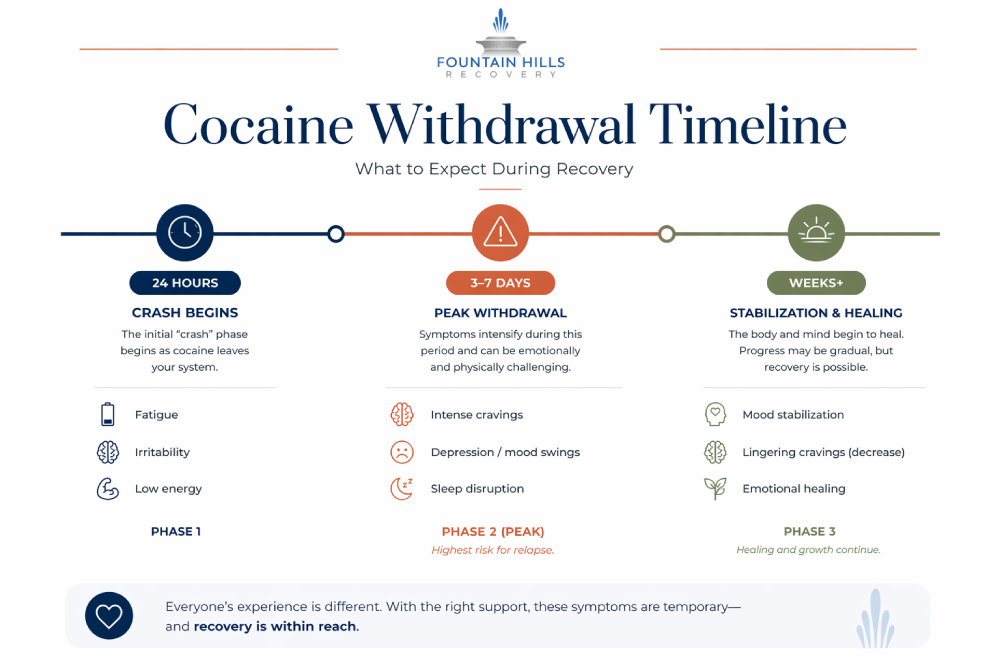
When cocaine use stops, the body and brain go through a “crash” period that can feel overwhelming.

Common withdrawal symptoms include:

  • Intense cravings
  • Fatigue and low energy
  • Depression or emotional numbness
  • Sleep disturbances
  • Irritability or agitation

While not always physically dangerous, this phase is one of the highest risk periods for relapse, making professional support essential.

Cocaine withdrawal timeline: crash, peak withdrawal, and stabilization and healing

How Cocaine Addiction Is Treated

Effective cocaine addiction treatment addresses both the physical and psychological aspects of addiction.

At Fountain Hills Recovery, treatment is structured around your individual needs and may include:

A highly structured environment for individuals needing full-time support and stabilization.

Each level of care is designed to meet you where you are, and help you move forward with confidence.

Not Sure Which Program Is Right for You?

We’ll walk you through your options and help you find the right level of care.

Therapies Used in Cocaine Addiction Treatment

Treatment goes beyond stopping substance use, it focuses on understanding and changing the patterns behind it.

Evidence-Based Therapies Include:

  • Cognitive Behavioral Therapy (CBT): Helps identify and change harmful thought patterns
  • Motivational Interviewing (MI): Strengthens internal motivation for change
  • Group Therapy: Builds connection, accountability, and support
  • Trauma-Informed Therapy: Addresses underlying emotional pain
  • Dual Diagnosis Care: Treats co-occurring mental health conditions

Cocaine Addiction & Mental Health

Many individuals struggling with cocaine addiction also experience mental health challenges such as:

  • Anxiety
  • Depression
  • Trauma or PTSD

Without addressing both conditions together, long-term recovery becomes much more difficult. Our dual diagnosis approach ensures that both substance use and mental health are treated simultaneously.

What Recovery Can Look Like

Recovery is about more than quitting cocaine, it’s about rebuilding your life.

With the right support, you can experience:

  • Clearer thinking and emotional stability
  • Improved physical health
  • Stronger relationships
  • A renewed sense of purpose

Why Choose Fountain Hills Recovery?

At Fountain Hills Recovery, we combine clinical expertise with a deeply human approach to care.

  • Private, supportive setting in Arizona
  • Personalized treatment plans
  • Experienced and compassionate clinical team
  • Focus on long-term recovery, not quick fixes
  • Unique therapies, including experiential and equine therapy
  • A strong connection to supporting first responders

Get Help for Cocaine Addiction Today

Call Us to Check Availability

Questions and answers

Cocaine Addiction Treatment FAQs

Can occasional cocaine use turn into an addiction?

It can. Cocaine is a powerful stimulant, and repeated use changes how the brain processes reward, making it harder to feel normal without the drug. Even occasional use can escalate into a pattern that is difficult to stop. Warning signs include losing control over use, neglecting responsibilities, secrecy and continuing despite consequences. Recognizing these signs early can make a real difference.

What is a cocaine crash?

When cocaine use stops, the brain and body go through a crash that can feel overwhelming. Common symptoms include intense cravings, fatigue, low mood or emotional numbness, sleep problems and irritability. While this phase is not always physically dangerous, it is one of the highest-risk times for relapse. That is why having professional support around you during early recovery matters so much.

Can cocaine use cause anxiety or paranoia?

Yes. Cocaine can bring on anxiety, paranoia, panic and mood swings, and long-term use is linked to ongoing anxiety, depression or paranoia. Many people were also living with anxiety, depression or trauma before they started using. Our dual diagnosis approach treats the cocaine use and your mental health at the same time, because long-term recovery is much harder when only one side is addressed.

What therapies help with cocaine addiction?

Treatment focuses on understanding and changing the patterns behind cocaine use. Your plan may include cognitive behavioral therapy to work on harmful thought patterns, motivational interviewing to strengthen your own reasons for change, group therapy for connection and accountability, and trauma-informed therapy for underlying emotional pain. Fountain Hills Recovery also offers experiential and equine therapy as part of a personalized plan.

Do you offer cocaine addiction treatment for first responders?

Yes. Fountain Hills Recovery has a strong connection to supporting first responders and offers specialized tracks for first responders, executives and professional athletes. Treatment takes place in a private, supportive setting in Arizona, with a personalized plan that can account for the pressures of your work. Call our admissions team at (888) 788-7033 to talk confidentially about your options.

What are the signs that someone may need cocaine addiction treatment?

Signs may include frequent cocaine use, strong cravings, difficulty controlling use, neglecting responsibilities, changes in mood or behavior, and continuing to use cocaine despite experiencing negative consequences. When cocaine use begins affecting daily life, relationships, work, or health, professional treatment may be appropriate.

What does cocaine addiction treatment near Scottsdale, AZ involve?

Cocaine addiction treatment can include an initial assessment, individualized treatment planning, behavioral therapies, counseling, recovery support, and ongoing care. The appropriate level of treatment depends on the person’s substance use history, needs, and overall circumstances.

Is cocaine withdrawal dangerous?

Cocaine withdrawal does not typically cause the same severe physical symptoms associated with withdrawal from some other substances, but it can involve intense cravings, fatigue, irritability, anxiety, depressed mood, sleep changes, and difficulty concentrating. Professional support can help people manage these symptoms safely and address the risk of returning to cocaine use.

How long does cocaine addiction treatment take?

The length of treatment varies from person to person. Some individuals may benefit from a shorter course of care, while others may need longer-term treatment and continuing recovery support. A professional assessment can help determine an appropriate treatment plan.

Can cocaine addiction be treated without medication?

Yes. Behavioral therapies and counseling are commonly used to address cocaine addiction. Treatment can focus on identifying triggers, developing healthier coping strategies, managing cravings, and making lasting changes that support recovery.

What therapies are used to treat cocaine addiction?

Treatment may include evidence-based behavioral approaches such as cognitive behavioral therapy, individual counseling, group therapy, and other therapeutic services. These approaches can help individuals understand patterns of cocaine use and develop practical skills for maintaining recovery.

What happens during the first step of cocaine addiction treatment?

Treatment typically begins with an assessment of the individual’s substance use, physical and emotional needs, treatment history, and recovery goals. This information helps the treatment team determine which services and level of support may be appropriate.

Can cocaine addiction treatment help with cravings?

Yes. Treatment can provide strategies for recognizing triggers, managing cravings, and responding to situations that may increase the desire to use cocaine. Counseling and behavioral therapies can help individuals develop healthier ways to cope with cravings over time.

Can I receive cocaine addiction treatment if I live in Scottsdale, AZ?

Yes. Individuals in Scottsdale and surrounding communities can explore treatment options at Fountain Hills Recovery. The appropriate services depend on each person’s needs and can be discussed during an initial assessment.

What should I do if a loved one is struggling with cocaine addiction?

Approach your loved one with concern rather than judgment and encourage them to speak with a qualified treatment professional. You can also seek guidance for yourself to better understand addiction and learn how to support your loved one while maintaining healthy boundaries.

What happens after completing cocaine addiction treatment?

Recovery continues after the initial treatment period. Aftercare may include ongoing counseling, support groups, continued recovery services, and strategies for preventing relapse. A continuing-care plan can help individuals maintain the progress they made during treatment.

Admissions open 24/7

Start Your Recovery Today

One confidential call connects you with our admissions team. We will listen, check your insurance, and help you find the right level of care for mental health, addiction, or both.

Call 24/7 +1 (888) 788-7033
Call to check availability+1 (888) 788-7033