

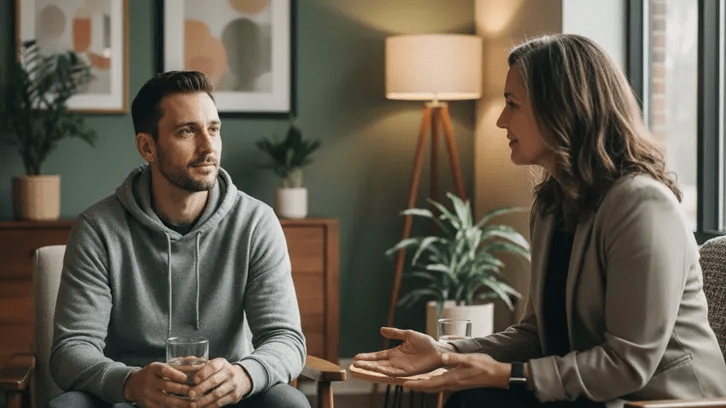




A few years ago, I sat across from a guy who looked like he had everything together.
Good job. Nice house. Married. The kind of person people described as reliable.
He wasn’t there because he had lost everything. He was there because he was exhausted.
Not physically. Emotionally.
Every day felt like a performance. He could still meet deadlines, show up for meetings, and answer emails. But behind the scenes, alcohol had become the thing holding everything together and quietly pulling everything apart at the same time.
That’s a story I’ve heard more than once.
For many professionals, the decision to get help doesn’t come after a dramatic collapse. It comes after years of carrying too much while pretending everything is fine. That’s one reason more people are exploring programs like Intensive Outpatient Program services that allow them to receive support while continuing to manage important parts of their lives.
The Problem Was Never a Lack of Willpower
Most high-achieving people are used to solving problems on their own.
They push through stress. They work longer hours. They tell themselves they’ll get things under control next week, next month, or after the next big project.
That approach works for many challenges.
It rarely works for substance use.
The professionals I’ve met weren’t weak. If anything, they were incredibly disciplined. The problem was that discipline had become another way to avoid looking at what was happening underneath.
The more successful they appeared, the easier it became to hide.
Nobody Around Them Knew How Tired They Were
One executive described it perfectly.
He said his life felt like spinning ten plates at once. From a distance, it looked impressive. Up close, he was terrified one of them would crash.
That fear creates a strange kind of isolation.
Coworkers see performance. Friends see accomplishments. Family sees responsibility.
Very few people see the mental math happening every day:
How much can I drink tonight and still function tomorrow?
Can I make it through this meeting?
Will anyone notice?
That constant calculation becomes exhausting.
The Stories That Changed Their Minds
I’ve heard versions of the same story from attorneys, healthcare workers, business owners, and sales professionals.
They didn’t choose treatment because they hit a stereotypical rock bottom.
They chose it because they realized they were slowly losing pieces of themselves.
One woman told me she hadn’t laughed naturally in years.
Another said he couldn’t remember the last weekend he wasn’t either drinking, recovering from drinking, or thinking about drinking.
On paper, they were succeeding.
Inside, they felt trapped.
What changed wasn’t a crisis. It was the realization that maintaining appearances was becoming harder than asking for help.
Keeping a Career Doesn’t Mean Ignoring a Problem
A common misconception is that treatment requires disappearing from your life.
For many professionals, that’s simply not realistic.
They have teams relying on them. Families depending on them. Financial obligations that don’t pause.
That’s why programs offering structured care multiple days each week have become appealing. Many people searching for a work friendly outpatient rehab option are looking for support that acknowledges reality rather than asking them to abandon it.
The goal isn’t to choose between recovery and responsibility.
It’s finding a path that allows both to exist together.
Recovery Looked Different Than They Expected
Something interesting happened after these professionals got help.
Most of them didn’t become different people.
They became more themselves.
The executive who felt like he was spinning plates finally slept through the night.
The business owner stopped planning every social event around alcohol.
The healthcare worker found herself present with her family again instead of mentally checking out at the end of every day.
One person described recovery as taking off a backpack he forgot he was carrying.
That’s the part many people miss.
The hidden weight becomes so familiar that it feels normal.
Until it isn’t there anymore.
The Question That Finally Mattered
For many high-functioning professionals, the turning point isn’t asking, “Am I bad enough to need help?”
It’s asking something simpler.
“How much longer do I want to keep living like this?”
That’s a different question.
It shifts the focus away from labels and toward quality of life.
And for many people, the answer becomes clear.
If you’re exploring treatment options, you may also find valuable local resources and support through treatment in Scottsdale Addiction Rehab and Mental Health or additional support in Fountain Hills Drug.
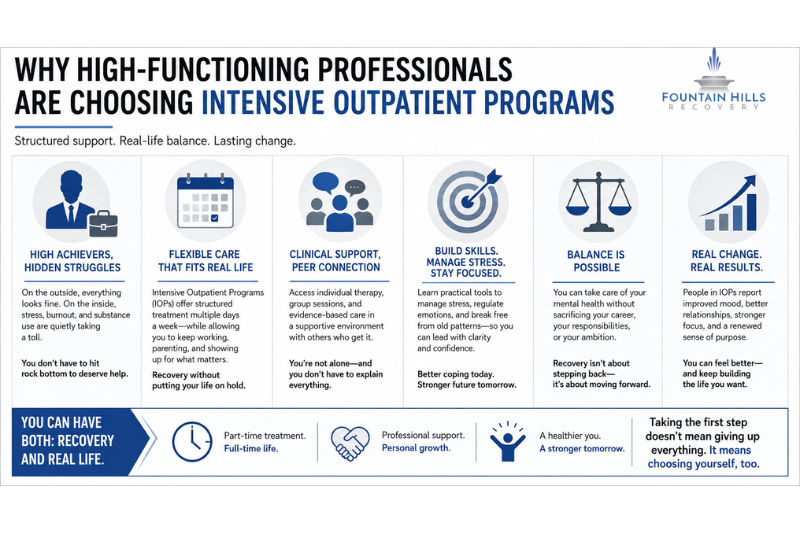
Success Doesn’t Have to Cost This Much
If you’re holding everything together on the outside while feeling worn down on the inside, you’re not the only one.
Many professionals who seek help aren’t failing.
They’re simply tired of carrying a burden that no one else can see.
And sometimes the strongest decision isn’t pushing through one more day.
It’s allowing yourself the support you’ve been postponing.
Call (800) 715-2004 or visit our Intensive Outpatient Program services to learn more about our Intensive Outpatient Program services.