




I thought getting sober would be the hard part.
For a long time, it was. Then life settled down. The chaos was gone. The emergencies stopped. From the outside, everything looked fine.
But somewhere along the way, recovery became something I used to actively live and started feeling more like something I had accomplished.
I wasn’t drinking. I wasn’t using. I wasn’t falling apart.
I was just… disconnected.
A few years into sobriety, that surprised me more than active addiction ever did.
What eventually helped me reconnect wasn’t a dramatic relapse or a crisis. It was making the decision to step back into a higher level of support through a luxury inpatient treatment program. Looking back, it was one of the most important recovery decisions I’ve made since getting sober.
The Problem Wasn’t Relapse. It Was Distance.
Nobody talks much about this stage of recovery.
People celebrate your first 30 days. Your first year. Maybe even five years.
What happens when you’ve done all that and still feel empty?
I wasn’t actively struggling with cravings. I wasn’t making reckless decisions. But I had stopped doing many of the things that originally helped me stay connected.
Meetings became occasional.
Honest conversations became rare.
I was going through the motions.
Recovery had become maintenance instead of growth.
That’s a dangerous place because it doesn’t look dangerous from the outside.
I Kept Telling Myself I Didn’t Need More Help
One of the biggest lies I told myself was that asking for support meant something was wrong.
I had already completed treatment years earlier. I had built a life I was proud of.
Why would I need help again?
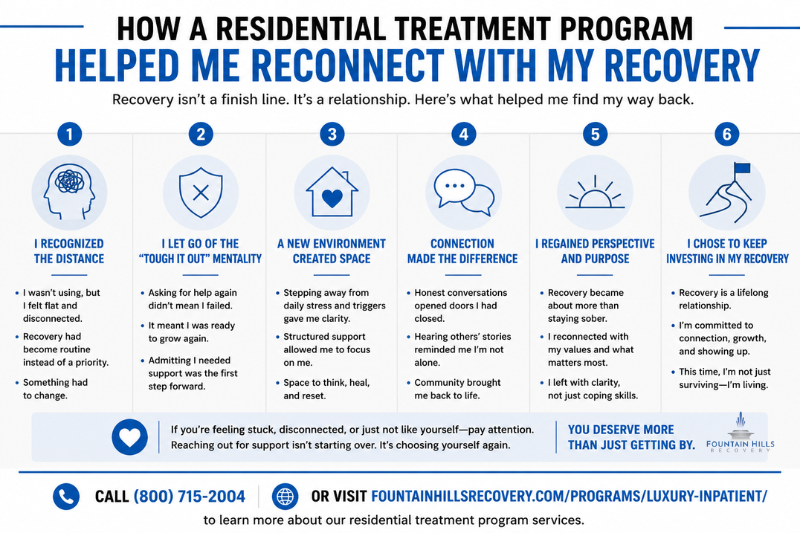
The truth is that recovery isn’t a finish line. It’s a relationship.
And like any relationship, it can become distant if you stop investing in it.
For months, I convinced myself I could figure it out alone. The longer I waited, the more disconnected I felt.
Eventually I realized I wasn’t looking for rescue.
I was looking for reconnection.
The Environment Matters More Than Most People Realize
One thing I learned in early sobriety was how much my surroundings affected my mindset.
Years later, I forgot that lesson.
Home was full of responsibilities, distractions, and routines. Every day looked the same. Every thought followed familiar tracks.
Stepping into a structured environment gave me something I hadn’t had in years: space.
Space to think.
Space to be honest.
Space to look at parts of myself I had been avoiding.
For people trying to decide between different levels of care, conversations about inpatient vs outpatient rehab often focus on schedules, costs, or convenience. What I discovered was that environment can be a powerful recovery tool. Sometimes getting away from daily triggers and responsibilities creates room for deeper personal work.
Recovery Had Changed, and I Needed to Catch Up
The version of recovery that got me sober wasn’t necessarily the version I needed years later.
That realization hit hard.
Early recovery was about survival.
Long-term recovery became about purpose.
The questions were different.
Instead of asking, “How do I stop using?” I was asking:
- Who am I becoming?
- What still needs healing?
- Why do I feel disconnected despite everything I’ve built?
Those aren’t questions I could answer while rushing between work, family obligations, and daily life.
They required time and honesty.
Being Around Other People Helped Me See Myself Again
Isolation doesn’t always look like being alone.
Sometimes it looks like staying busy enough to avoid meaningful connection.
One of the most valuable parts of returning to treatment was hearing other people’s stories.
Not because our experiences were identical.
Because they weren’t.
But hearing someone describe emotions I couldn’t quite put into words reminded me that I wasn’t uniquely broken or failing at recovery.
I was human.
And humans need connection.
A conversation at the right moment can sometimes do what months of self-reflection cannot.
I Left With Something Different Than Sobriety
The first time I completed treatment, I left with tools to stay sober.
This time, I left with something else.
Perspective.
I remembered why recovery mattered to me beyond simply avoiding substances.
I reconnected with values that had gotten buried beneath routines and responsibilities.
Most importantly, I stopped measuring recovery solely by how long I’d been sober.
Time matters.
Connection matters more.
“I thought I needed to fix something. What I actually needed was to reconnect with something I’d slowly stopped nurturing.”
That distinction changed everything.
If Recovery Feels Flat, Pay Attention
Not every season of recovery feels inspiring.
Some seasons feel repetitive.
Some feel lonely.
Some feel confusing because your life looks successful while your inner world feels disconnected.
That doesn’t mean you’ve failed.
But it may mean it’s time to reconnect.
For me, that meant stepping back into structured support and allowing myself to be honest about where I was emotionally.
The decision gave me more than recovery reinforcement.
It gave me my relationship with recovery back.
If you’re feeling disconnected, there is support available. Whether you’re looking for a deeper level of care or exploring treatment options again, Fountain Hills Recovery offers compassionate support through its residential program and additional resources for those seeking support in Scottsdale Addiction Rehab and Mental Health or help in Fountain Hills Drug.
Call (800) 715-2004 or visit our residential treatment program services to learn more about our residential treatment program services.