





If you’re asking does insurance cover rehab, you’re probably thinking about more than just your policy. You’re wondering whether getting help is financially possible.
The encouraging news is that most health insurance plans provide some level of coverage for substance use disorder treatment and mental health care. However, exactly what is covered depends on your insurance company, your specific plan, whether the treatment provider is in-network, and the level of care you need.
Understanding your benefits before you begin treatment can prevent unexpected costs and help you make informed decisions. Here’s what insurance typically covers, how mental health parity laws protect your rights, and the fastest way to verify your benefits.
Does Insurance Cover Rehab? (Yes, Usually — Here’s Why)
In most cases, yes. Thanks to federal regulations and expanded behavioral health benefits, many private insurance plans, employer-sponsored plans, and marketplace plans include coverage for addiction treatment.
Coverage often includes medically necessary services such as:
- Medical detox
- Residential or inpatient rehab
- Partial Hospitalization Programs (PHP)
- Intensive Outpatient Programs (IOP)
- Outpatient therapy
- Medication-assisted treatment (MAT)
- Mental health treatment when appropriate
Insurance companies typically review whether treatment is medically necessary. That determination may consider factors such as your substance use history, withdrawal risk, previous treatment attempts, co-occurring mental health conditions, and recommendations from qualified healthcare professionals.
Rather than asking whether insurance covers rehab, the more important question is:
How much of your treatment will your specific plan cover?
That’s where a benefits verification becomes valuable.
What Mental Health Parity Laws Mean for Your Coverage
The Mental Health Parity and Addiction Equity Act requires many health insurance plans to provide behavioral health benefits that are comparable to medical and surgical benefits.
In practical terms, this means insurers generally cannot impose significantly stricter financial requirements or treatment limitations simply because you’re seeking care for addiction or mental health.
Parity does not guarantee that every treatment center or every service will be fully covered. Your plan may still include:
- Deductibles
- Copays
- Coinsurance
- Prior authorization requirements
- Medical necessity reviews
- Network restrictions
These rules can still affect your out-of-pocket costs, but they must generally be applied consistently with how similar medical services are covered.
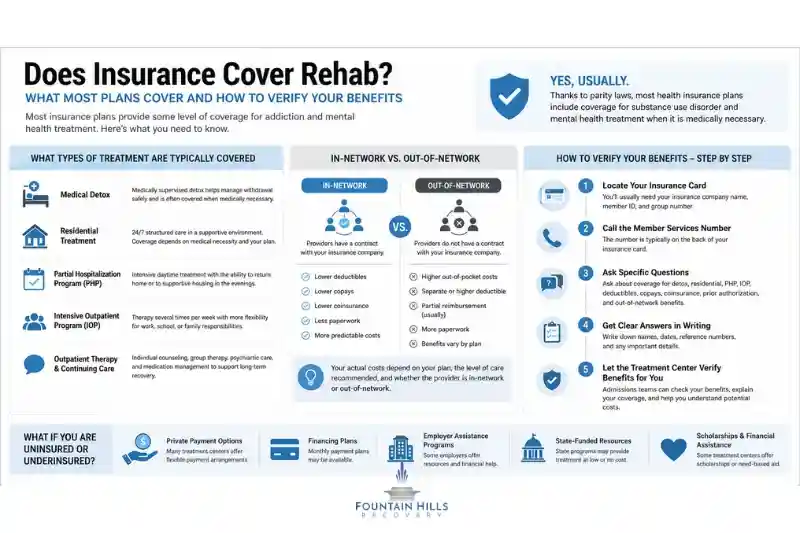
What Types of Treatment Are Typically Covered (Detox, Residential, PHP, IOP)
Insurance coverage often varies depending on the level of care recommended by a clinical assessment.
Medical Detox
Detox helps people safely manage withdrawal under medical supervision. Because withdrawal from certain substances can become dangerous, detox is frequently covered when medically necessary.
Residential Treatment
Residential treatment provides 24-hour support in a structured environment. Coverage often depends on clinical necessity and may require ongoing authorization from your insurance provider.
Partial Hospitalization Programs (PHP)
PHP offers intensive daytime treatment while allowing clients to return home or to supportive housing in the evenings. Many insurers cover PHP when it serves as an appropriate alternative to inpatient care.
Intensive Outpatient Programs (IOP)
IOP combines multiple therapy sessions each week with greater flexibility for work, school, or family responsibilities. Many insurance plans include IOP benefits because it provides structured treatment at a lower overall cost than residential care.
Outpatient Therapy and Continuing Care
Many plans continue covering individual counseling, group therapy, psychiatric care, and medication management after higher levels of treatment end. These services help support long-term recovery and reduce the risk of relapse.
In-Network vs. Out-of-Network: What the Difference Costs You
Whether a treatment center is in-network or out-of-network can significantly affect what you pay.
In-network providers have negotiated rates with your insurance company. This usually results in:
- Lower deductibles
- Lower copays
- Lower coinsurance
- Less paperwork for patients
Out-of-network providers have not negotiated contracted rates with your insurer. Depending on your plan, you may:
- Pay higher out-of-pocket costs
- Have a separate deductible
- Receive partial reimbursement
- Have no out-of-network benefits at all
That doesn’t automatically mean an out-of-network provider is unaffordable. Some treatment centers help patients understand their benefits, explain estimated costs, and discuss payment options before admission.
The only way to know your actual financial responsibility is to verify your benefits using your specific insurance plan.
How to Verify Your Benefits — Step by Step
Many people delay treatment because they assume rehab will be too expensive. In reality, they often don’t know what their insurance actually covers.
Here’s how to find out.
1. Locate Your Insurance Card
You’ll usually need:
- Insurance company name
- Member ID
- Group number (if applicable)
2. Call the Member Services Number
The phone number is typically listed on the back of your insurance card.
3. Ask Specific Questions
Consider asking:
- Does my plan cover substance use disorder treatment?
- Is medical detox covered?
- Does my plan include residential treatment?
- What are my PHP and IOP benefits?
- Do I need prior authorization?
- What is my deductible?
- How much coinsurance or copay will I owe?
- What is my out-of-pocket maximum?
- Are there in-network treatment providers near me?
- Do I have out-of-network benefits?
Writing down the answers can make comparing treatment options much easier.
4. Let the Treatment Center Verify Benefits for You
You don’t have to navigate insurance alone.
If you’re considering treatment, you can verify your insurance with Fountain Hills Recovery. Their admissions team can contact your insurance provider, explain your benefits, estimate potential costs, and answer questions about available levels of care. In many cases, the process takes only a few minutes.
What If You Are Uninsured or Underinsured?
Not having strong insurance coverage does not necessarily mean treatment is out of reach.
Depending on your situation, you may have access to:
- Private payment options
- Financing plans
- Payment arrangements
- Employer assistance programs
- State-funded treatment resources
- Scholarships or financial assistance offered by some treatment providers
Speaking with an admissions specialist can help you understand what options are available before deciding that treatment is unaffordable.
Frequently Asked Questions
Does insurance cover drug and alcohol rehab?
Yes. Most health insurance plans provide some level of coverage for medically necessary drug and alcohol rehabilitation services, although the amount covered depends on your policy and the level of care recommended.
How much of rehab does insurance pay for?
There isn’t a single answer. Some plans cover a large portion of treatment after deductibles are met, while others require higher copays or coinsurance. Your costs depend on your individual policy, network status, and treatment recommendations.
What if my insurance is out of network?
You may still have benefits. Some insurance plans reimburse a portion of out-of-network treatment costs, while others do not. Verifying your benefits is the quickest way to understand your options.
Take the Next Step with Confidence
Questions about insurance shouldn’t prevent you from getting help.
If you’re ready to learn what your plan covers, let Fountain Hills Recovery verify your insurance for you. The admissions team can explain your benefits, discuss potential costs, and help you understand your treatment options. It only takes a few minutes, and you’ll have clear information to help you decide what comes next.