Benzodiazepine dependence often begins with a legitimate prescription. A medication intended to relieve anxiety, panic attacks, seizures, or insomnia can gradually become something you feel unable to function without.
Fountain Hills Recovery treats many behavioral health conditions and offers personalized benzodiazepine addiction treatment in Arizona for adults who are medically stable and ready to begin structured recovery care. Located in Fountain Hills near Scottsdale and Phoenix, our private treatment setting offers residential care, partial hospitalization, intensive outpatient treatment, and support for co-occurring mental health conditions.
Fountain Hills Recovery does not provide detox services. If you are still taking benzodiazepines or may be at risk for withdrawal, you should speak with a qualified medical provider before attempting to reduce or stop your medication. Once you have completed any necessary medical detox and have been cleared for treatment, our team can help you address the behavioral, emotional, and mental health concerns connected to benzodiazepine addiction.
Call (888) 788-7033 today to discuss admission or verify your insurance benefits.
What Is Benzodiazepine Addiction?
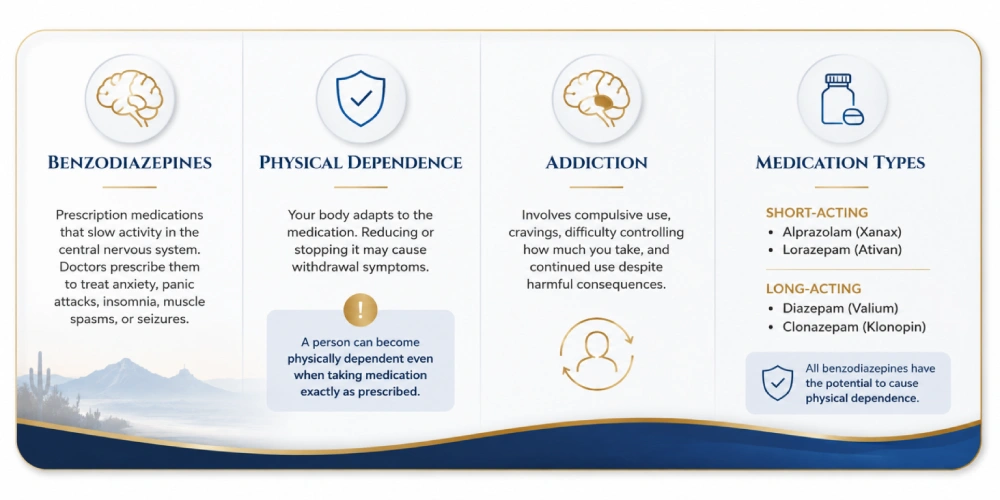
Benzodiazepines are prescription medications that slow activity in the central nervous system. Doctors may prescribe them to treat anxiety disorders, panic attacks, insomnia, muscle spasms, or seizure conditions.
These medications increase the activity of gamma-aminobutyric acid, commonly called GABA. GABA helps calm brain activity. With ongoing benzodiazepine use, the brain and body can adapt to the medication’s effects.
It is important to understand the difference between physical dependence and addiction:
- Physical dependence means your body has adapted to the medication. Reducing or stopping it may cause withdrawal symptoms.
- Addiction involves compulsive use, cravings, difficulty controlling how much you take, and continued use despite harmful consequences.
A person can become physically dependent while taking medication exactly as prescribed. However, dependence can increase the risk of misuse, especially when the medication is taken for longer than intended or in larger amounts.
Commonly prescribed benzodiazepines include:
- Alprazolam, commonly known as Xanax
- Lorazepam, commonly known as Ativan
- Diazepam, commonly known as Valium
- Clonazepam, commonly known as Klonopin
All benzodiazepines have the potential to cause physical dependence. The risk may increase with longer use, higher doses, or taking the medication outside a doctor’s instructions.
Ready to take control with alcohol rehab?
Call Us to Check Availability
+1 (888) 788-7033
Short-Acting vs. Long-Acting Benzodiazepines
Short-acting benzodiazepines such as Xanax and Ativan take effect quickly and leave the body sooner. Because their effects fade faster, some people begin taking repeated doses or experience symptoms between doses.
Longer-acting medications such as Valium and Klonopin remain in the body for more time. They can still cause tolerance, dependence, and addiction, even when doses are taken less frequently.
The medication you take, your dosage, your length of use, and whether you use other substances can all affect your treatment needs.
Signs of Benzo Addiction
Benzo addiction can affect your physical health, emotional well-being, relationships, work, and daily responsibilities. The changes may happen gradually, making them difficult to recognize at first.
Physical warning signs may include:
- Persistent drowsiness
- Dizziness
- Slurred speech
- Poor balance or coordination
- Headaches
- Changes in sleep
- Memory problems
- Needing higher doses to feel the same effect
These symptoms can indicate physical dependence and should be evaluated by a medical professional before attempting to stop drinking on your own.
Behavioral changes may include running out of medication early, visiting multiple doctors, taking medication in ways that were not prescribed, hiding your use, or withdrawing from friends and family.
You may also begin neglecting work, school, household responsibilities, or activities that were previously important to you.
Psychological symptoms may include:
- Increased anxiety between doses
- Irritability or mood swings
- Panic attacks
- Depression
- Difficulty concentrating
- Strong cravings
- Feeling unable to relax or function without the medication
It may be time to consider professional benzo addiction treatment if you have tried to reduce your use but could not, experience symptoms between doses, or continue taking benzodiazepines despite problems in your health, relationships, or daily life.
Benzodiazepine Use in Arizona
Benzodiazepines continue to be prescribed throughout Arizona. According to the Arizona Prescription Monitoring Program, benzodiazepine prescriptions increased by 9% in 2024, reaching more than 2.1 million prescriptions. Alprazolam prescriptions increased by 11.3%.
Prescription data alone does not show how many people have developed an addiction. However, it demonstrates that benzodiazepines remain widely available throughout the state and reinforces the need for careful prescribing, patient education, and access to benzodiazepine addiction treatment.
Co-Occurring Mental Health Conditions
Many people first receive benzodiazepines to manage a real mental health concern, such as anxiety, panic disorder, post-traumatic stress disorder, or insomnia. Over time, dependence or misuse may begin to worsen the same symptoms the medication was intended to relieve.
For example, you may experience stronger anxiety as a dose wears off. You may then take more medication to feel calm again, creating a cycle of short-term relief followed by worsening symptoms.
Our dual diagnosis treatment approach addresses substance use and mental health concerns together. Depending on your needs, treatment may address:
- Anxiety disorders
- Panic disorder
- Depression
- Trauma and PTSD
- Insomnia
- Other co-occurring behavioral health concerns
Treating both sides of a dual diagnosis can help you better understand what contributed to your medication use and develop healthier ways to respond to anxiety, stress, trauma, and emotional discomfort.
Benzo Withdrawal and the Need for Medical Care
Benzodiazepine withdrawal can become medically dangerous. You should not stop taking benzodiazepines suddenly or attempt to manage withdrawal without speaking to a qualified medical provider.
Fountain Hills Recovery does not offer benzodiazepine detox or medically supervised withdrawal management. Our programs are intended for clients who are medically stable and able to participate safely in addiction treatment.
If a medical provider determines that you need detox, you will need to complete that process through an appropriate medical detox facility or healthcare provider before entering treatment at Fountain Hills Recovery.
Why Benzodiazepine Withdrawal Can Be Dangerous
Abruptly stopping benzodiazepines may cause serious complications, including:
- Seizures
- Severe anxiety or panic
- Hallucinations
- Confusion
- Dangerous changes in heart rate or blood pressure
- Delirium
- Suicidal thoughts
Your risk may depend on the medication you take, your dosage, how long you have taken it, whether you use other substances, and your physical and mental health history.
Call 911 or seek emergency medical care if you or someone you know experiences a seizure, hallucinations, severe confusion, loss of consciousness, or suicidal thoughts.
What Happens During Benzodiazepine Detox?
Benzodiazepine detox often involves gradually reducing the medication rather than stopping it all at once. This process is known as tapering.
A qualified medical provider may adjust the dose over time while monitoring withdrawal symptoms and overall health. There is no single taper schedule that is appropriate for everyone. The process must be based on the medication, dosage, length of use, symptoms, and individual medical needs.
This type of medical management is not provided at Fountain Hills Recovery, although we can refer to accredited providers. Once detox is complete and you are medically cleared, ongoing treatment can address cravings, emotional symptoms, relapse risks, and the underlying reasons your use became difficult to control.
Benzodiazepine Withdrawal Timeline
The benzodiazepine withdrawal timeline varies considerably from person to person. The medication’s half-life, dose, length of use, taper schedule, and your overall health can all affect when symptoms begin and how long they last.
The following timeline is general and should not be used as a substitute for medical advice.
Withdrawal from short-acting medications may begin within a day after the last dose. Symptoms from longer-acting benzodiazepines may not appear for several days.
Early symptoms may include anxiety, restlessness, insomnia, sweating, nausea, headaches, tremors, and difficulty concentrating.
Symptoms may intensify during the first several days. Some people experience severe anxiety, panic attacks, confusion, muscle pain, sensory sensitivity, or changes in perception.
This is also the period when seizures and other serious complications may occur, especially after abrupt withdrawal.
Acute symptoms may improve over one to two weeks, although the timeline can be longer. Sleep problems, anxiety, mood changes, and cravings may continue after the most severe physical symptoms have eased.
Some people experience lingering symptoms for weeks or longer. Therapy, psychiatric support, relapse-prevention planning, and healthy daily routines can help you manage emotional and behavioral symptoms during ongoing recovery.
A qualified medical professional should evaluate your individual withdrawal risk and determine whether detox is necessary.
Benzodiazepine Rehab: Our Approach and Levels of Care
Detox and addiction treatment serve different purposes. Detox addresses the medical risks of reducing or stopping benzodiazepines. Benzodiazepine rehab addresses the thoughts, behaviors, mental health symptoms, and life circumstances connected to continued use.
Fountain Hills Recovery provides benzo rehab after a client has completed any necessary detox and is medically stable.
Your treatment begins with an individualized assessment. Our clinical team considers your substance use history, mental health needs, previous treatment experiences, support system, daily responsibilities, and recovery goals.
Your recommended level of care may include the following.
Our residential treatment program offers immersive care in a private and structured setting. You live in one of our luxury residences while participating in individual therapy, group sessions, recovery education, and personalized treatment planning.
Residential care may be appropriate when you need distance from triggers, consistent support, or time to focus fully on your health and recovery.
Luxury inpatient treatment provides structured care in a small, private setting. Clients receive clinical and behavioral support while staying in an environment designed to promote comfort, privacy, and healing.
This level of care may be appropriate after medical stabilization when you still need significant structure and support.
Our partial hospitalization program provides intensive daytime treatment. PHP can help you continue building stability after residential care or provide structured support when overnight supervision is no longer necessary.
Our intensive outpatient program offers scheduled therapy several days per week with greater flexibility. IOP may allow you to continue meeting work, school, or family responsibilities while receiving ongoing clinical support.
Treatment is not always a straight line. Your care plan may be adjusted as your symptoms, stability, and recovery needs change.
Therapies Used in Benzo Addiction Treatment
Effective benzodiazepine addiction treatment involves more than discontinuing the medication. Therapy helps you understand why your use continued and develop practical ways to manage anxiety, cravings, stress, trauma, and other triggers.
Your individualized care plan may include:
- Cognitive behavioral therapy: Helps you identify unhelpful thought patterns and change behaviors that contribute to medication misuse.
- Dialectical behavior therapy: Builds emotional regulation, distress tolerance, mindfulness, and interpersonal skills.
- Motivational interviewing: Helps you explore uncertainty about change and strengthen your personal reasons for recovery.
- Trauma-informed therapy: Addresses traumatic experiences while emphasizing emotional and physical safety.
- Family therapy: Helps improve communication, establish healthy boundaries, and involve loved ones in recovery.
- Relapse-prevention planning: Helps you identify triggers, recognize warning signs, and prepare for high-risk situations.
- Holistic therapies: May include mindfulness, yoga, recreation, meditation, or expressive activities when clinically appropriate.
Our clinicians select therapies based on your individual needs rather than placing every client into the same treatment plan.
Why Choose Fountain Hills Recovery?
Fountain Hills Recovery provides clinically grounded addiction treatment in a private, comfortable setting near Scottsdale and Phoenix. Our goal is to help you build lasting stability after you are medically ready to participate in treatment.
Our approach includes:
- Individualized treatment planning
- Small treatment groups
- Dual diagnosis support
- Residential, PHP, and IOP levels of care
- Evidence-based and holistic therapies
- Private luxury residences
- Support from licensed clinical and behavioral health professionals
- Family involvement and admissions guidance
- Discreet care for professionals, executives, athletes, and first responders
Fountain Hills Recovery is a licensed treatment provider accredited by The Joint Commission. The organization is also LegitScript certified and maintains membership in the National Association of Addiction Treatment Providers.
The medical and clinical team is led by Medical Director Dr. Abraham Sayegh and Director of Psychiatry and Addiction Medicine Robbie Westerman, DNP-PMHNP. Their work is supported by psychiatric providers, licensed therapists, trauma specialists, and additional behavioral health professionals.
While Fountain Hills Recovery does not provide detox, we can facilitate that care with trusted partners. Our programs offer continued care after medical stabilization so you can focus on the behavioral and emotional work of recovery.
Benzo Addiction Treatment Near Scottsdale
Fountain Hills Recovery is located in Fountain Hills, just outside Scottsdale, and offers personalized benzodiazepine addiction treatment in a private, supportive setting. Our programs can help you address cravings, anxiety, trauma, and relapse risks while building the skills and confidence needed for lasting recovery.
We serve adults and families from communities throughout Arizona, including:
- Scottsdale
- Phoenix
- Fountain Hills
- Mesa
- Tempe
- Chandler
- Gilbert
- Paradise Valley
Our location offers a peaceful alternative to treatment in a busy urban setting while remaining accessible to Scottsdale and the greater Phoenix area.
Paying for Benzodiazepine Addiction Treatment
Fountain Hills Recovery accepts most major commercial and private insurance plans. Coverage and out-of-pocket costs depend on your individual policy.
Our admissions team can verify your insurance benefits, explain what your plan may cover, and discuss potential financial responsibilities before treatment begins. Private-pay options are also available for clients who prefer greater confidentiality or do not plan to use insurance.
Insurance coverage for detox is separate from coverage for treatment at Fountain Hills Recovery. If you need medical detox before admission, you should confirm benefits directly with the detox provider or your insurance company.
A family member may call on your behalf if you are unsure how to begin. Admissions conversations are confidential and do not obligate you to enter treatment.
Call Us to Check Availability
+1 (888) 788-7033