


You thought you were past this.
There was a moment—maybe even a stretch of time—where things felt like they were getting better. More stable. More hopeful.
And then something shifted.
Maybe it was subtle at first.
A change in tone. A missed call. A look in their eyes that felt… different.
And now you’re here, asking yourself:
“How did we end up back here?”
If your child has started using again, you’re not alone in that confusion—and you’re not wrong for feeling overwhelmed by it.
Many families reach this point and begin exploring help for alcohol use and recovery not because they’ve lost hope, but because they realize this situation is more complex than it first appeared.
Relapse Doesn’t Mean Everything Was Lost
It feels like it does.
It can feel like all the progress disappeared overnight. Like everything you hoped for slipped through your hands.
But relapse doesn’t erase growth.
Your child still carries what they learned. Even if it doesn’t show up clearly right now.
Relapse usually means something underneath is still unresolved.
Something still hurts.
Something still overwhelms them.
Something still hasn’t found a healthier outlet.
It’s not the end of the story.
It’s a signal that the story needs more support.
Why This Stage of Life Makes It Harder
Young adulthood is already unstable—even without substance use.
Your child is navigating:
- Who they are
- Where they fit
- What their future looks like
- How to handle pressure, failure, and uncertainty
And they’re doing it without fully developed tools for emotional regulation.
So when something feels too big—too confusing, too painful—they reach for what they know works in the moment.
Even if it creates bigger problems later.
This isn’t about weakness.
It’s about capacity.
And right now, their capacity might be overwhelmed.
It’s Rarely Just About the Drinking
From the outside, it looks like the behavior is the problem.
But in most cases, the behavior is the symptom.
Underneath it, there’s often something deeper:
- Anxiety that doesn’t shut off
- Depression that drains motivation and hope
- Emotional pain they don’t know how to explain
And when those things aren’t fully addressed, stopping the drinking alone doesn’t hold.
Because the reason for the behavior is still there.
It’s like pressing pause on something that hasn’t been resolved.
Eventually, it starts playing again.
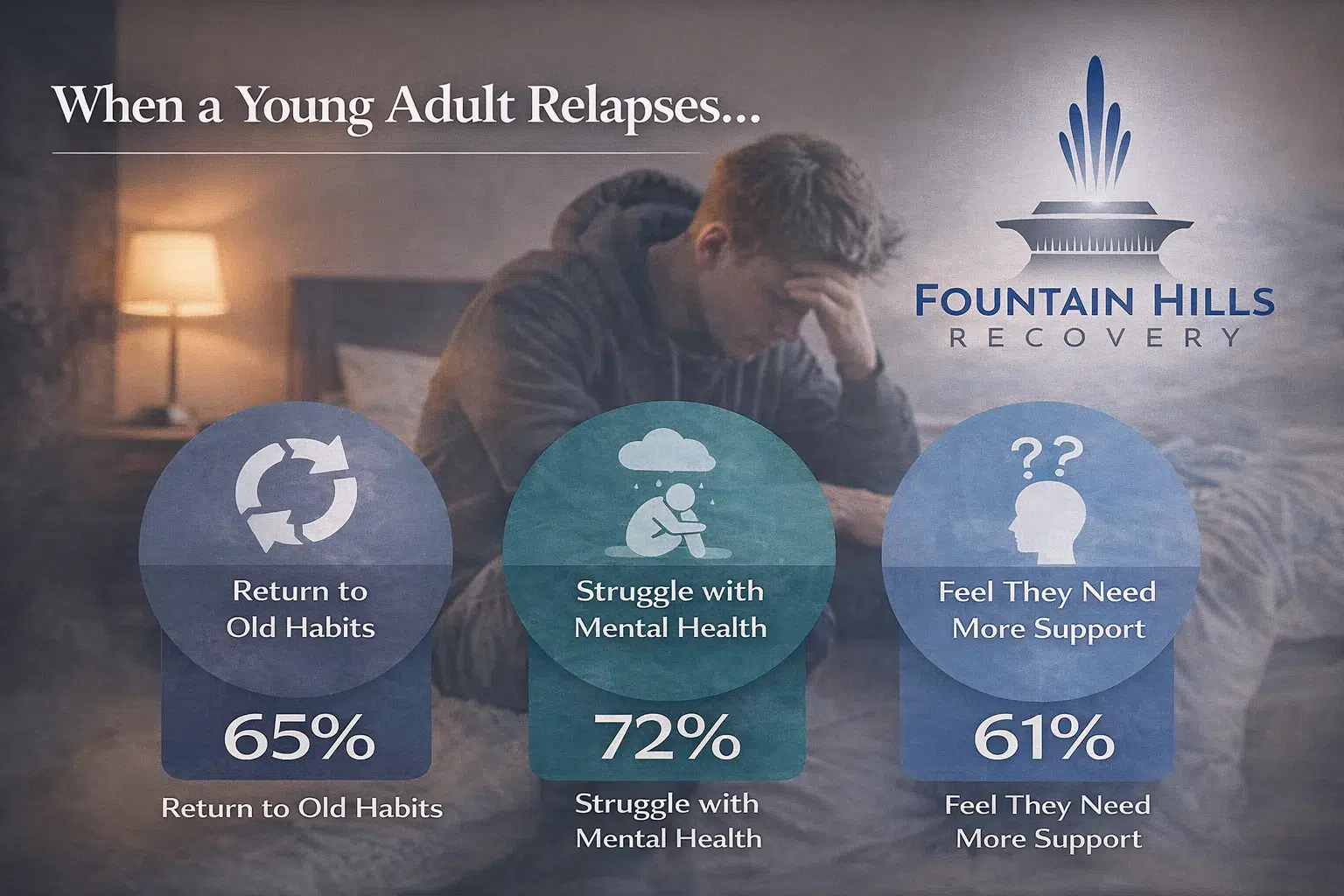
The Pattern That Leaves Parents Exhausted
You’ve probably seen the cycle.
Things improve.
You start to relax.
Then something shifts—and you’re back in uncertainty again.
This back-and-forth can feel like emotional whiplash.
You might find yourself thinking:
“Are we doing something wrong?”
“Is this just how it’s going to be?”
But this pattern isn’t random.
It usually means your child hasn’t had the kind of support that addresses everything happening—not just one piece of it.
What Your Child May Be Experiencing Internally
Even if they can’t say it, many young adults are dealing with something like this:
“I don’t know how to feel okay.”
“Everything feels overwhelming, even small things.”
“I don’t have another way to handle this.”
So they go back to what works quickly.
Not because they want to hurt you.
Not because they don’t care.
Because they don’t know what else to do in that moment.
Understanding this doesn’t remove the need for boundaries.
But it changes the way you see what’s happening.
Why More Comprehensive Support Can Change the Outcome
When support expands beyond surface-level solutions, something shifts.
Instead of trying to control behavior, the focus becomes understanding what drives it.
That can look like:
- Identifying emotional triggers your child doesn’t recognize yet
- Building coping strategies they can actually use in real time
- Creating structure that supports stability, not just short-term improvement
And when those pieces come together, change becomes more sustainable.
Not perfect.
But real.
The Guilt Parents Carry (And Don’t Deserve)
It’s almost automatic.
You look back and ask:
“Did we miss something?”
“Should we have done more?”
“Did we make the wrong decision?”
But most families don’t start here.
They start with what feels appropriate.
You did what made sense at the time—with the information you had.
This moment isn’t about blame.
It’s about recognizing what your child needs now—and responding to that.
That’s not failure.
That’s love adapting.
You Don’t Have to Hold This Alone
At some point, trying to manage everything within the family becomes too heavy.
You’re not just a parent anymore—you’ve become:
- A constant support system
- A monitor of behavior and mood
- A decision-maker in situations that feel urgent and unclear
That’s a lot.
Too much, for most people to carry alone.
Some families begin by exploring care in Scottsdale Addiction Rehab and Mental Health to understand what expanded support could look like nearby.
Others look into support in Fountain Hills Drug, where a more structured and focused environment can help stabilize what’s been unpredictable.
You don’t have to commit to everything right now.
You just have to take one step toward not carrying this by yourself.
What Often Changes With the Right Support
Parents often describe a shift—not immediate relief, but something meaningful.
It sounds like:
“We finally understood what was going on.”
“We weren’t guessing anymore.”
“There was a plan that actually made sense.”
That clarity matters.
Because uncertainty is one of the hardest parts of this experience.
And when things start to make sense, you can respond differently.
More clearly. More effectively.
When It Feels Urgent (Even If You Can’t Explain Why)
Sometimes, there’s a quiet urgency.
Not panic—but a sense that things could escalate.
And at the same time, you might hesitate:
“What if we overreact?”
“What if we push too hard?”
Those fears are real.
But waiting for absolute certainty can keep things stuck.
Taking a step toward understanding doesn’t lock you into anything.
It opens the door to better decisions.
Frequently Asked Questions
Why does relapse happen after things seemed better?
Because underlying issues—like emotional distress or coping challenges—may still be present and unaddressed.
Does this mean previous help didn’t work?
Not necessarily. It may mean your child needs more comprehensive or continued support.
Is relapse common in young adults?
Yes. This stage of life brings instability and pressure that can make sustained change harder without the right support.
How should I respond without making things worse?
Balance is key—clear boundaries with compassion and understanding.
What if my child refuses help?
That’s common. Resistance often comes from fear or overwhelm, not lack of desire to feel better.
When should we act?
If patterns are repeating or escalating, earlier support can make a meaningful difference.
The Shift That Changes Everything
Right now, it might feel like you’re reacting to everything.
Trying to keep up. Trying to manage.
But there’s a point where that can change.
Where you move from reacting… to responding.
Not perfectly. Not all at once.
But with more clarity.
And that clarity is what creates a path forward.
If your child has started using again and you’re trying to understand what comes next, you don’t have to navigate it alone.
Call (800) 715-2004 to learn more about our alcohol addiction treatment in Scottsdale, Arizona.