


I didn’t relapse.
I didn’t stop functioning.
I didn’t scare anyone.
That’s what made it so confusing.
Years after I first went through depression treatment, I found myself back in a familiar place — not the dark, urgent place that pushed me to get help the first time, but something quieter.
Flatter.
I was working. Paying bills. Showing up to family events. From the outside, I looked stable.
Inside, I felt like someone had slowly turned the color down on my life.
If you’re a long-term alum feeling stuck or disconnected, this is the part we don’t talk about enough.
I Wasn’t in Crisis — I Was Just Numb
The first time I sought help, I was drowning.
I couldn’t get out of bed. I cried in parking lots. I felt like my chest was permanently tight.
Going back years later didn’t look like that.
It looked like waking up without dread — but also without excitement.
It looked like conversations that felt surface-level even when they weren’t.
It looked like accomplishing things and feeling nothing about them.
There was no dramatic breakdown.
Just a slow erosion of aliveness.
And because it wasn’t dramatic, I told myself it didn’t count.
I Thought Needing Help Again Meant I Failed
This was the loudest thought.
“You already did this.”
“You have the tools.”
“Other people are worse off.”
I had internalized the idea that treatment was for emergencies only. That once you’ve stabilized, you should be able to maintain it forever.
But life changes.
Grief happens. Careers shift. Relationships evolve. Bodies age. Stress accumulates.
The coping skills that carried me through my twenties didn’t automatically adjust to my thirties.
And that doesn’t mean they didn’t work.
It means I was growing.
Growth doesn’t cancel vulnerability. It reshapes it.
The Second Time Wasn’t About Survival
The first time I entered care, I needed containment.
Structure saved me.
This time, I needed something different. I needed reflection. Depth. Space to reconnect with myself before I drifted further away.
I didn’t need round-the-clock stabilization. I needed structured daytime care that allowed me to keep living my life while addressing the quiet disconnection building underneath it.
When people look into support in Fountain Hills, they often think it’s only for people falling apart.
But sometimes it’s for people who refuse to fall apart again.
There’s power in intervening early.
I Had More Insight — And That Changed the Work
The second time felt different immediately.
I wasn’t defensive.
I wasn’t trying to prove I was fine.
I wasn’t resisting feedback.
I could name my patterns before someone pointed them out.
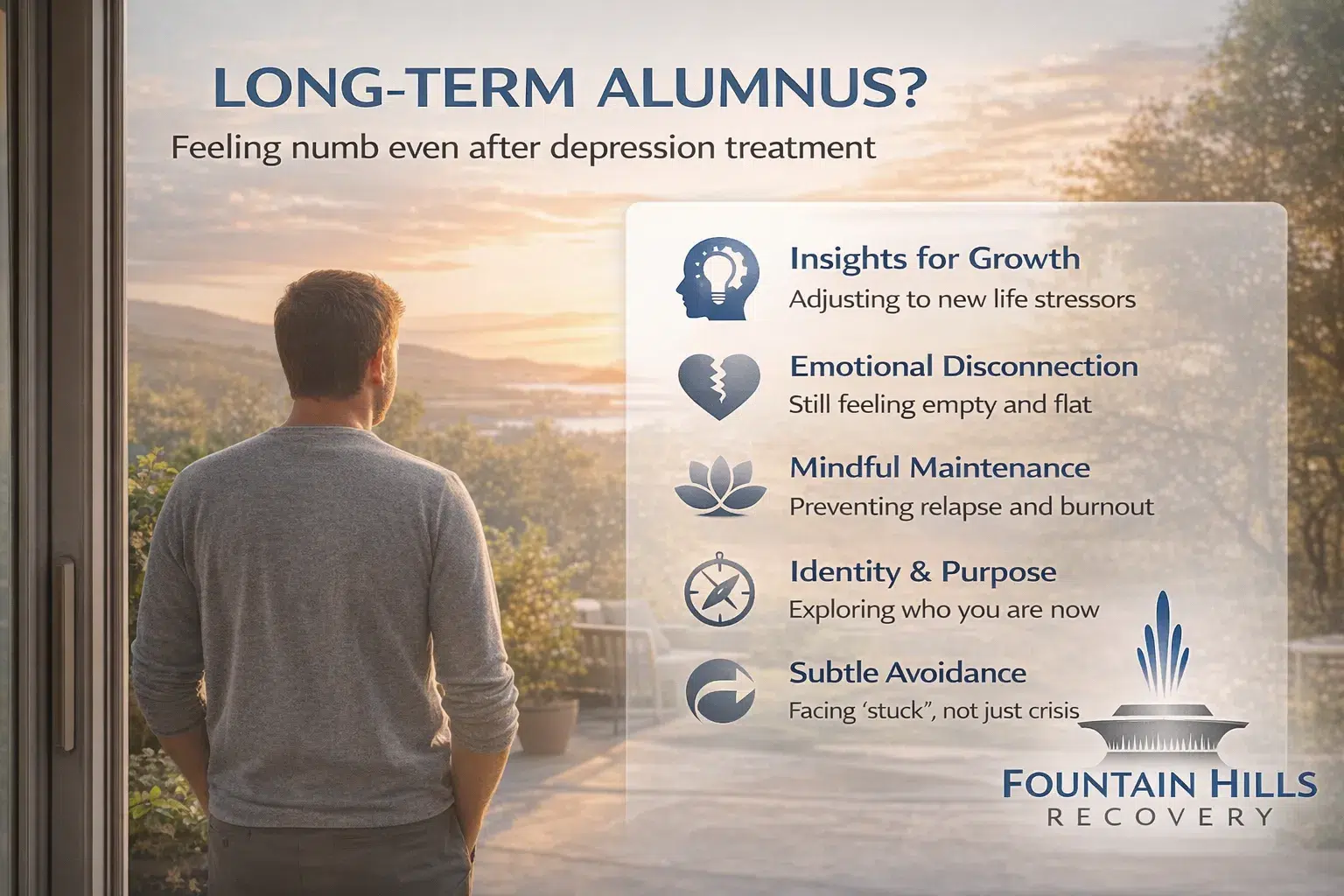
I knew I isolate when overwhelmed. I knew I lean into productivity to avoid emotional discomfort. I knew I detach instead of asking for help.
That awareness didn’t make me immune to depression.
It made the work more precise.
There’s something powerful about returning with history. You’re not starting over. You’re refining.
Stability Isn’t the Same as Fulfillment
This was the hardest truth.
I had equated “not in crisis” with “doing well.”
They’re not the same.
You can be stable and still disconnected.
You can be functioning and still emotionally flat.
You can be achieving and still quietly empty.
I had built a life that looked solid.
But it felt like I was living it from behind glass.
The second round of care helped me reconnect — not with chaos, but with feeling.
Music started sounding different again. Conversations felt textured. I caught myself laughing without forcing it.
It wasn’t dramatic.
It was gradual.
And it was real.
I Didn’t Want to Wait Until It Was Obvious
The first time I got help, everyone knew I needed it.
The second time, no one would have guessed.
That was intentional.
I didn’t want to wait for a breakdown.
I didn’t want to wait for my relationships to suffer or my work to decline.
If you’re exploring care in Scottsdale or nearby communities as a long-term alum, understand this: returning early is strength.
Maintenance isn’t failure.
It’s wisdom.
The Shame Was Louder Than Reality
I expected judgment.
I expected to feel like I’d regressed.
Instead, I was met with something steady.
No one asked, “What happened to you?”
It was more like, “Okay. What’s shifted since we last saw you?”
That difference matters.
Long-term alumni don’t need to be treated like beginners.
We need to be treated like people navigating new chapters.
There’s dignity in coming back before things collapse.
The Work Was Quieter — But Deeper
The second time around, the conversations weren’t about crisis management.
They were about:
- Identity shifts
- Burnout
- Relationship patterns
- Subtle avoidance
- Unprocessed grief
It was less about stopping something destructive and more about inviting something back.
Curiosity. Engagement. Emotional range.
Depression doesn’t always return as devastation.
Sometimes it returns as absence.
And absence deserves attention too.
What I Gained the Second Time
I didn’t gain a new personality.
I gained calibration.
I learned to notice early warning signs.
I learned to adjust before spiraling.
I learned that asking for help doesn’t erase growth.
If anything, it proves growth happened.
Because the younger version of me would have waited until I was drowning again.
This version chose not to.
FAQs for Long-Term Alumni Considering Returning
Does going back mean the first time didn’t work?
No. The first time may have stabilized you during a specific season. Returning later often addresses different stressors and deeper layers. Growth is ongoing.
How do I know if I actually need help again?
Ask yourself:
- Do I feel connected to my life?
- Am I emotionally engaged or just going through motions?
- Have I been quietly withdrawing from people?
- Does everything feel muted?
If the answer to several of these is yes, it may be worth exploring support.
What if I’m not in crisis?
You don’t have to be.
Waiting until things fall apart isn’t a requirement. Early intervention often leads to shorter, more effective care.
Will I feel embarrassed coming back?
That’s common. But in practice, returning alumni are usually met with respect. Seeking support again reflects awareness — not weakness.
Is it different the second time?
Yes.
You have more insight. More language. More history. The work tends to go deeper, faster, and more honestly.
What if I’m just “stuck,” not depressed?
Stuck still matters.
Disconnection still matters.
You don’t have to meet a dramatic threshold to deserve support.
Here’s the truth I wish someone had told me:
You don’t graduate from needing care.
You evolve.
Sometimes evolution requires another layer.
If you feel flat, disconnected, or quietly exhausted years after your first experience, you are not broken.
You are human.
And humans recalibrate.
Call 800-715-2004 or visit our Depression Treatment services to learn more about what reconnecting could look like now — not years ago, not at rock bottom, but right where you are.