


From the outside, nothing looks wrong.
You show up.
You meet deadlines.
You respond to messages.
You keep everything moving.
And because of that, no one really asks if you’re okay.
But inside, something feels off.
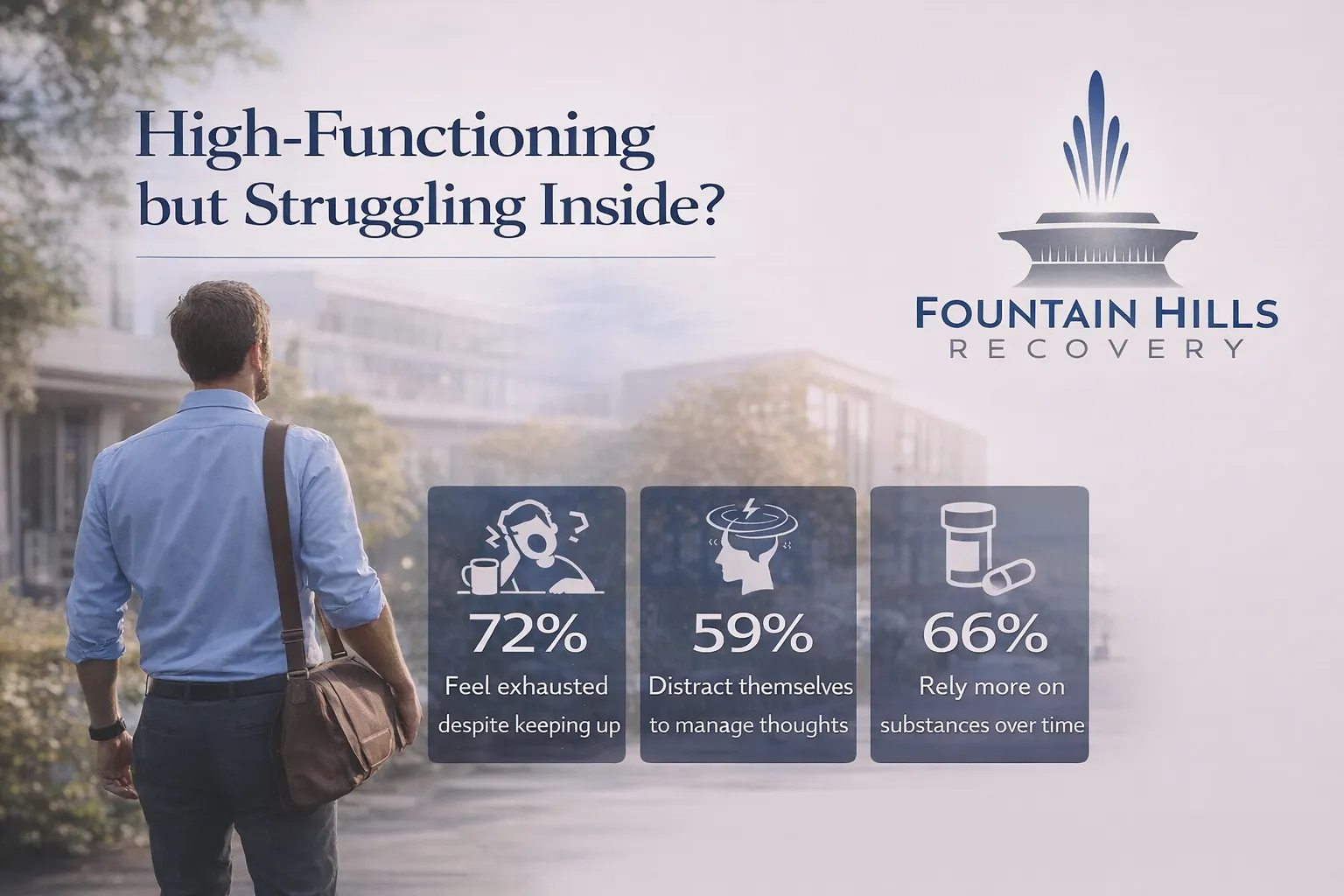
You’re tired in a way that sleep doesn’t fix.
Your thoughts don’t quiet down—even when everything around you does.
And whatever you’re using to take the edge off? It’s starting to feel less optional… and more necessary.
A lot of people in this position don’t think they “qualify” for help.
Not yet. Not bad enough.
Some only begin to question that after looking into support for both mental health and substance use—not because their life has fallen apart, but because holding it together is quietly becoming too much.
You’re Still Performing—So It Must Be Fine
This is the trap.
You’re functioning, so you assume you’re okay.
You tell yourself:
- “I’m still getting everything done.”
- “No one’s complaining.”
- “This is just a stressful phase.”
And on paper, that all checks out.
But here’s the truth most high-functioning people avoid:
Performance can hide pain.
You can be productive and still feel empty.
Reliable and still feel disconnected.
Successful and still feel like you’re barely holding it together.
Functioning isn’t the same as feeling okay.
It just means you’ve gotten really good at pushing through.
The Cost of Keeping It All Together
There’s always a cost.
It might not show up immediately—but it builds.
To maintain that level of control, something usually gets sacrificed:
- Rest
- Emotional clarity
- Presence
- Genuine connection
You push through the day, then collapse at night.
Or you numb just enough to reset.
Then you wake up and do it again.
It becomes a cycle of managing, not living.
Like running a marathon every day… without ever stopping at the finish line.
Depression Doesn’t Always Look Like Falling Apart
One of the reasons this gets missed is because depression doesn’t always look obvious.
It doesn’t always mean staying in bed or not functioning.
Sometimes it looks like:
- Going through the motions without feeling anything
- Smiling in conversations you don’t feel connected to
- Completing tasks without satisfaction
- Feeling flat—even when things are objectively going well
You’re there—but not really there.
And because you’re still showing up, it’s easy for others—and even you—to overlook it.
The Role Substances Quietly Start to Play
At first, it makes sense.
Something to help you unwind.
Something to take the edge off.
Something to help you sleep.
It feels controlled. Intentional.
But over time, it shifts.
You start to rely on it:
- To feel normal
- To slow your thoughts
- To make things manageable
And because you’re still functioning, it doesn’t raise alarms.
But internally, the balance starts to change.
What once helped you cope… starts becoming something you need to cope.
Why This Combination Gets Overlooked
When depression and substance use show up together, they can mask each other.
You might think:
- “I’m just burned out.”
- “I just need better habits.”
- “I’ll cut back and it’ll be fine.”
But things don’t fully improve.
Because one part is feeding the other.
The exhaustion leads to coping.
The coping deepens the exhaustion.
And from the outside, everything still looks stable.
That’s why people stay in this loop for years.
Not because they don’t care—but because it’s hard to see clearly from the inside.
The Moment You Realize It’s Not Sustainable
There’s usually a shift.
Not a crisis.
Not a dramatic breaking point.
Just a quiet realization:
“I can’t keep doing this like this.”
Maybe it’s:
- Feeling constantly drained, no matter what you try
- Not recognizing yourself emotionally anymore
- Realizing your habits aren’t helping the way they used to
It’s subtle—but it’s real.
And it’s often the moment people finally pause long enough to ask:
“What’s actually going on here?”
What Changes When Everything Is Looked At Together
When both sides—mental health and substance use—are finally seen together, something important shifts.
You stop trying to fix one thing while the other keeps pulling you back.
Instead:
- The patterns start to connect
- Your behaviors start to make sense
- You stop feeling like two separate versions of yourself
One person described it like this:
“It wasn’t that I got worse—it was that I finally saw the full picture.”
And once you can see it, you can actually work with it.
Not against it.
You Don’t Have to Crash to Take This Seriously
A lot of high-functioning people wait.
They wait for a reason that feels “valid enough.”
A crisis. A mistake. A visible consequence.
But you don’t have to wait for things to fall apart.
You’re allowed to take how you feel seriously—even if everything still looks okay from the outside.
Some people start by exploring support in Scottsdale Addiction Rehab and Mental Health to understand what options look like close to their current life.
Others step into support in Fountain Hills Drug, where they can step out of the constant pressure and actually focus on what’s going on beneath the surface.
There’s no single right path.
Just a moment where you decide to stop ignoring what you feel.
The Truth Most High-Functioning People Avoid
You might not call it addiction.
You might not call it depression.
You might just say:
“I’m tired.”
“I’m burned out.”
“I just need a break.”
But underneath that, there’s often something deeper.
Not broken. Not extreme.
Just unaddressed.
And the longer it stays unaddressed, the heavier it gets.
What It Feels Like When You Stop Carrying It Alone
When people finally step into the right kind of support, the change isn’t instant—but it is noticeable.
It feels like:
- Not having to explain everything from scratch
- Realizing your patterns actually make sense
- Feeling understood without being judged
- Not having to keep performing just to be okay
It’s not about becoming a different person.
It’s about not having to fight yourself every day.
Frequently Asked Questions
Can you really be struggling if your life still looks stable?
Yes. Stability on the outside doesn’t always reflect what’s happening internally. Many high-functioning people struggle quietly for years.
What if I don’t think my substance use is a big problem?
That’s common. The question isn’t just how much you use—but why, and how it’s affecting you over time.
Is this something that gets worse?
It can. Especially when mental health and coping patterns reinforce each other without being addressed together.
What if I don’t want to stop everything completely?
Support isn’t one-size-fits-all. The focus is on understanding your patterns and finding what actually helps—not forcing extremes.
Do I need to hit a breaking point first?
No. You don’t have to wait until things fall apart to take yourself seriously.
What if I’ve been managing this for years?
Managing isn’t the same as resolving. Many people reach a point where managing starts to feel unsustainable.
What if I’m afraid of what I’ll find if I look deeper?
That fear is real. But understanding usually brings relief—not more chaos. It gives you something to work with.
The Decision That Feels Small—but Isn’t
This doesn’t have to be dramatic.
You don’t need a label.
You don’t need a breaking point.
You don’t need to prove anything.
Just a moment of honesty:
“This isn’t working the way I want it to.”
That’s enough.
That’s where things begin to shift.
If you’re starting to question whether what you’re carrying is more than just stress, you don’t have to figure it out alone.
Call (800) 715-2004 to learn more about our dual diagnosis treatment in Scottsdale, Arizona.