

There’s a moment that doesn’t look dramatic from the outside—but inside, it feels huge.
It’s the moment you realize something needs to change… and you’re not sure if you’re ready.
Maybe you’ve been sitting with a diagnosis that doesn’t quite feel real yet. Maybe someone suggested treatment, and part of you nodded—but another part pulled back. Not because you don’t want help, but because you’re scared of what help might mean.
If you’re here, you’re not alone in that tension.
Many people begin exploring care by simply looking at options—like a live-in treatment option—not because they’re fully ready, but because something inside them is quietly asking for support.
And that quiet voice matters more than certainty.
The Fear of Losing Yourself
One of the most common fears we hear isn’t about treatment itself—it’s about identity.
“What if I don’t feel like me anymore?”
“What if medication changes who I am?”
“What if I lose something I can’t get back?”
These questions don’t come from resistance. They come from self-protection.
If you’ve spent years learning how to cope, adapt, or even hide what you’re feeling, the idea of changing anything can feel like stepping into the unknown without a map.
But early recovery isn’t about taking pieces of you away.
It’s about helping you reconnect with parts of yourself that may have been buried under stress, symptoms, or survival habits.
You’re not being replaced. You’re being supported in finding steadiness again.
And if medication is part of your care, it’s approached thoughtfully—not as a shortcut, but as one option among many, guided by your comfort and input.
What That First Day Actually Feels Like
It’s easy to imagine the worst before walking in.
You might picture pressure. Expectations. Being analyzed or judged.
But what most people actually experience is something very different.
The first day is often slower than expected. Quieter. More human.
You’re welcomed—not evaluated.
You’re listened to—not rushed.
You’re allowed to be unsure.
There’s no performance required. No expectation to open up all at once.
Some people talk right away. Others take time. Both are okay.
One client once described it this way:
“I thought I’d feel exposed. Instead, I felt… held. Like I didn’t have to explain everything to be understood.”
That’s what the first step is meant to feel like.
You Don’t Have to Commit Forever
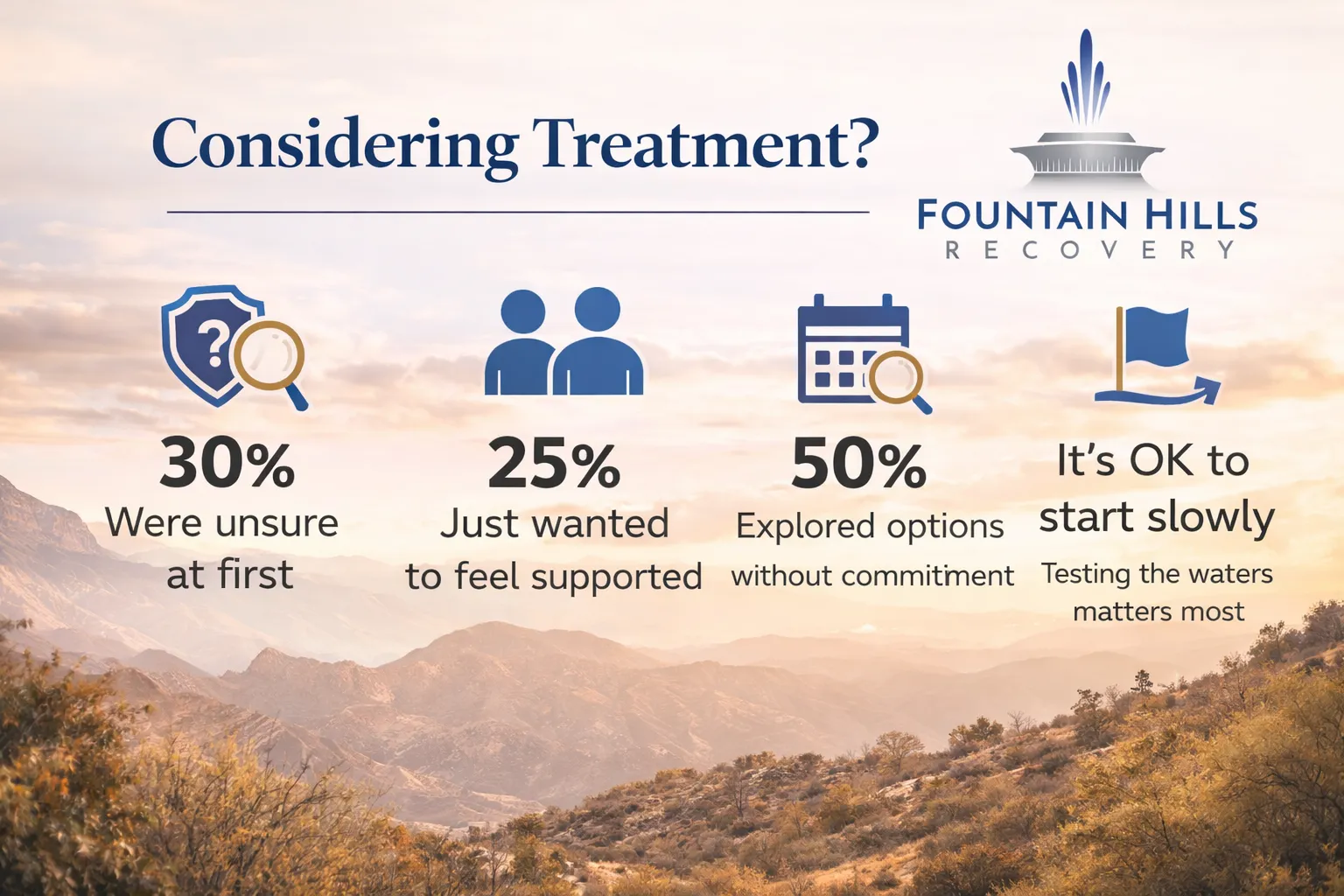
One of the biggest misconceptions about starting treatment is that it’s an all-or-nothing decision.
It’s not.
You’re not signing up for a lifetime commitment. You’re giving yourself a starting point.
Early recovery is about what happens next—not what happens months from now.
You’re allowed to:
- Ask questions without pressure
- Take time to adjust
- Reevaluate what’s working for you
- Move at a pace that feels manageable
Even choosing a residential treatment program isn’t about giving up control—it’s about creating a safe space where you don’t have to carry everything alone for a while.
Think of it less like a contract… and more like a pause. A reset. A place to breathe.
Support That Meets You Gently
If you’re hesitant about medication—or unsure about treatment in general—you deserve an environment that respects that.
The right kind of care doesn’t push. It guides.
Instead of being told what you “should” do, you’re invited into conversations about what might help.
Support can look like:
- Taking time to explain options clearly, without pressure
- Checking in about how you feel—not just physically, but emotionally
- Adjusting approaches based on your comfort level
- Letting you be part of every decision, not just the outcome
You’re not expected to agree with everything right away.
You’re not expected to feel ready.
You’re just asked to stay open enough to explore what might help.
That’s a very different experience than being told what to do.
The Small Wins That Start to Matter
Early recovery doesn’t usually come with big, dramatic breakthroughs.
It’s quieter than that.
It shows up in moments that might seem small—but feel significant when you notice them.
Like:
- Sleeping through the night without waking up in panic
- Eating a full meal without overthinking it
- Feeling a brief moment of calm you didn’t expect
- Laughing—genuinely—even if it surprises you
- Being able to sit with your thoughts without feeling overwhelmed
These are not minor changes. They are signs that your system is starting to settle.
Recovery isn’t a switch that flips.
It’s more like light slowly returning to a dim room.
At first, you barely notice it. Then one day, you realize you can see a little more clearly.
The Role of Structure (Without Feeling Controlled)
One of the most supportive parts of early recovery is structure—but not in the way people often imagine.
It’s not rigid or restrictive.
It’s grounding.
Having a consistent rhythm to your day can help reduce the mental noise that comes with uncertainty.
Instead of constantly asking yourself:
“What should I be doing right now?”
“Am I doing this right?”
You’re given a gentle framework that helps guide you through the day.
That structure might include:
- Regular meals
- Scheduled therapy sessions
- Time for rest and reflection
- Space for connection with others
It’s not about control—it’s about relief.
Relief from having to figure everything out on your own.
Being Around People Who Understand
One of the unexpected parts of early recovery is how much it helps to not feel alone.
You may meet people who are also at the beginning. Some further along. Some unsure, just like you.
And something shifts when you realize:
You don’t have to explain everything.
You don’t have to justify how you feel.
You don’t have to pretend.
There’s a quiet comfort in being around people who get it—without needing a full backstory.
Even if you’re not ready to open up right away, just being in that environment can make a difference.
It reminds you that what you’re experiencing is human.
And that healing doesn’t happen in isolation.
You Don’t Have to Do This Alone in Arizona
Starting doesn’t mean you need to have all the answers—it just means you’re willing to explore what support could look like.
Some people begin by looking into treatment in Scottsdale Addiction Rehab and Mental Health, especially if they want access to care in a familiar, accessible setting.
Others feel more comfortable stepping into a quieter environment, choosing care in Fountain Hills Drug, where space and privacy help them slow down and process what they’re going through.
There’s no single right setting.
Only what feels safe enough for you to begin.
What If You’re Still Not Sure?
That’s okay.
You’re allowed to be unsure and still take a step.
You don’t have to believe this will work.
You don’t have to feel confident.
You don’t have to be free of fear.
You just have to be willing to not stay exactly where you are.
Sometimes the bravest step isn’t a big one.
It’s a quiet decision to explore what might be possible—without forcing yourself to have it all figured out.
Frequently Asked Questions About Starting Early Recovery
Do I have to be completely ready before starting?
No. Most people aren’t. Readiness often comes after you begin, not before. You’re allowed to start with uncertainty.
What if I’m scared of medication?
That fear is valid. Good care includes open conversations about medication—what it does, how it feels, and whether it’s right for you. You’re part of that decision.
Will I lose control over my choices?
No. You remain involved in your care. The goal is to support you, not take autonomy away from you.
What if I don’t open up right away?
That’s completely okay. There’s no expectation to share everything immediately. Trust builds over time.
How long do I have to stay?
That depends on your needs, but early recovery is about taking things step by step—not committing to something overwhelming all at once.
What if I’ve tried to get help before and it didn’t work?
That doesn’t mean it won’t work now. Different environments, different timing, and different support can create a completely different experience.
Is it normal to feel scared even if I want help?
Yes. Wanting help and feeling afraid can exist at the same time. That doesn’t mean you’re not ready—it means you’re human.
The Step That Changes Everything (Even If It Feels Small)
You don’t need certainty to begin.
You don’t need to have everything figured out.
You don’t even need to believe fully that things will get better.
You just need a small opening—a willingness to not stay stuck in the same place.
That’s where change starts.
And if you’re here, reading this, part of you has already taken that first step.
If you’re considering what early recovery could look like, we’re here to walk with you—at your pace, without pressure, and with respect for everything you’re carrying.
Call (800) 715-2004 to learn more about our residential treatment program in Scottsdale, Arizona.